Fast senior-focused shortlist
Choose by the task the base needs to make simpler
“For seniors” covers many situations. The useful feature depends on the task: simple position controls, a visible path to the bathroom, easier access to a nightstand, or separate controls for a partner. The six choices below compare exact products by those practical jobs.
| Daily task | Shortlist pick | Why it fits | Purchase caution | Shop |
|---|---|---|---|---|
| Simplest controls plus in-room setup | Tempur-Pedic Ease Queen $999 | A wireless remote, head and foot lift, and zero-gravity preset cover the core positioning jobs. Tempur-Pedic says its in-home delivery team sets up a purchased power base and removes the packaging. | No under-bed light or massage, and the base is nonreturnable. | Check price → |
| Night lighting and finer positioning | TEMPUR-Ergo Queen $1,699 | Adds adjustable lumbar position, a remote-controlled under-bed light, charging ports, massage, and adjustable leg height to the core head and foot movement. | The $700 step-up only makes sense if those added controls will be used; the base is nonreturnable. | Check price → |
| More return flexibility and height choices | Puffy Serenity Queen $1,399 | Seven leg-height settings, a wireless remote, under-bed light, head and leg movement, massage, and Puffy's current 365-night trial create a forgiving first-base package. | Confirm the exact trial, return pickup, assembly, and selected-size terms in the cart. | Check price → |
| Keeping the nightstand within reach | Amerisleep Bed+ Queen $2,000 | Wall Glide moves the base toward the wall as the head rises. A backlit remote, under-bed light, app control, presets, and adjustable legs add practical control choices. | Amerisleep lists this base as nonreturnable with no sleep trial. | Check price → |
| A low-profile base inside existing furniture | Avocado Adjustable Base Queen $1,599 | The 3.5-inch zero-clearance frame can sit on a compatible platform or slats, inside a bed frame, or on included adjustable wood legs. | It has no under-bed light, massage, or app, and Avocado lists it as final sale. | Check price → |
| Independent positions for two sleepers | Twinkle Split King Queen $1,599; confirm Split King price | The Split King configuration gives each Twin XL side its own controls, while the standard King synchronizes both halves. The remote keeps the feature set focused. | Twinkle lists the base as final sale except for qualifying manufacturing or mechanical defects. | Check price → |
Choose the buying path first
Fixed foundation
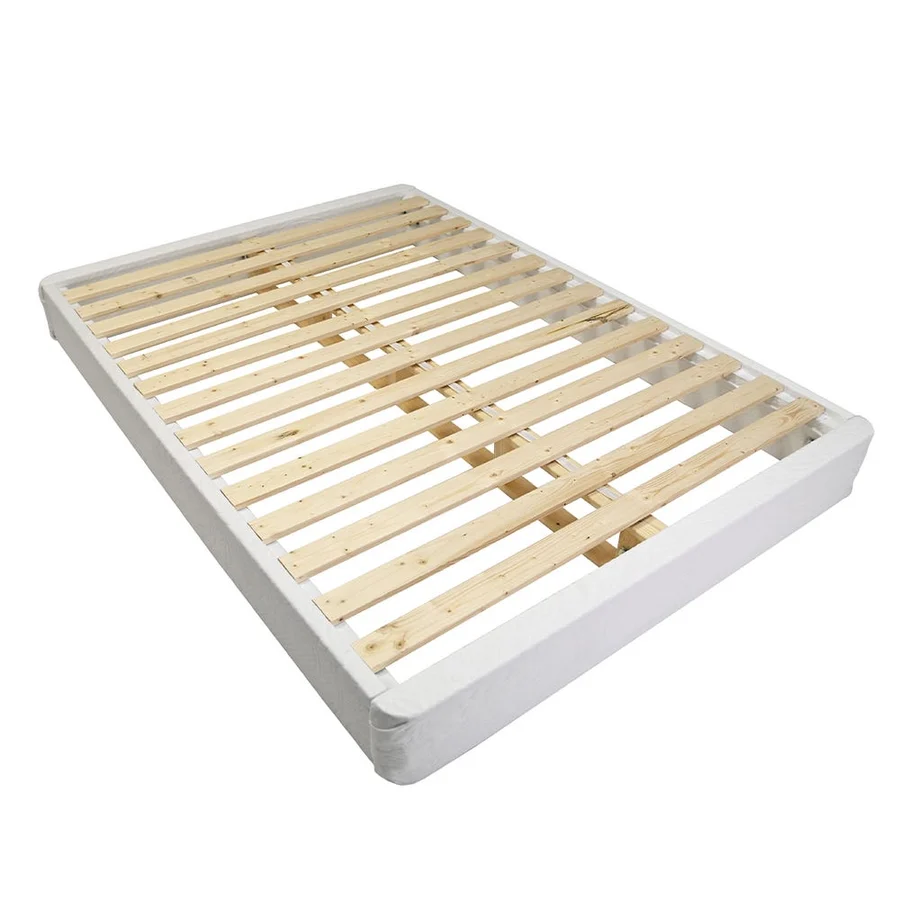
Best when the mattress only needs strong, flat support. You save money and skip motors, remotes, and electrical parts you would not use.
Compare foundations →Base only
Best when you already own a compatible mattress. Your budget goes toward positioning, presets, massage, lighting, or split-side control.
Shop adjustable bases →Complete system
Best when you need both pieces or want mattress and base compatibility settled in one purchase. Integrated temperature systems also belong here.
See complete systems ↓Tempur-Pedic base ladder
Ease vs. Ergo vs. Ergo Smart vs. Ergo ProSmart
All four current Tempur-Pedic bases provide head-and-foot movement and carry a 25-year limited warranty. The literal difference is how much positioning, bedside convenience, sleep tracking, and relaxation technology you want built into the base.
Good · Queen $999
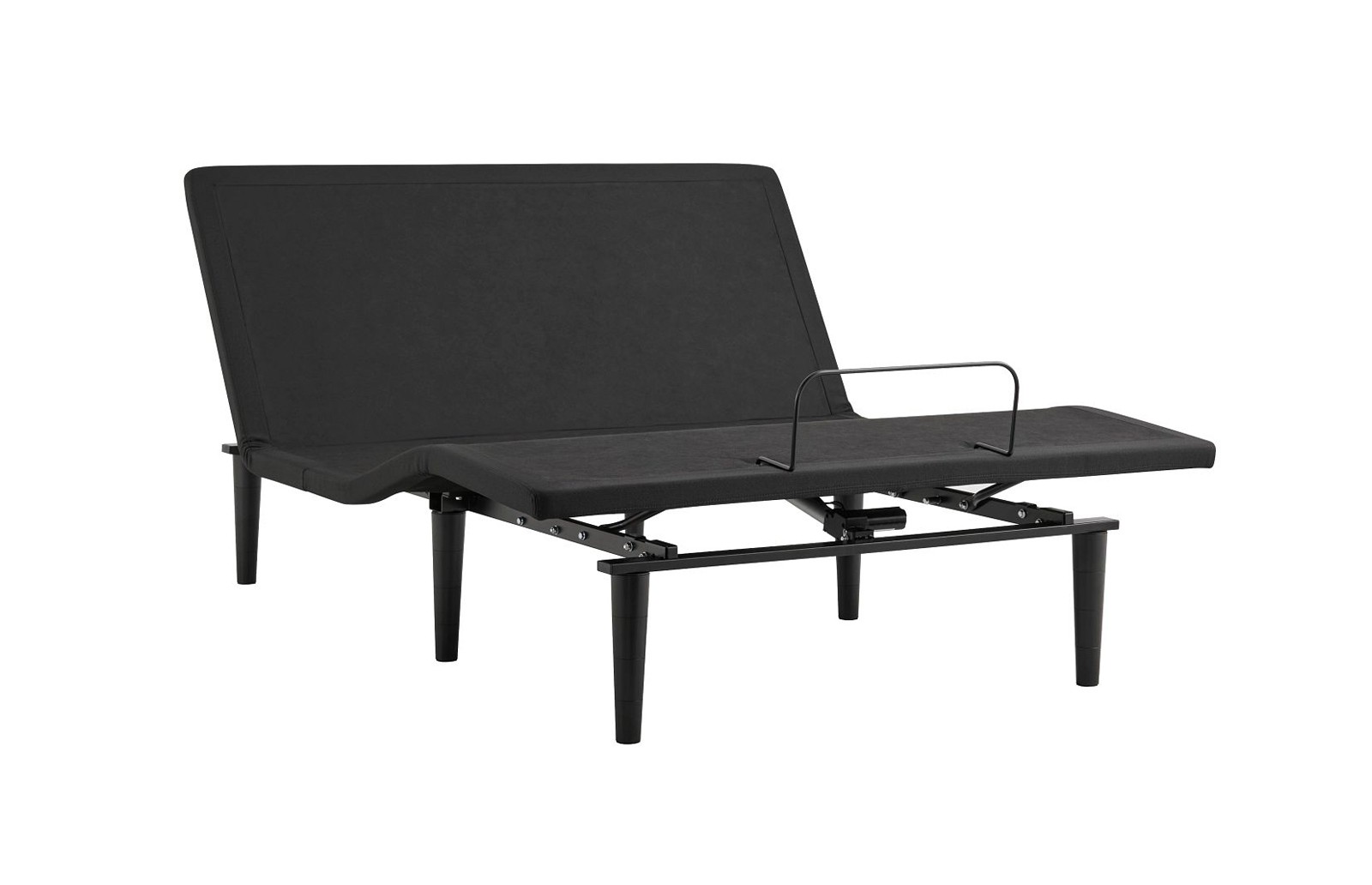
Ease Power Base
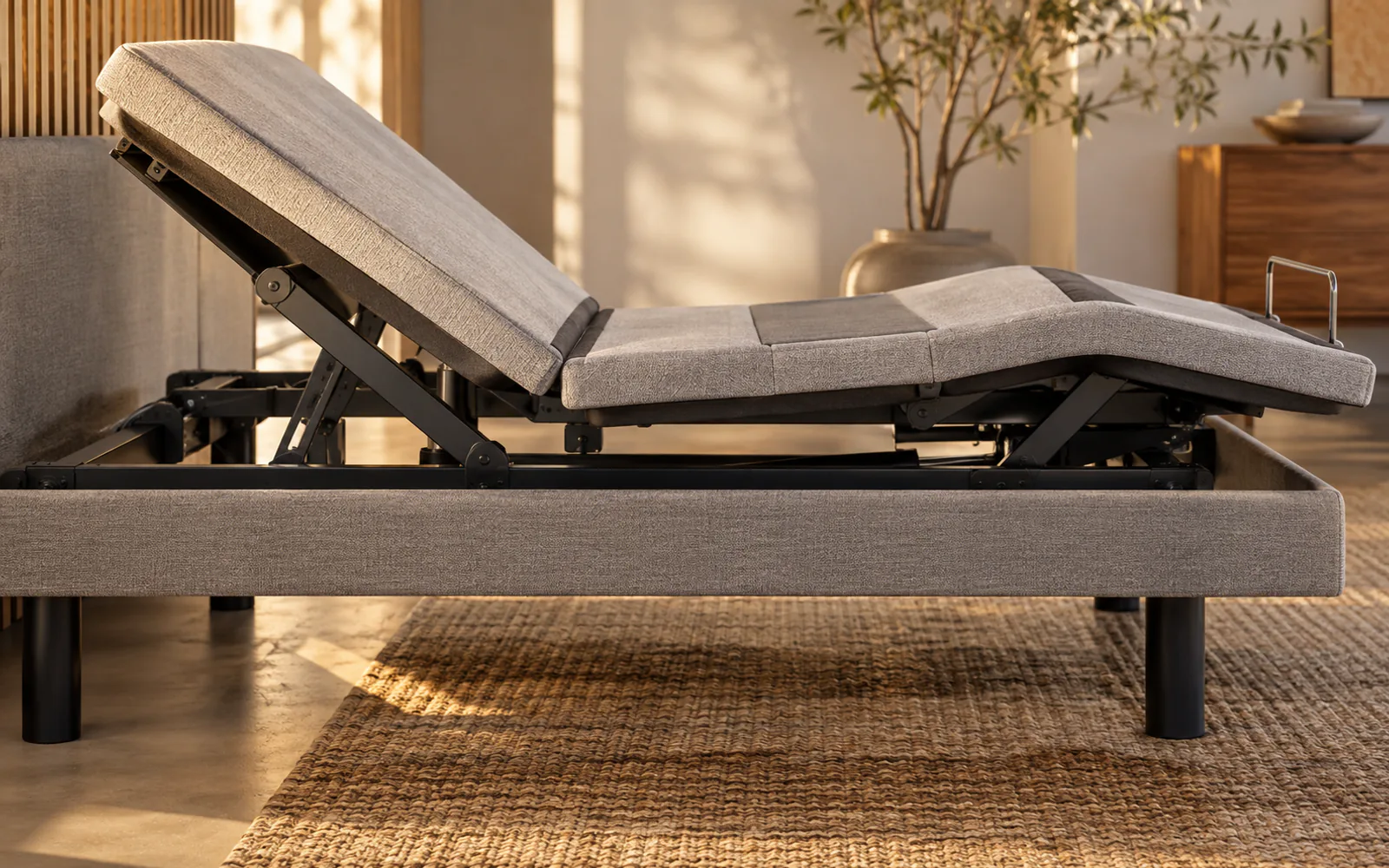
Head and foot movement, zero gravity, and a wireless remote cover the main reasons most people buy an adjustable base.
Who benefits: Choose Ease when positioning is the benefit. It keeps $700 in your pocket when lumbar control, massage, charging, and lighting would go unused.
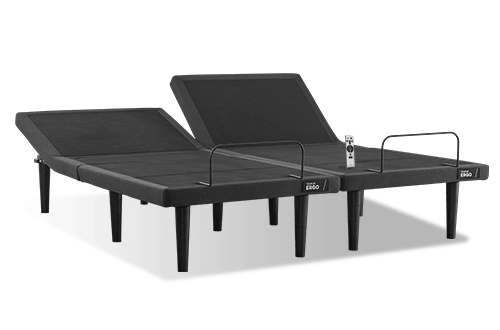
Better · Queen $1,699
TEMPUR-Ergo Power Base
The $700 upgrade adds adjustable lumbar support, QuietMode, one-zone massage, USB and USB-C ports, and under-bed lighting.
Who benefits: Choose Ergo when you want finer lower-back support or regularly use the bed for reading and relaxing. Massage, charging, and lighting make the upgrade easier to feel every day.
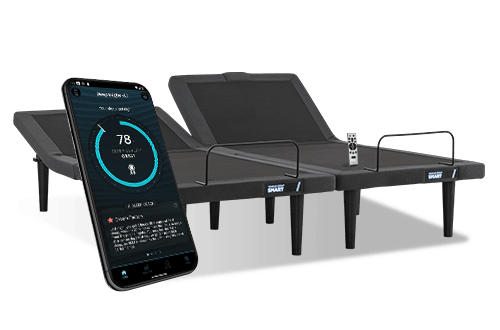
Smart · Queen $2,199
TEMPUR-Ergo Smart Base
The next $500 adds two-zone massage, automatic Snore Response, Sleeptracker-AI coaching, and a smart alarm.
Who benefits: Choose Ergo Smart when automatic adjustment and sleep insights are part of the purchase. Ergo remains the better value if you do not want an app or overnight data.
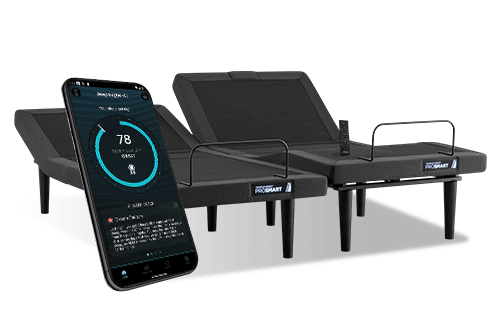
Best · Queen $2,699
TEMPUR-Ergo ProSmart Base
The final $500 adds WaveForm massage, SoundScape mode, and a programmed Wind Down routine to the Smart feature set.
Who benefits: Choose ProSmart when advanced massage and sound-based relaxation are features you expect to use often. Smart provides the same core tracking and automatic snore-response value for less.
Literal model difference
Avocado Adjustable Base vs. Avocado Plus: what the extra $900 buys
The Queen models share the same essential positioning, sizes, zero-clearance design, natural-wood legs, organic-cotton cover, backup battery, and 20-year limited warranty. The choice is whether the Plus features will change how you use the bed.
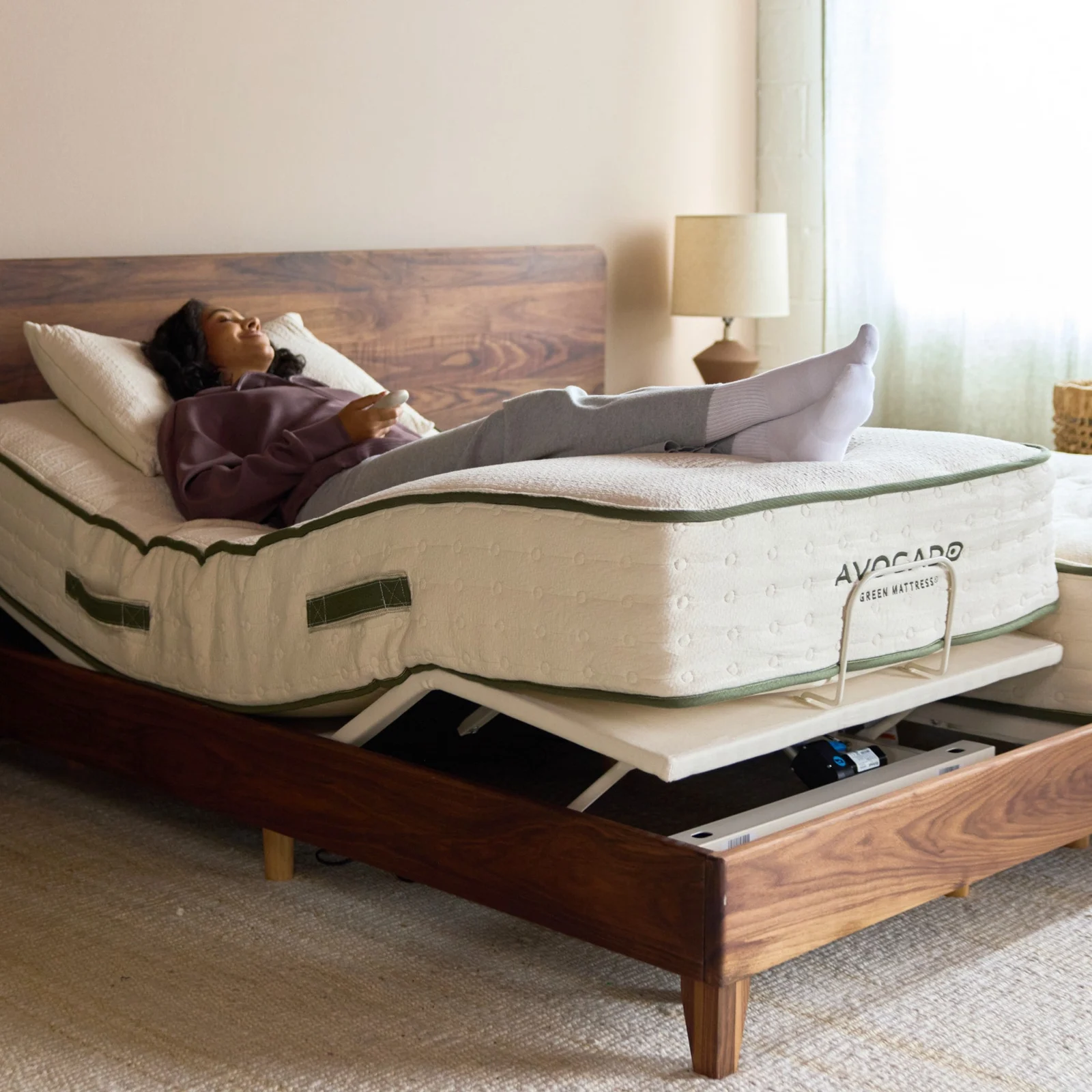
Good · Queen $1,599
Avocado Adjustable Base
You get independent head and foot elevation, zero gravity, a wireless remote, backup battery, and a 3.5-inch frame that can sit on a platform, across slats, inside a bed frame, or on the included adjustable legs.
Who benefits: shoppers who want the nightly value of elevation and a furniture-like design but prefer simple remote operation. This is the stronger buy when massage, phone control, lumbar adjustment, and bedside tech would go unused.
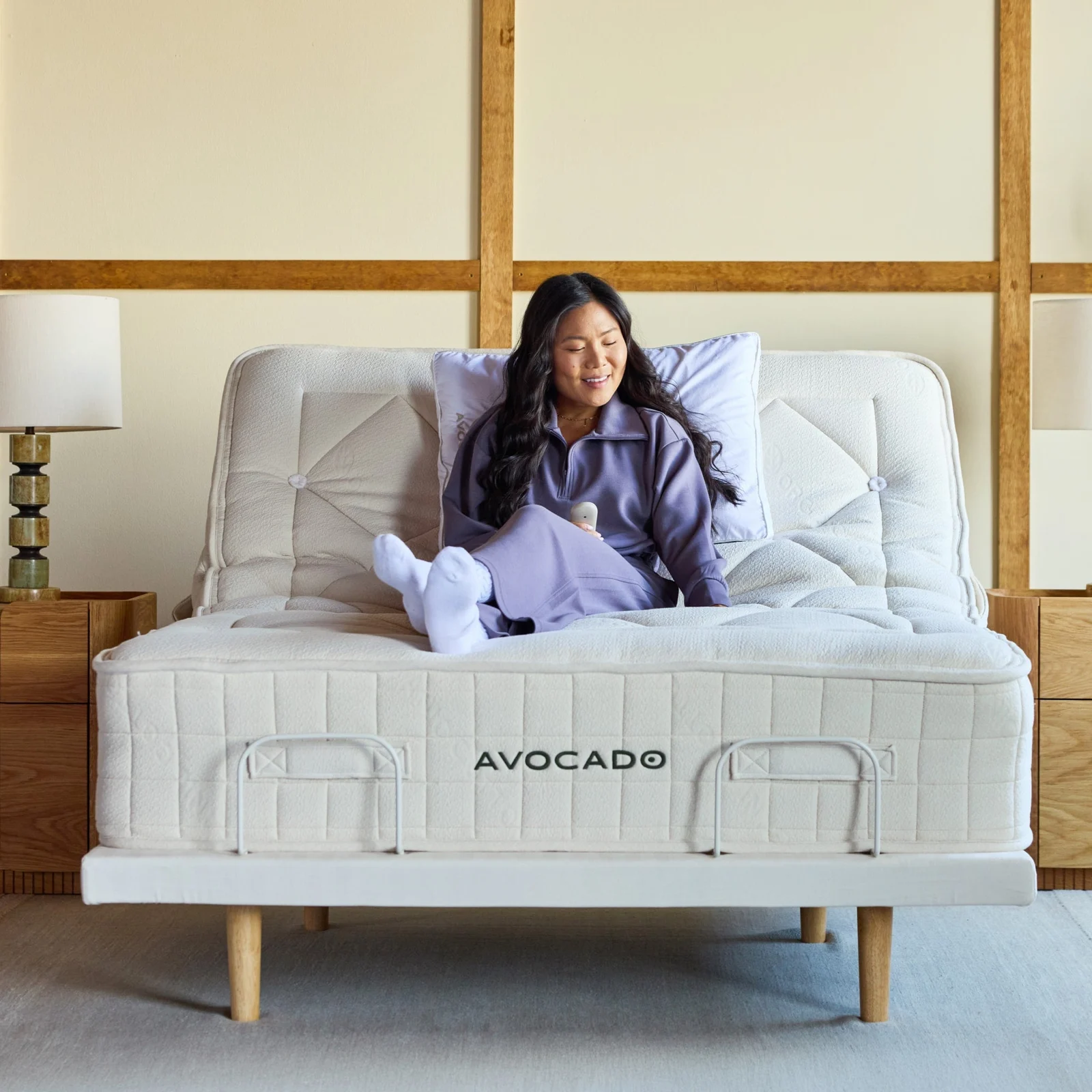
Better · Queen $2,499
Avocado Plus Adjustable Base
The Plus adds adjustable lumbar support, automatic head tilt, head-and-foot massage, phone control, USB-A and USB-C charging, under-bed lighting, organic-wool padding, and a three-inch shroud that conceals the mechanism.
Who benefits: sleepers who want finer lower-back or elevated-position control, people who regularly read or watch TV in bed, and shoppers who will use massage, charging, and a night light as part of the room every day.
Matched mattress + base
Complete systems worth comparing
A matched system removes compatibility guesswork. The value still depends on what the base adds, whether the mattress feel suits you, and which return policy applies to each component.
Best packaged value
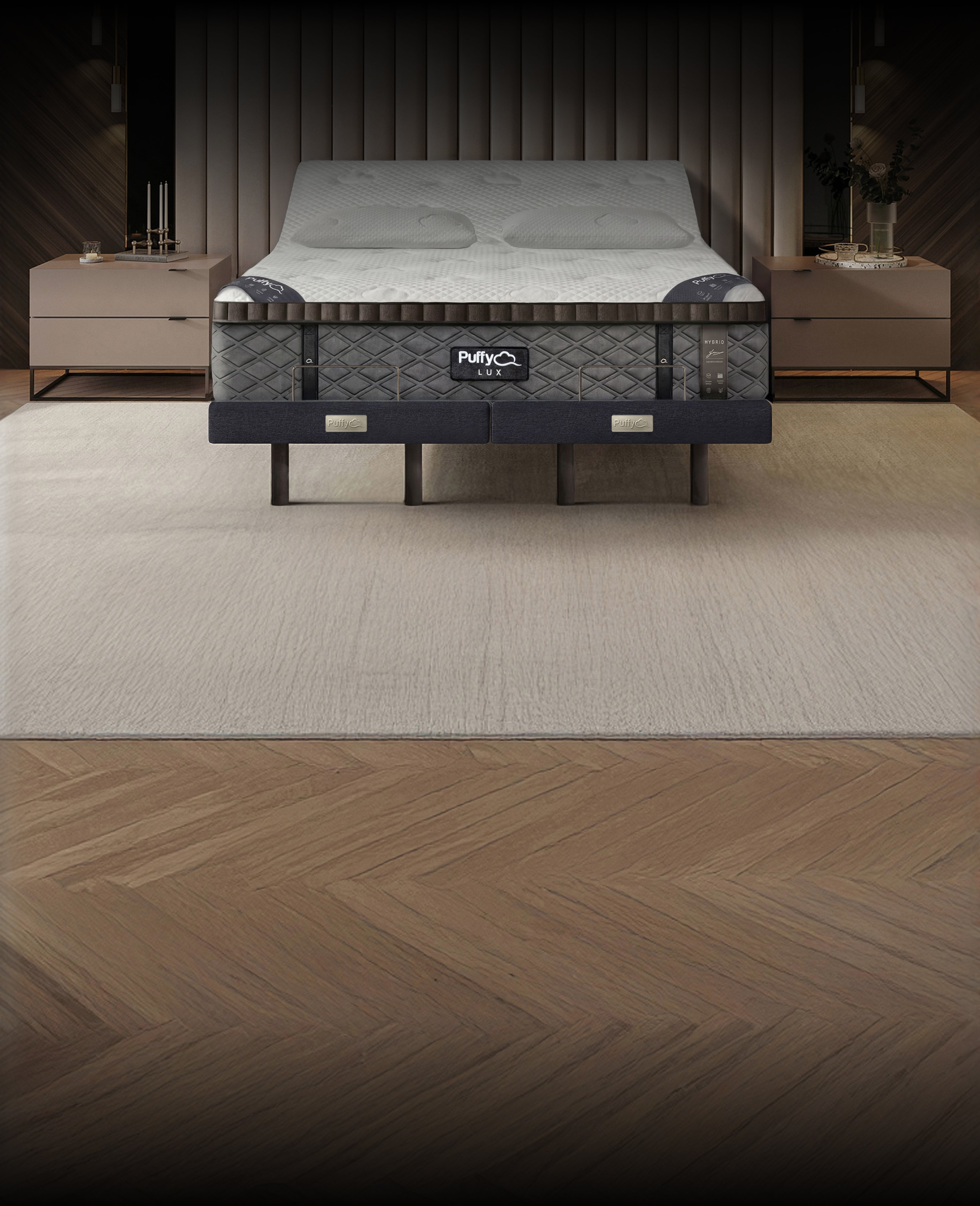
Puffy Lux Smart Bed Set
The current set combines Puffy's Lux hybrid with the Serenity Adjustable Base. The base adds independent head and leg elevation, an OrthoGravity position, dual-zone three-speed massage, USB charging, under-bed light, and adjustable leg height.
Who benefits: someone replacing the entire bed who wants pressure-relieving hybrid comfort, powered positioning, massage, and in-home setup without assembling a mattress-and-base combination from separate sellers.
Why spend more than a mattress alone: the added money buys the powered base and service package. It is a stronger value when head or leg elevation and massage will be used often; it is unnecessary when a fixed foundation already meets your needs.
Buy with confidence: Puffy currently displays a 365-night trial, free delivery and returns, full-service in-home setup, and a lifetime warranty for the set. Confirm the exact size, promotion, and written cart terms.
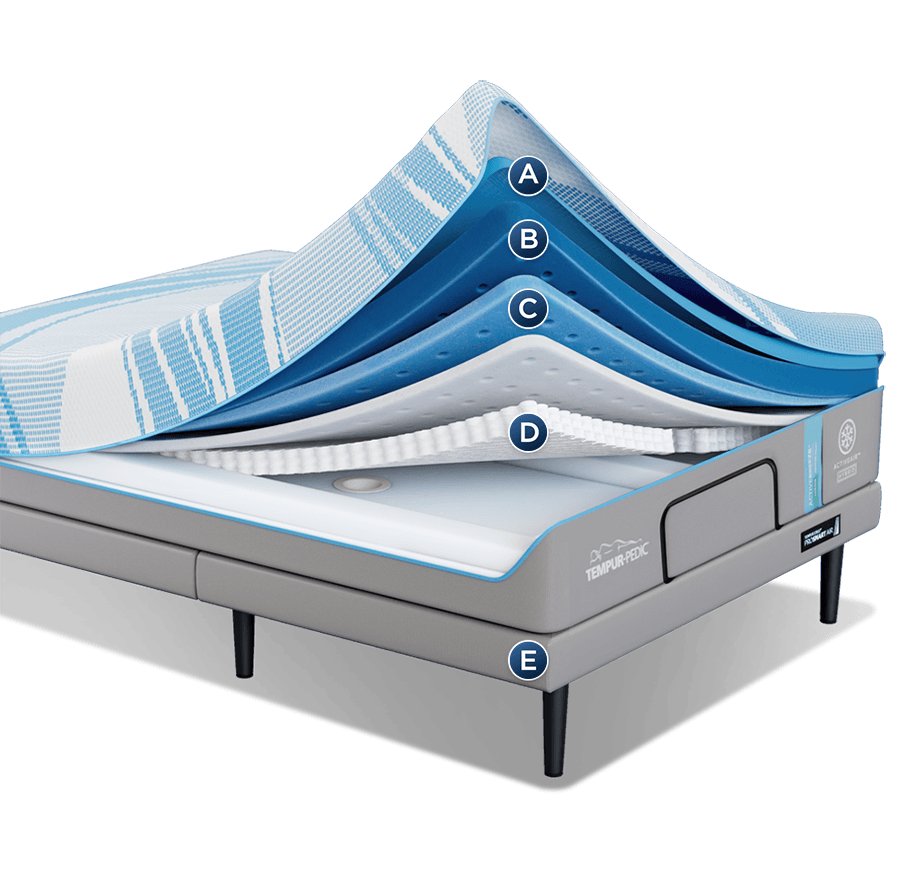
Best for active temperature control
TEMPUR-ActiveBreeze
This is a powered climate system rather than a conventional mattress placed on a moving base. Airflow through the ProSmart Air Base and mattress is designed to cool or warm each side, while the TEMPUR comfort layers provide the slow, close contour associated with the brand.
Who benefits: couples with different temperature preferences and shoppers who want active overnight cooling or warming, not just a cool-to-the-touch cover.
Why it costs more: you are paying for the mattress, climate hardware, adjustable base, connected controls, and a much more specialized system. Choose it for the temperature function; positioning alone is available for far less.
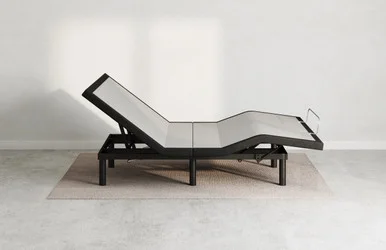
Best build-your-own system
Amerisleep mattress + Adjustable Bed
Pair a compatible Amerisleep mattress with the simpler Adjustable Bed for head and foot articulation, flat and zero-gravity presets, a programmable remote, zero-clearance placement, and adjustable legs.
Who benefits: shoppers who want to choose the mattress feel first, then add the essential positioning features without paying for massage or app control.
When to upgrade to Bed+: choose the higher tier for full-body wave massage, Wall Glide, under-bed lighting, USB ports, app control, and supported voice controls. If those extras will sit unused, the standard base is the cleaner value.
Return checkpoint: Amerisleep lists both adjustable bases as nonrefundable with no sleep trial. Confirm size, delivery, and warranty before ordering.
Base-only comparison
What the added money actually buys
Every choice below raises the head and feet. The price gap comes from the number of adjustment zones, presets, massage, furniture compatibility, charging, lighting, and controls.
| Base | Core difference | Who benefits | Return checkpoint | Review |
|---|---|---|---|---|
| Tempur-Pedic Ease | Head and foot movement, zero gravity, and wireless remote | You want the essential Tempur-Pedic positioning functions at the lowest current Queen price. | Nonreturnable; 25-year limited warranty | View → |
| TEMPUR-Ergo Smart | Lumbar control, two-zone massage, charging, lighting, Snore Response, sleep coaching, and smart alarm | You want connected sleep insights and automatic adjustment without ProSmart's advanced massage and sound modes. | Nonreturnable; 25-year limited warranty | View → |
| Twinkle Adjustable Base | Head and foot movement, zero gravity, wireless remote, and synchronized King or independent Split King choices | You want core positioning and need the couple-control configuration to be explicit before checkout. | Final sale except manufacturing or mechanical defects | View → |
| Avocado Adjustable Base | Organic-cotton-wrapped 3.5-inch zero-clearance frame, natural-wood legs, zero gravity, head and foot movement | You want the essential positioning and Avocado's finished residential look at the lower price. | Final sale; 20-year limited warranty | View → |
| Avocado Plus Adjustable Base | Adds lumbar control, head tilt, massage, app, USB-A/C, lighting, wool padding, and a padded shroud | You expect the added positioning and bedside features to become part of the nightly routine. | Final sale; same 20-year limited warranty | View → |
| PlushBeds PB Essential | Head and foot movement, two memory positions, one-touch flat, zero clearance | You want the essential controls and a 700-pound published load limit without massage. | Nonreturnable; 10-year limited warranty | View → |
| Ergomotion RIO 4.0 | Three programmable presets, Zero Gravity, two massage motors, USB-A/C, under-bed light | You want strong daily convenience features and broad size availability from a base specialist. | Final sale on the current direct listing | View → |
| Puffy Serenity | OrthoGravity, dual-zone three-speed massage, USB, under-bed light, seven leg heights | You want massage and generous height adjustment with Puffy's current direct-store confidence signals. | Puffy currently advertises a 365-night trial | View → |
| Amerisleep Adjustable Bed+ | Wave massage, Wall Glide, app and voice controls, USB, lighting, programmable presets | You want the base to move with your nightstand reach and expect to use connected controls. | Nonrefundable; no sleep trial | View → |
| PlushBeds PB Premier | Separate neck, head/back, lumbar, and foot zones plus massage and presets | You want finer positioning control, especially lumbar and neck adjustment that simpler two-zone bases omit. | Nonreturnable; 10-year warranty | View → |
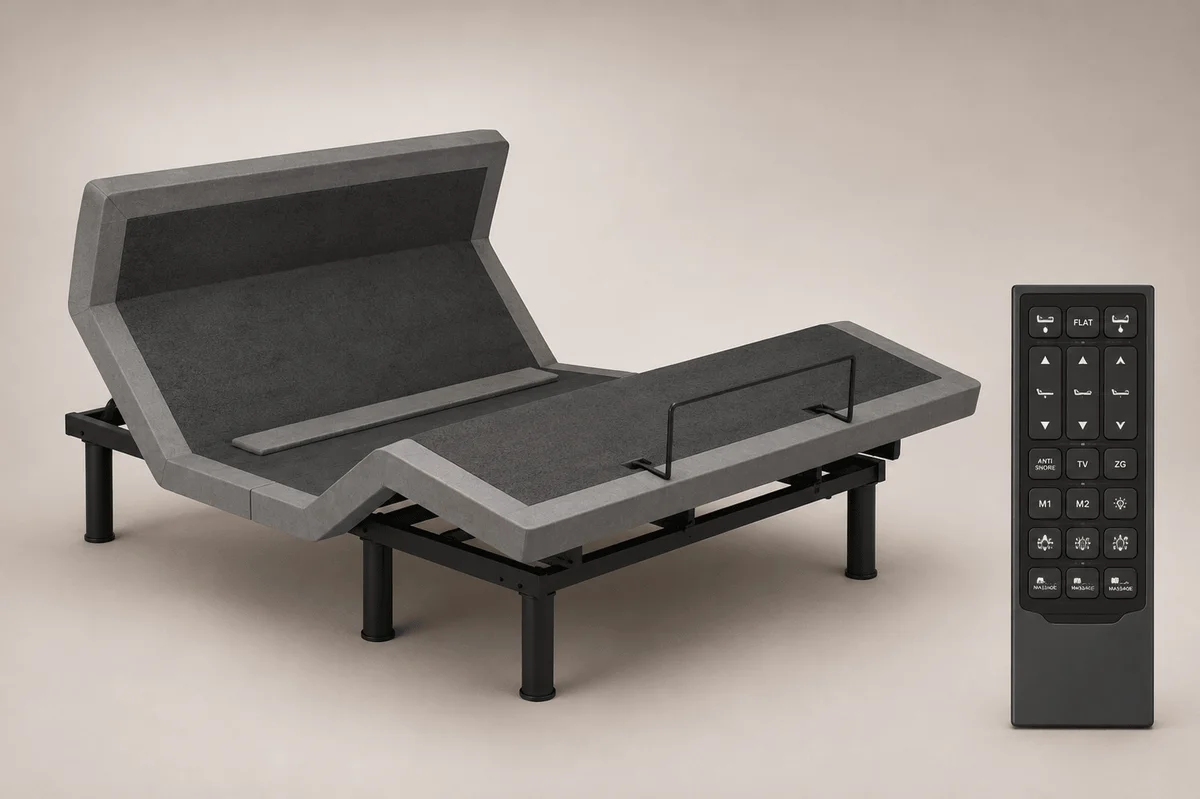
Who benefits from an adjustable system?
Readers and screen watchers
Head elevation supports a more upright position without stacking pillows that slide or fold. Memory presets matter when you return to the same angle nightly.
Couples with different position preferences
A Split King can let each side move independently. Check whether the selected mattress, base, sheets, and protector all match the split configuration.
Older adults who want repeatable position changes
Zero-gravity and custom memory buttons can make a preferred head-and-leg position easier to reproduce. This is a convenience feature, not a promise to treat pain, swelling, snoring, reflux, or another condition.
Hot sleepers considering active climate tech
A moving base alone does not cool the mattress. Choose a system such as ActiveBreeze only when powered airflow or temperature control is the feature you want; otherwise prioritize the mattress and bedding materials.
A fixed foundation may fit you better if:
you like sleeping flat, your existing frame already fits a rigid support unit, and you do not expect to use powered positioning, massage, split controls, or connected features. Put the savings toward the mattress comfort and support that affect every hour in bed.
Bedroom safety checks before adding powered movement
An adjustable base changes mattress position and adds motors, cables, moving joints, and a remote. It does not replace a room-level fall review or an individualized transfer assessment.
Measure the finished entry height
Add the base frame, selected leg height, and mattress thickness. Test the complete height rather than assuming a taller or lower bed is safer for everyone.
Keep light and communication within reach
The National Institute on Aging recommends night lights and light switches close to the bed, a flashlight for outages, and a charged phone nearby. An under-bed light helps visibility but does not prevent falls by itself.
Protect the walking path
Plan where the power cord, control cable, nightstand, rug edges, and packaging will go. Keep the route from bed to doorway or bathroom clear before the installers leave.
Treat bed rails as a separate safety decision
The FDA warns that adult portable bed rails can create entrapment and fall hazards. Do not attach a generic rail to a moving base without explicit rail, mattress, and base compatibility plus an individual assessment when it is meant for mobility or fall support.
Compatibility checklist before checkout
- 1. Confirm the exact mattress.
Do not rely on “foam” or “hybrid” alone. Verify that the exact model and size are approved for an adjustable base and that third-party use preserves the warranty.
- 2. Add the total weight.
Count the mattress, sleepers, bedding, pets, and anything else on the bed against the base's published limit.
- 3. Measure the furniture.
Check zero-clearance support, leg height, side-rail clearance, headboard brackets, nightstand reach, and the path from the door to the bedroom.
- 4. Plan power and controls.
Locate a suitable outlet, leave room for cables, and decide whether one remote, two split-side remotes, an app, or voice controls fit the household.
- 5. Price delivery and setup.
These bases are heavy. Confirm curbside versus room-of-choice delivery, assembly, packaging removal, old-base removal, stairs, and any added charge.
- 6. Read the base return policy.
The mattress trial may not apply to the base. Treat final-sale or nonreturnable wording as a purchase decision, not a footnote.
Our recommendation
For most seniors comparing a first adjustable base, start with controls, finished entry height, delivery, and returnability. Choose Tempur-Pedic Ease when a simple remote and in-home setup matter most. Ergo earns its $700 premium with lumbar control, charging, massage, adjustable leg height, and an under-bed light. Puffy Serenity is the more forgiving trial choice, while Amerisleep Bed+ is the stronger nightstand-reach option when Wall Glide will be used.
Ergo Smart and ProSmart are technology upgrades rather than senior necessities. Pay for automatic Snore Response, sleep coaching, advanced massage, or sound modes only when the buyer wants those functions and can manage the app. A clear wireless remote can be the better interface.
Outside Tempur-Pedic, Twinkle is a strong straightforward choice for couples because it distinguishes synchronized King movement from independent Split King controls. The Avocado Adjustable Base pairs essential movement with a finished furniture-like design, while Avocado Plus earns its $900 Queen premium only when lumbar support, head tilt, massage, app control, charging, or lighting will become part of your routine. PB Essential covers the core adjustments at a lower price, RIO 4.0 adds useful presets and massage, and PB Premier or Amerisleep Bed+ earns the upgrade only when its added zones or controls solve a real preference.
Choose TEMPUR-ActiveBreeze when active overnight temperature control is the reason for the purchase. Choose a fixed foundation when you simply need reliable flat support. That lower-cost choice is not a compromise when you would never use powered features.
Frequently asked questions
What is the best adjustable bed for seniors?
There is no single best base for every older adult. Tempur-Pedic Ease is a strong simple-control choice with in-home setup, TEMPUR-Ergo adds an under-bed light and adjustable lumbar position, Puffy Serenity offers seven leg-height settings and a current trial, Amerisleep Bed+ keeps the sleeper closer to the nightstand with Wall Glide, and a Split King can give partners separate controls. Match the base to the daily task and confirm the exact return policy before ordering.
Does an adjustable base make it easier to get in and out of bed?
It can change the head and foot angle, but that does not prove the finished bed is the right transfer height for a particular person. Measure the top of the mattress after the base, legs, and mattress are combined. When transfers are a safety concern, ask a qualified clinician or occupational therapist whether a consumer base or a powered-height home-care bed fits the situation.
Is a consumer adjustable base the same as a hospital or home-care bed?
No. Consumer bases usually move the head and foot sections while the overall frame height is selected during setup. A powered-height home-care or hospital bed can raise and lower the entire sleep surface and is regulated and selected for different care needs. Do not assume a retail adjustable base provides that function.
Should I add a portable bed rail to an adjustable base?
Only after confirming that the rail, mattress, and moving base are explicitly compatible and appropriate for the sleeper. The FDA warns that adult portable bed rails can create entrapment and fall hazards, especially for older adults and people with physical or cognitive limitations. A health professional should assess rail use when it is intended for transfer or fall-related support.
Do I need to buy a mattress with an adjustable base?
No. A base-only purchase can be the better value when your current mattress is flexible, undamaged, and explicitly compatible with an adjustable base. A complete system is easier when you also need a mattress, want one matched checkout, or are buying integrated heating and cooling technology.
What features are worth paying more for on an adjustable bed?
Head and foot positioning are the core functions. Pay more for split-side control, lumbar or neck adjustment, massage, wall-hugging movement, under-bed lighting, app control, or active temperature features only when they solve a routine you expect to use often.
Can any mattress go on an adjustable base?
No. The mattress must be flexible enough to articulate and must meet the mattress maker's support requirements. Confirm compatibility, combined weight limits, retainer design, split sizing, and whether using a third-party base affects the mattress warranty.
Are adjustable bases returnable?
Policies vary sharply. Puffy currently advertises a 365-night trial on its direct base and Smart Bed Set, while Tempur-Pedic lists power bases as nonreturnable. Avocado lists both adjustable bases as final sale, Amerisleep describes its adjustable bases as nonrefundable, PlushBeds says its bases are nonreturnable, and Ergomotion lists RIO 4.0 as final sale. Read the exact terms before ordering.
When is a standard foundation the better buy?
Choose a fixed foundation when you only need flat, warranty-compliant support. It costs less, has no motors or remotes, and can be easier to place inside a conventional bed frame. An adjustable base earns the upgrade when powered positioning or another added feature matters to your nightly routine.
Manufacturer sources
Product features and current seller terms were checked against the official Tempur-Pedic bases and foundations, Puffy Lux Smart Bed Set, Puffy Serenity Adjustable Base, Twinkle Adjustable Base, Avocado Adjustable Base, Avocado Plus Adjustable Base, Amerisleep Adjustable Bed, Amerisleep Adjustable Bed+, Ergomotion RIO 4.0, PlushBeds PB Essential, and PlushBeds PB Premier pages.
Senior-safety context comes from the National Institute on Aging bedroom fall-prevention guidance and the FDA's adult portable bed-rail safety guidance. These sources support the room-lighting and rail-risk checks; they do not endorse a particular product on this page.