Innerspring Mattresses
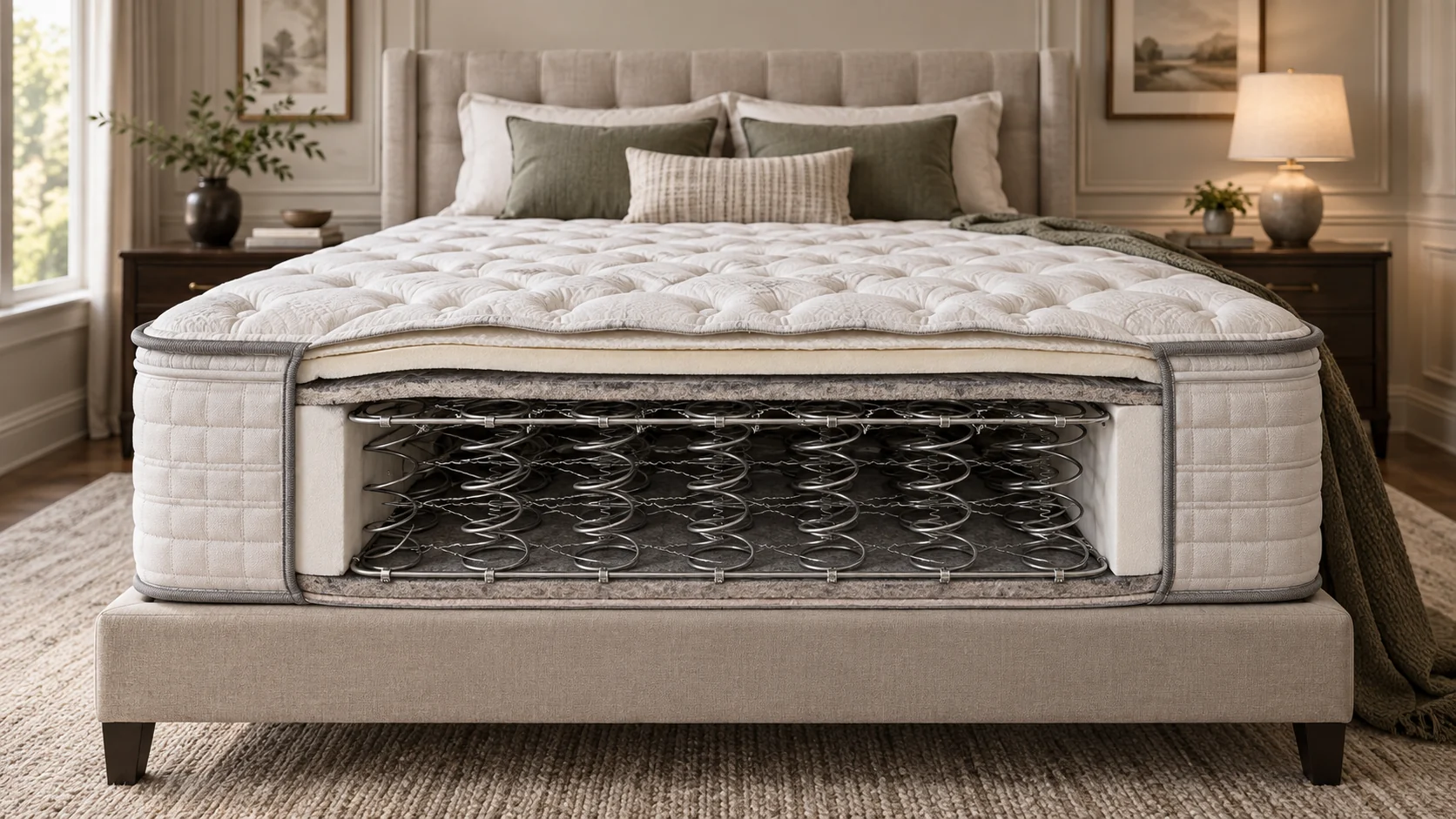
Innerspring mattresses use a coil support system with minimal foam layering, delivering excellent airflow, strong edge support, and the traditional bouncy feel many sleepers love.
What Is a Innerspring Mattress?
Innerspring is the original modern mattress construction, dominating the industry from the early 1900s through the 1990s. True innerspring mattresses are defined by their coil-dominant construction — a steel coil support system with thin comfort layers (typically 1–2 inches of foam or fiber). This minimal layering makes innerspring mattresses lighter, cooler, and bouncier than foam-dominant alternatives. Three main coil types exist: Bonnell (traditional hourglass shape, economical, interconnected), offset coils (hinged for more contouring), and pocketed coils (individually wrapped, the best motion isolation of the three). For coil beds with thick foam or latex comfort layers (2+ inches), see the Hybrid category. Traditional innerspring is experiencing a revival as buyers seek alternatives to the 'sinking in foam' feel and appreciate the temperature neutrality of coil-dominant construction.
Innerspring Pros & Cons
Pros
- ✓Excellent cooling — coils allow natural airflow throughout
- ✓Strong edge support — can sit on the edge without compression
- ✓Responsive bounce — easy to change positions
- ✓Lower price than comparable hybrid or foam options
- ✓Lighter weight — easier to move and rotate
Cons
- ✗Less pressure relief than foam or latex
- ✗Motion transfer — interconnected coils transfer movement
- ✗Can squeak over time (less common with pocketed coils)
- ✗Less conforming — may not alleviate significant pressure points
- ✗Traditional feel may feel 'old-fashioned' to foam-accustomed sleepers
Best For
Not Ideal For
Shop Innerspring Mattresses (25)
Featured mattress catalog
Showing 2 featured mattresses. Use the filters to explore all 25 options.
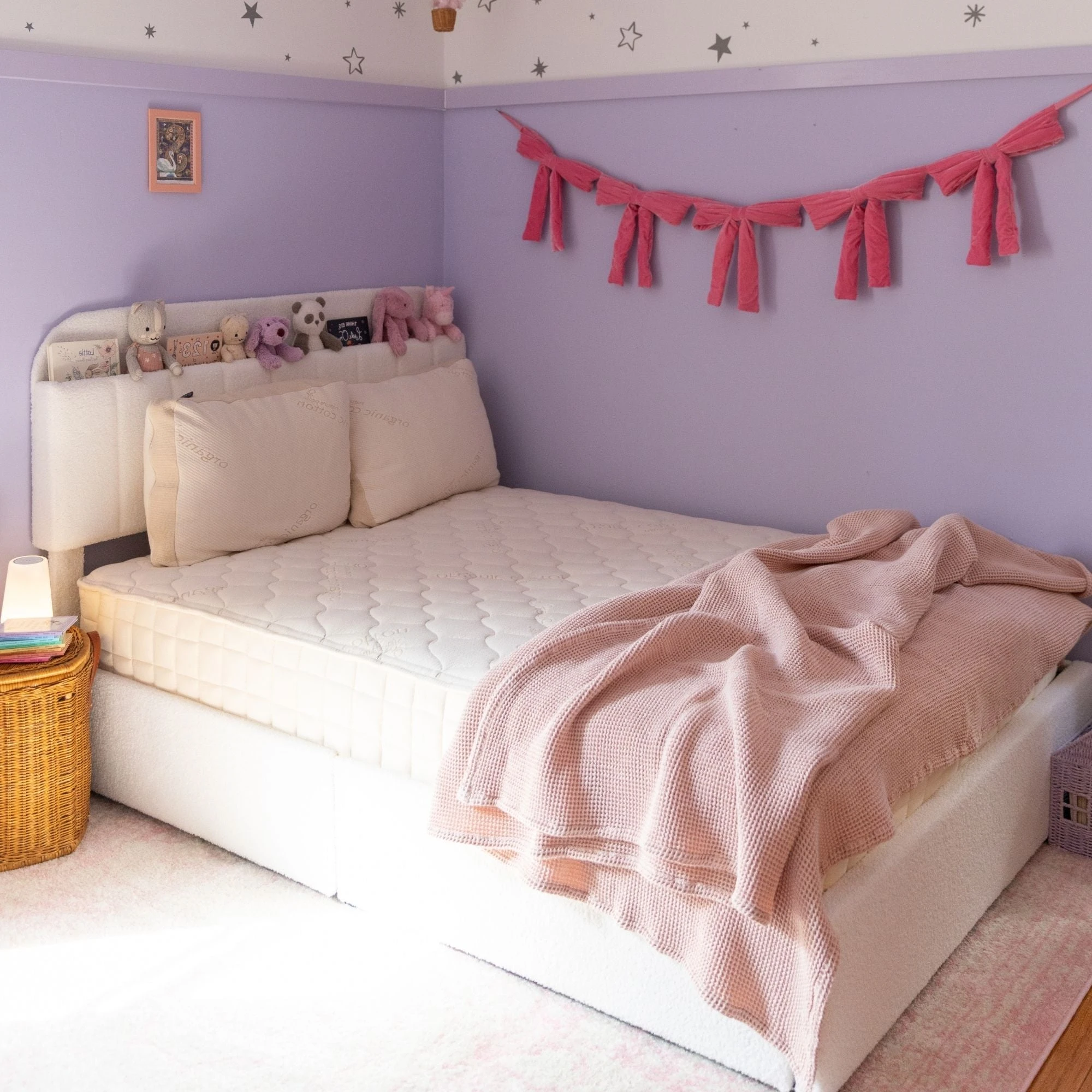
Best for: Big kids moving to a Twin bed · Teens who prefer firm spring support
Why it stands out: A one-inch organic cotton cushion over seven-inch encased coils gives a firm, spring-supported surface without latex or Polyurethane Foam
Keep in mind: Its one Firm feel may not suit an older child or guest who wants a plush surface
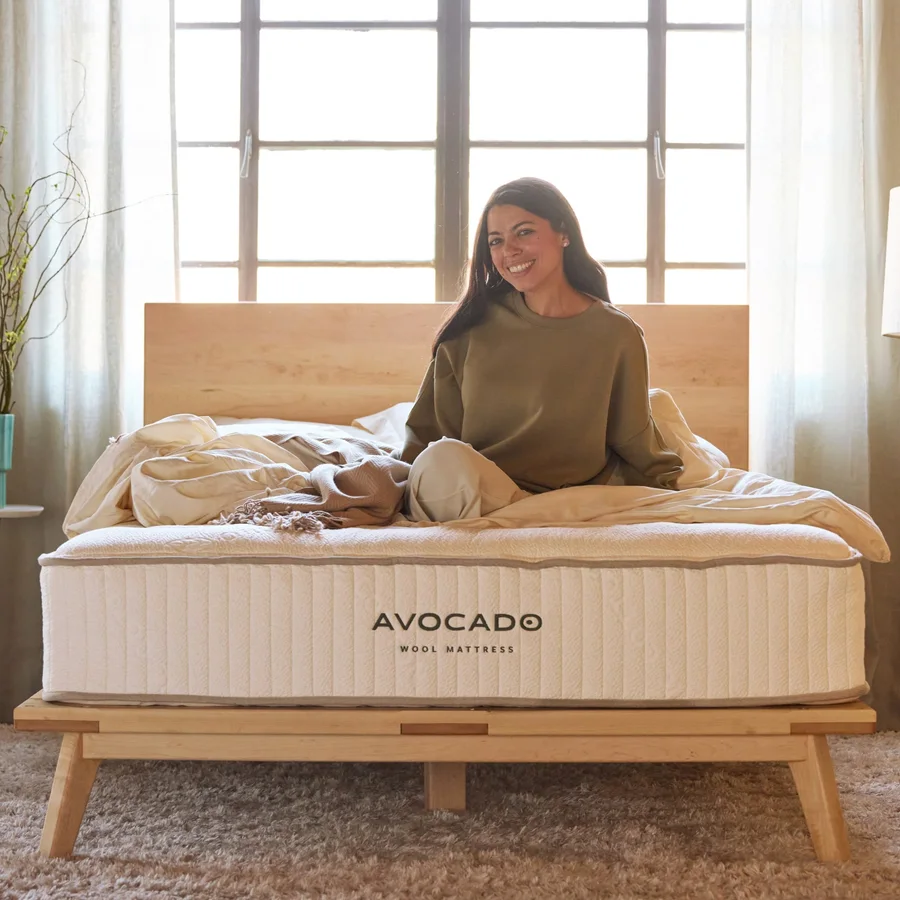
Best for: Latex free shoppers · Foam free shoppers
Why it stands out: It provides a current Avocado option for shoppers avoiding both latex and synthetic foam
Keep in mind: Latex-free does not mean allergy-free; buyers with material sensitivities should review the full fiber list and medical guidance
Buy with confidence
1-year direct-purchase comfort trial at Avocado
Innerspring Mattress — Frequently Asked Questions
What's the difference between innerspring and hybrid?
Innerspring mattresses have thin comfort layers (typically under 2 inches) over coils, while hybrids have thick comfort layers (2+ inches of foam or latex) over coils. If the mattress has a distinct, thick comfort layer, it's a hybrid. If it's predominantly coil with minimal padding, it's innerspring.
Are innerspring mattresses good for back pain?
Firm innerspring mattresses are among the most recommended options for back pain related to poor lumbar support. The coil system provides lift under the lumbar region, and stomach sleepers particularly benefit from innerspring's ability to maintain spinal alignment without sinking.
Do innerspring mattresses sag?
Quality innerspring mattresses with tempered steel coils resist sagging well. The most common failure point is the comfort layer (foam or fiber topper) compressing before the coils degrade. Rotating your mattress every 3–6 months significantly extends life.
What coil count is good for an innerspring?
For a queen mattress: 400–600 coils is standard, 600–800 is good, 800+ is premium. Higher counts don't always mean better — coil gauge (thickness) and tempering process affect quality as much as count.
Are innerspring mattresses old-fashioned?
Innerspring construction is the opposite of old-fashioned — it's experiencing a premium revival with brands like Saatva, WinkBed, and Aireloom building their flagship products around advanced coil systems. The category's natural cooling and responsive feel are actively appealing to foam-fatigued buyers.