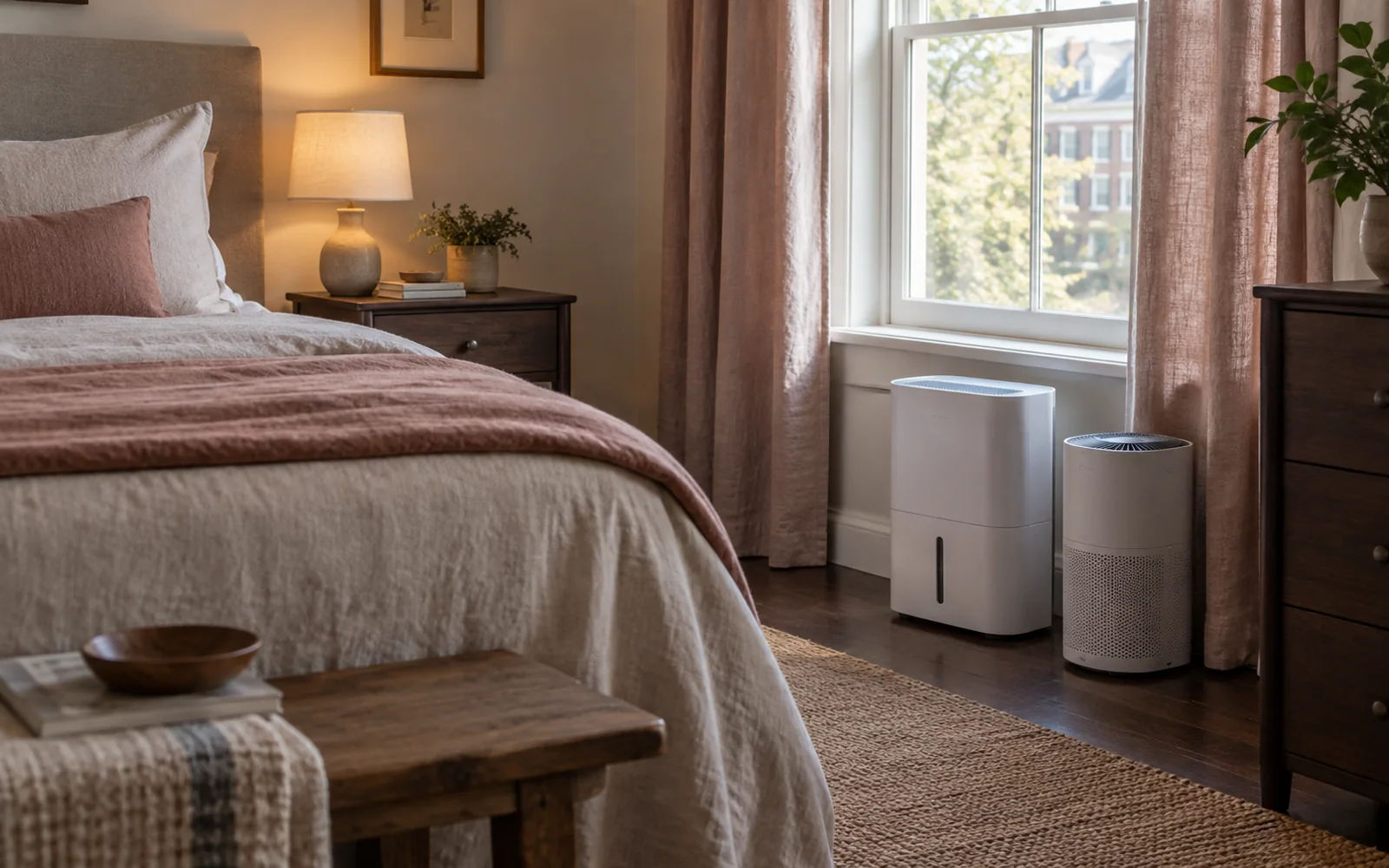
The fast answer
Buy for the measured moisture problem
30–50%
EPA's recommended indoor relative-humidity range. If the bedroom already stays here, a dehumidifier may add noise and heat without fixing your sleep complaint.
Choose Shield 35P
when a compact lower-cost body fits the drain location and 115 CFM is enough. You keep the pair's full listed 35-pint AHAM capacity.
Choose Pro 35C
when the unit will live in a bedroom or living area and you want 180 CFM, wheels, and a vertical shape that is easier to reposition.
Measure before you shop
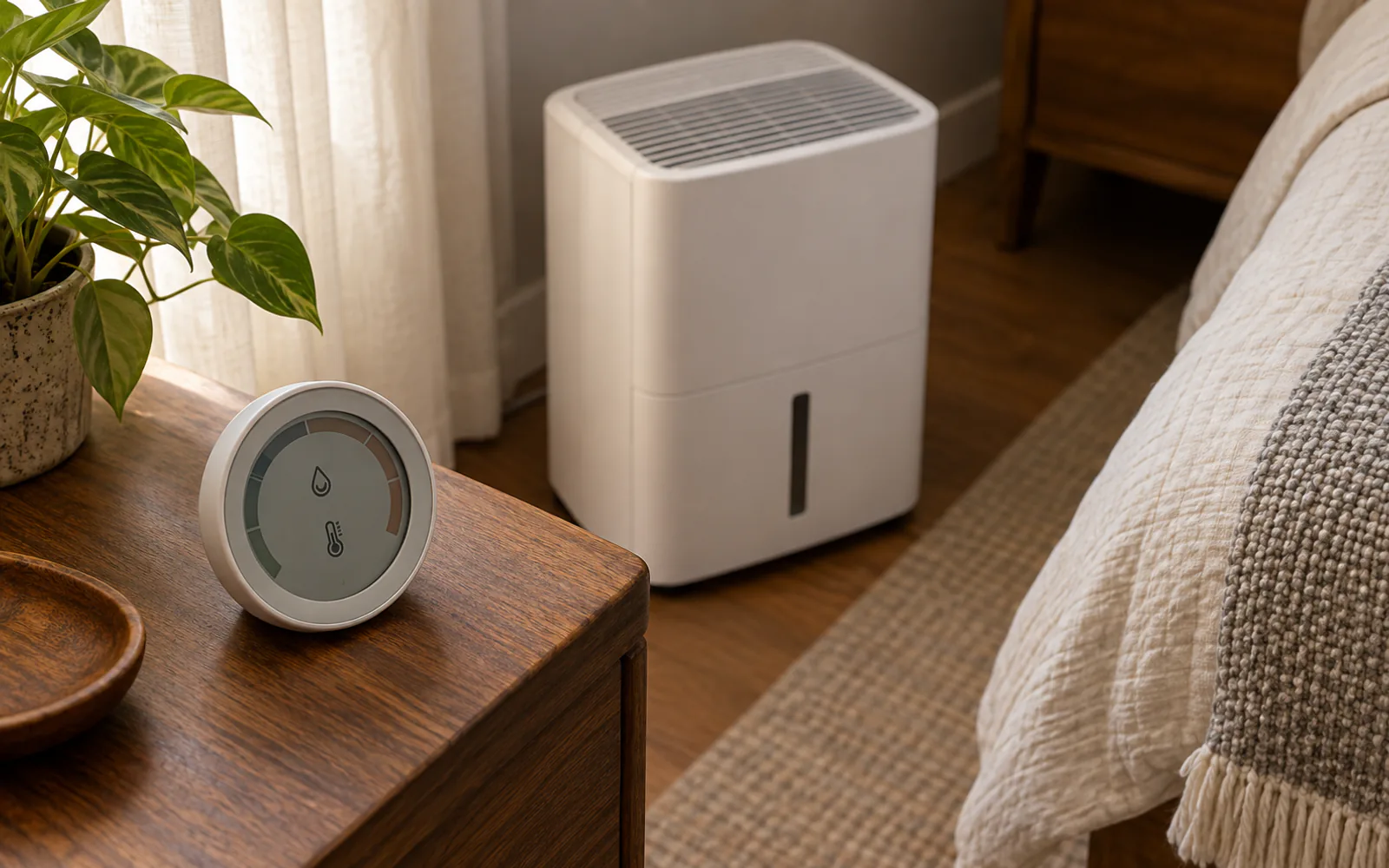
Put a basic hygrometer near bed height, away from a supply vent, open window, bathroom door, and the direct airflow of a humidifier. Check it at bedtime and again when you wake for several days. The EPA recommends indoor relative humidity between 30% and 50% and, when possible, below 60%.
Below 30%
The air is dry. A dehumidifier moves in the wrong direction. Compare a properly sized humidifier and avoid overcorrecting past 50%.
Compare bedroom humidifiers →30% to 50%
Humidity is already in the EPA's general target range. If you sleep hot, check room temperature, bedding, protector, and mattress contour before buying another appliance.
Diagnose a hot sleep surface →Repeatedly above 50%
First use ventilation or air conditioning when practical. Persistent moisture, damp surfaces, or a musty room can justify a dehumidifier after leaks and drainage problems are addressed.
Literal differences
Argendon Shield 35P vs Sandidry Pro 35C
The larger number in a model name does not settle this choice. Both are 35-pint AHAM units with the same 70-pint saturation claim and the same listed 1,000-square-foot ceiling. The real difference is how each machine moves air, occupies the room, and reaches a drain.
| Difference | Shield 35P | Sandidry Pro 35C | Why it matters |
|---|---|---|---|
| Verified price | $372.89 | $399.99 | Shield saves $27.10 without giving up listed capacity. |
| Moisture removal | 35 pints AHAM / 70 saturation | 35 pints AHAM / 70 saturation | Neither has a capacity advantage on the published test numbers. |
| Airflow | 115 CFM | 180 CFM | Pro 35C moves 65 CFM more air, useful when the room layout needs stronger circulation through the unit. |
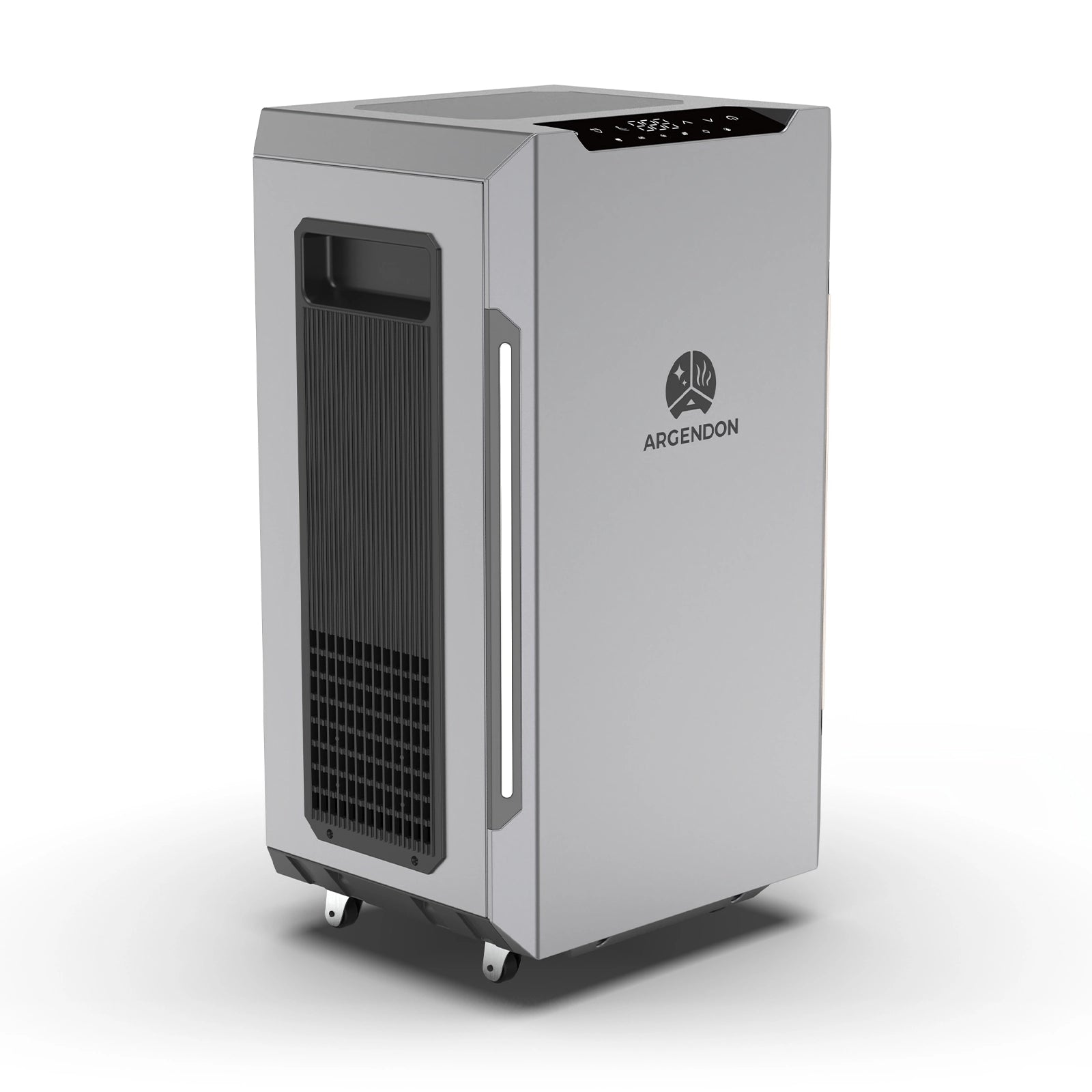
| Body | 15.2 × 11.2 × 11.4 in; 38.18 lb; adjustable feet | 12.9 × 14.14 × 24.55 in; 40.5 lb; 360° wheels | Shield is short and compact. Pro is tall, narrow, and much easier to roll between rooms. |
| Published sound | 50 dBA | No exact dBA on the current product page | Do not assume Pro is silent. Argendon positions the vertical Pro design as its lower-noise bedroom choice, but only Shield publishes a number. |
| Drainage | 6.5-ft gravity hose + pump to 19.6 ft | 6.5-ft gravity hose + pump to 19.6 ft | Both can run without daily bucket emptying when installed to a suitable drain. |
Who benefits from each design?
Both machines can solve the same moisture load. Choose by placement and airflow. The lower price is a strong reason to buy Shield 35P when its body fits the job; Pro 35C earns the added cost when you will use its faster air movement and mobility.
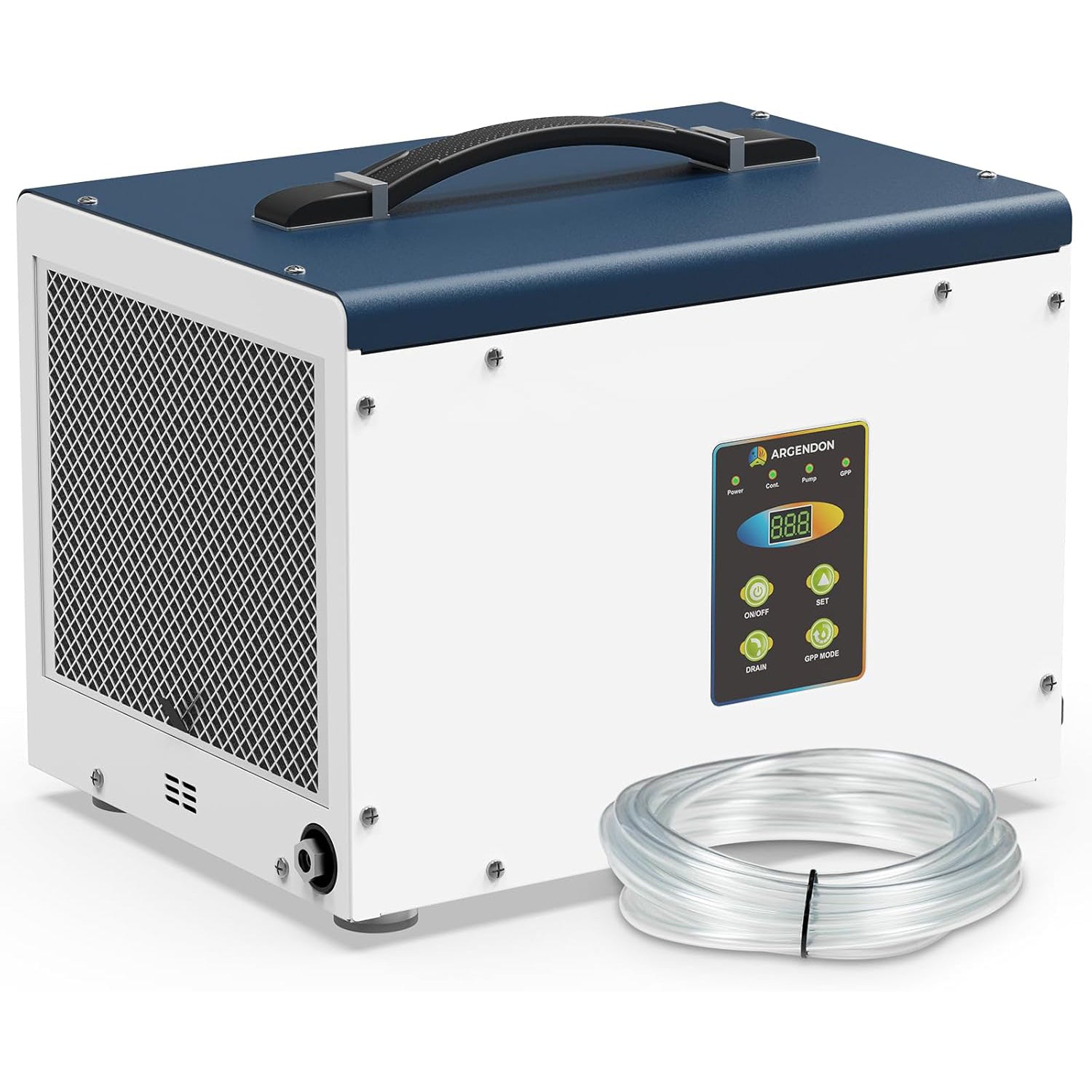
Compact value pick
Choose Shield 35P if:
- ✓ The unit will sit under shelving, in a closet opening, basement, or connected utility area where a short body is easier to place.
- ✓ The room has persistent high humidity but does not need Pro 35C's extra 65 CFM of airflow.
- ✓ You want the full published 35-pint AHAM capacity at the lower price.
- ✓ You can place the 50 dBA unit far enough from the bed that compressor sound will not disturb you.
Why this is the better buy: you are paying for the moisture removal you need and skipping the taller wheeled chassis and higher airflow you would not use.
Best fit for bedrooms
Choose Sandidry Pro 35C if:
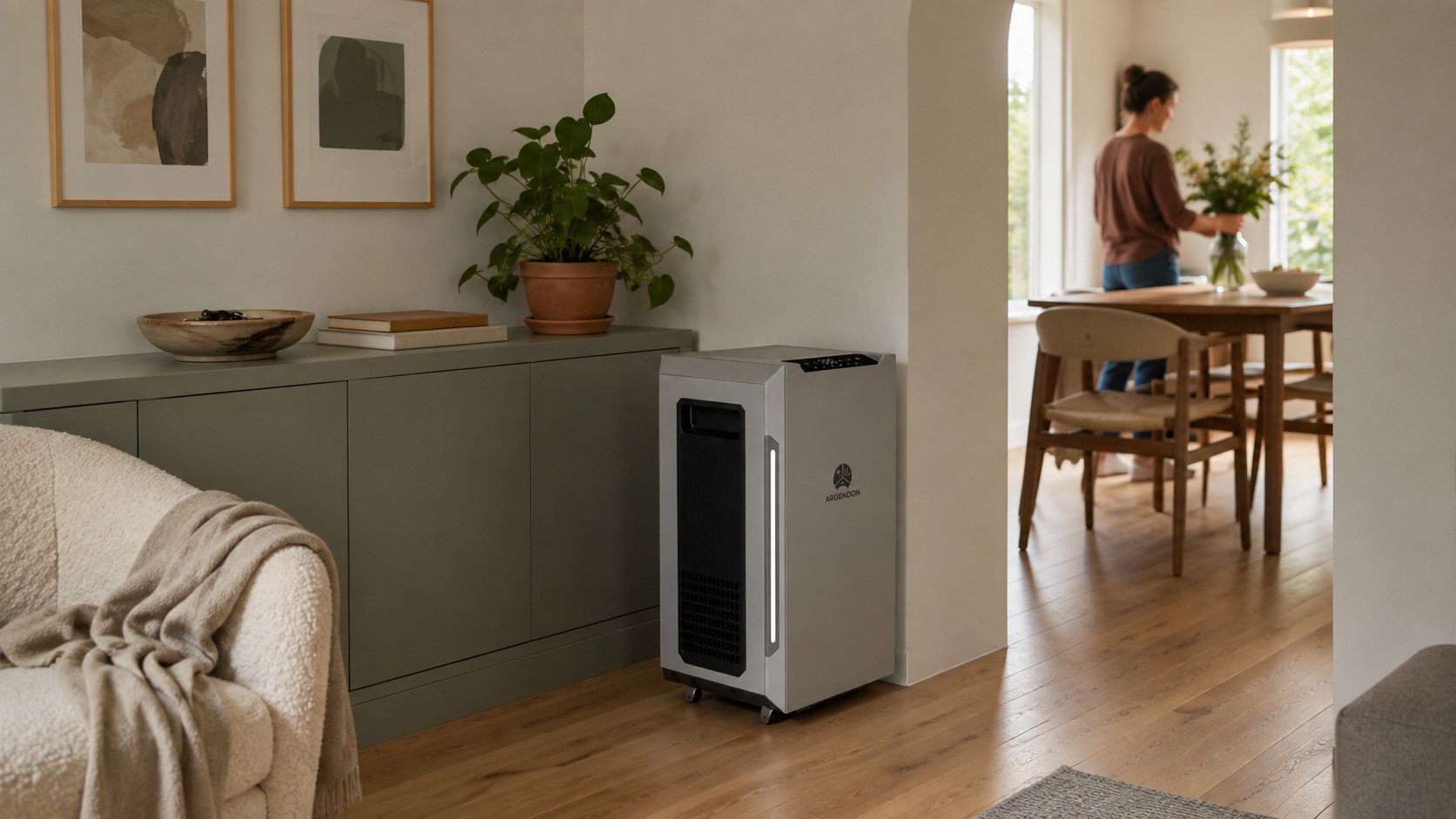
- ✓ The machine will live in the bedroom or a furnished living area and the vertical body works better than an industrial-looking horizontal unit.
- ✓ You want 180 CFM to pull more room air through the machine while moisture capacity remains the same.
- ✓ You expect to roll the unit between a bedroom, living area, and utility space.
- ✓ The extra $27.10 is reasonable for easier movement and the pair's higher-airflow design.
Why the upgrade earns its price: the added money buys 57% more published airflow and wheels, two benefits you can feel in daily placement and circulation. It does not buy more published moisture capacity.
Why airflow matters when capacity matches
Moisture-removal capacity tells you how much water the unit can extract under a defined condition. Airflow tells you how quickly room air passes through the machine. A higher CFM rating can help when furniture, doorways, or a larger connected area slow circulation, but it does not automatically remove more water than the compressor and test rating allow.
This is why Pro 35C can be the better bedroom machine without being the more powerful dehumidifier on every measure. Its 180 CFM rating and wheeled vertical design make air movement and repositioning easier. Shield 35P remains the smarter purchase when a fixed compact placement already exposes the unit to the damp air.
Plan the drain before choosing the location
Gravity drain
The included 6.5-foot hose must run continuously downhill to a suitable drain. This is simple and avoids pump cycling, but it limits where the machine can sit.
Built-in pump
Argendon lists a 19.6-foot pump lift for both models. That can reach a higher sink or window route, but you still need secure tubing, a safe outlet, and a path that cannot leak onto flooring.
These are continuous-drain machines, not small bedside units with a bucket you carry to the sink every morning. Their capacity is useful for a real moisture load, while their compressor and airflow deserve the same placement thought you would give a window air conditioner or room fan.
Buy with confidence: know the return and warranty limits
Argendon accepts eligible direct returns within 30 days. A defective or merchant-responsible return can receive a refund or replacement with shipping covered. A buyer-remorse return must be unopened and unused; the buyer pays return shipping, a 20% restocking fee may apply, and damage can reduce the refund.
The five-year limited warranty is tiered. Argendon lists parts, labor, and shipment for the first six months; parts and labor through year one with inbound shipping excluded; refrigeration-system parts and labor through year three with transportation excluded; and refrigeration-system parts only through year five with transportation excluded. Keep the original packaging and proof of purchase.
Read the current Argendon return policy and tiered warranty terms before ordering.
If the room is hot but not humid
A dehumidifier does not replace air conditioning. It can make high humidity feel less sticky because sweat evaporates more readily, but the compressor also releases heat into the room. If the hygrometer already reads 30% to 50%, spend first on the actual source of heat: room cooling, air movement, breathable sheets, a lighter comforter, or a mattress with less contour and more airflow.
Sources and verification
Capacity, dimensions, airflow, drainage, price, availability, and product identity were checked against Argendon's current product pages on September 12, 2026. Bedroom positioning comes from Argendon's current model guide. Humidity guidance comes from the U.S. Environmental Protection Agency.
Frequently asked questions
What humidity level is best for a bedroom?
The U.S. EPA recommends keeping indoor relative humidity between 30% and 50%. It also advises keeping humidity below 60% when possible. Measure the bedroom with a hygrometer before adding either a humidifier or dehumidifier.
Can a dehumidifier help when I sleep hot?
It can make a genuinely humid room feel less clammy by helping sweat evaporate, but a compressor dehumidifier does not lower the room's temperature and can release some heat while running. If humidity is already in range, room temperature, bedding, or mattress construction is the more useful place to look.
What is the difference between 35-pint AHAM and 70-pint saturation capacity?
Both Argendon models are rated to remove 35 pints per day under the standardized AHAM test condition and up to 70 pints in warmer, more humid saturation conditions. Compare the 35-pint AHAM number across models because the testing context matters as much as the larger marketing number.
Which is better for a bedroom, Shield 35P or Sandidry Pro 35C?
Sandidry Pro 35C is the stronger bedroom fit when its 180 CFM airflow, wheels, and vertical body help circulation and placement. Shield 35P is the better value when you want the same listed moisture-removal capacity in a shorter body and 115 CFM is enough for the space.
Do these dehumidifiers need to be emptied by hand?
Both models are designed for continuous drainage. Each includes a 6.5-foot gravity hose and a built-in condensate pump that Argendon says can move water up to 19.6 feet. Plan the drain path before placing either unit.
Does Argendon's five-year warranty cover everything for five years?
No. Argendon lists full parts, labor, and shipment coverage for six months; parts and labor with narrower shipping coverage through year one; refrigeration-system parts and labor through year three with transportation excluded; and refrigeration-system parts only through year five with transportation excluded.