
Start with the exact mattress and support system
Ask the maker for the selected mattress's per-person and total load limits. Those numbers are not interchangeable. Add both sleepers, then check the separate rating of the frame, foundation or adjustable base; it carries the mattress and bedding too. Review the required center support, slat spacing and warranty conditions before ordering.
- Confirm the limit for the exact model and size, not a brand-wide average.
- Check the combined load on the base, including sleepers, mattress, foundation and bedding.
- Ask how the edge feels if you sit there or sleep near it; a reinforced edge is a feature to test, not a lifespan guarantee.
- Compare your usual sleeping position, pressure comfort, ease of turning and temperature preference before choosing firmness.
Choose firmness for your position, not a weight rule
A body can press more deeply into a comfort layer without making every firm mattress the right choice. A side sleeper may need enough cushioning at the shoulder and hip; a back or stomach sleeper may prefer a flatter feel. Compare the exact model's published feel with your own pressure comfort and ease of movement. Use the seller's trial and return terms to test the choice at home.
The firmness scale explains why one number cannot prescribe the right feel for every body or sleeping position.
Read the Mattress Firmness Scale →Look beyond one foam or coil number
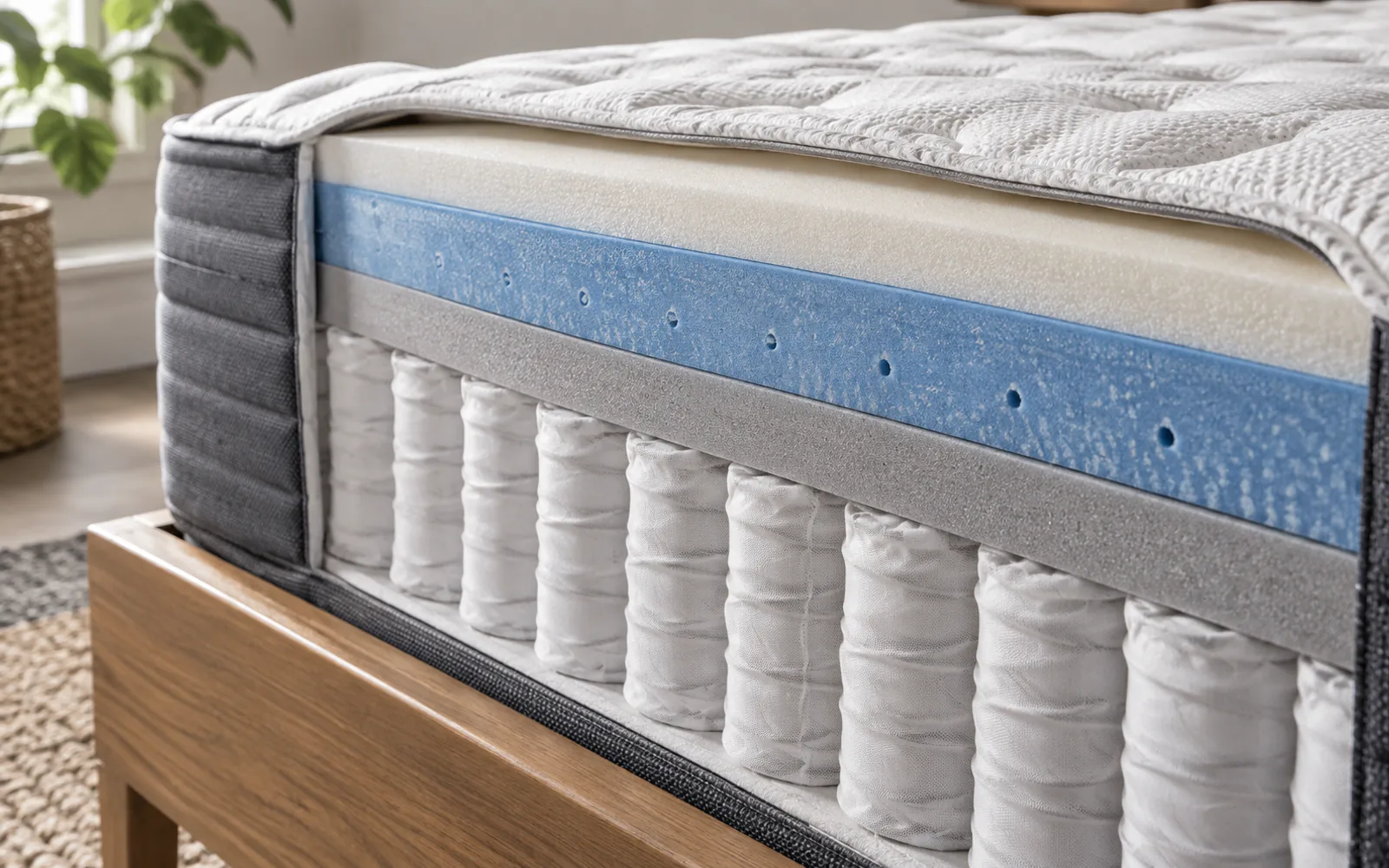
Ask for the actual support-core construction, comfort-layer details and edge design. Foam density is one material specification; without the rest of the build and a relevant durability test, it cannot predict a specific number of years before a body impression appears. For a hybrid, compare coil type, zoning, perimeter design and the layers above the springs at the same mattress size. Lower wire-gauge numbers mean thicker wire, but a gauge or coil count alone cannot certify support or durability.
Use the construction checklist before treating coil count or gauge as proof of support.
Read the coil count and gauge guide →One approved exact-product starting point
Avocado Green Extra Firm: published 550-pound per-person limit
Avocado publishes a 550-pound limit per sleeper and 1,100 pounds total for its Extra Firm Organic Mattress, compared with 350 pounds per sleeper for most of its adult models. The Extra Firm has two stacked coil units and a distinctly firm feel. That makes it a relevant option when the published capacity and firmer surface both fit your needs, not a universal best mattress. Avocado requires a suitable support system, including a rigid center beam and floor-reaching support leg for Queen and larger sizes.
Other makers publish different limits for their plus-size models: Helix lists up to 1,000 pounds for Helix Plus, and Brooklyn Bedding lists up to 1,000 pounds for Titan Plus Core. Those are manufacturer ratings for different products, not a reason to assume the same feel, trial, or base requirements. Compare their exact current terms if a medium-firm or different construction would suit you better.
Finish with a fit and return check
- 1Confirm the exact model, size, sleeper limits and combined load with the maker.
- 2Verify your frame, foundation or adjustable base supports the total setup and meets the mattress warranty requirements.
- 3Compare pressure comfort, movement, edge feel and temperature in your own sleeping positions; do not buy a firmness number alone.
- 4Read the selected seller's trial, return fees and exclusions before paying, especially for a heavy mattress that may be difficult to move.
💡 Prices and seller terms change. Check the linked product and selected option before ordering.
Not sure where to start?
Take our quick sleep quiz and we'll match you with mattresses that fit your sleep style and budget — no jargon, no upsell.
Find your perfect sleep →