The Three Pillow Variables That Actually Matter
Most people pick a pillow based on how it feels in the store for 30 seconds. Instead, focus on three measurable variables: loft (height), fill type, and firmness level. Everything else is secondary.
Step 1 — Match Loft to Your Sleep Position
Loft is the height of the pillow when it's in its natural state. Too high and your neck bends upward; too low and it droops. The goal is neutral alignment — your spine should form a straight line from your tailbone through the top of your head.
Loft Guide by Sleep Position
- Side sleepers → High loft (4–6 inches). Your shoulder width creates a gap the pillow needs to fill. Broader shoulders need more loft.
- Back sleepers → Medium loft (3–4 inches). Enough to support the natural curve of your cervical spine without pushing your chin toward your chest.
- Stomach sleepers → Low loft (1–3 inches) or no pillow. Stomach sleeping puts the neck in rotation; a high pillow compounds this significantly.
- Combination sleepers → Adjustable fill or medium loft on a responsive material. You need something that compresses when you're on your back but springs back for side sleeping.
Step 2 — Choose Your Fill Type
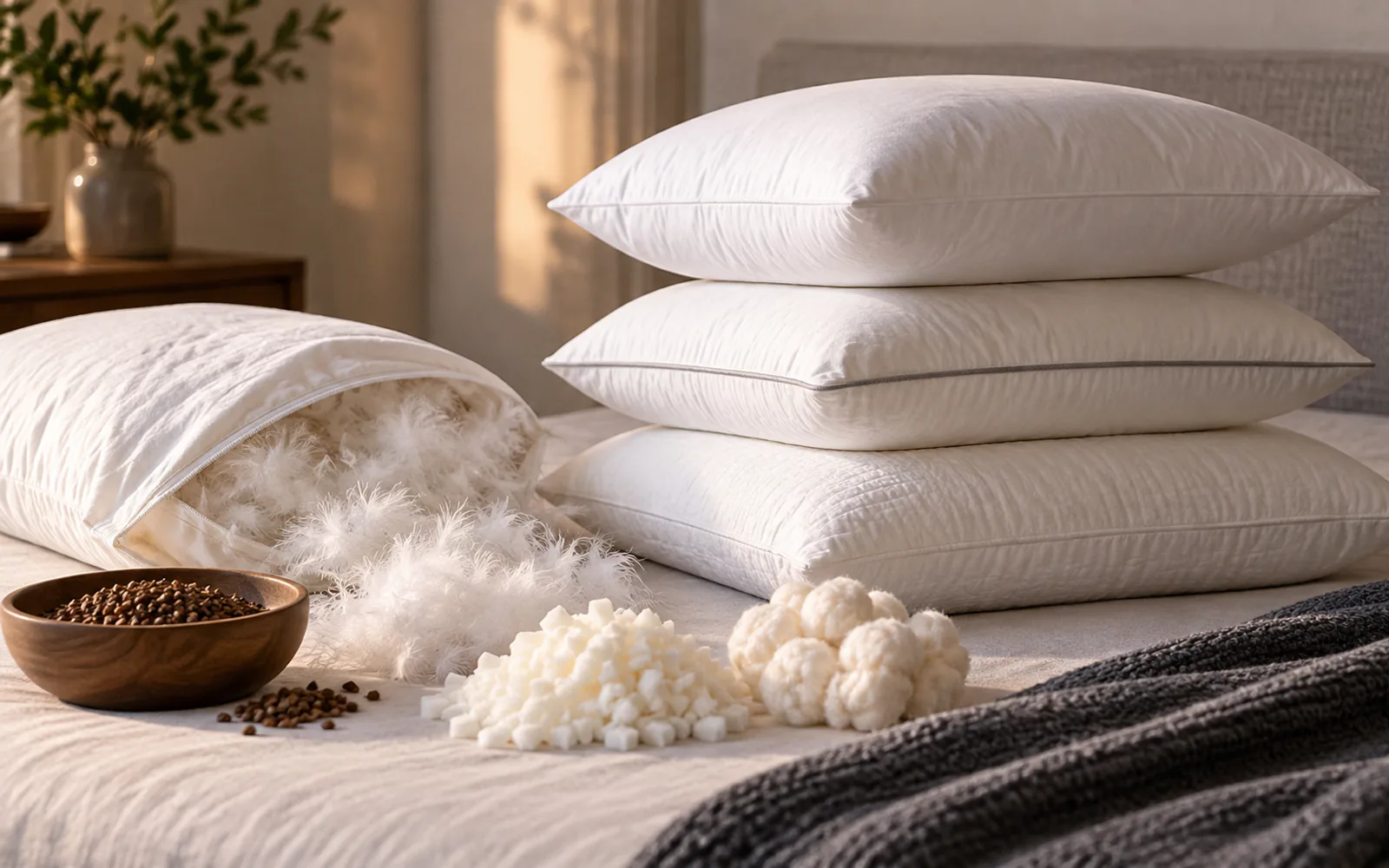
Memory Foam (Solid)
Most supportive for side sleepers; holds shape throughout the night; can sleep warm unless gel or copper-infused; does not flatten. Best for: side sleepers who want consistent support.
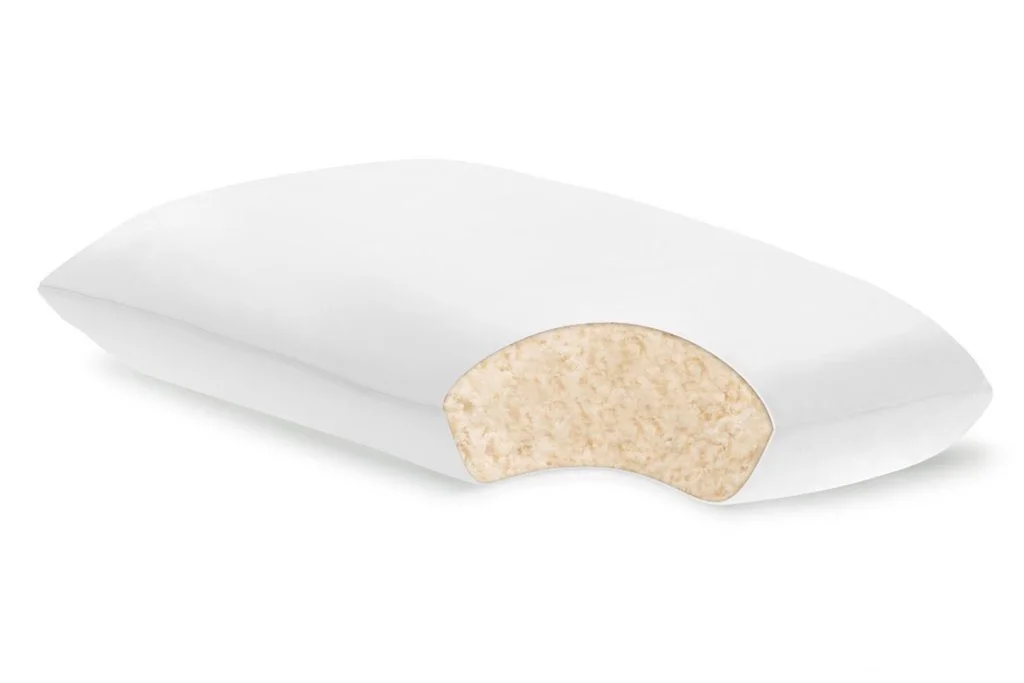
Shredded Memory Foam or Shredded Latex
Adjustable loft by adding/removing fill; more breathable than solid foam; good all-around option; Coop Home Goods and Saatva are known for this category.
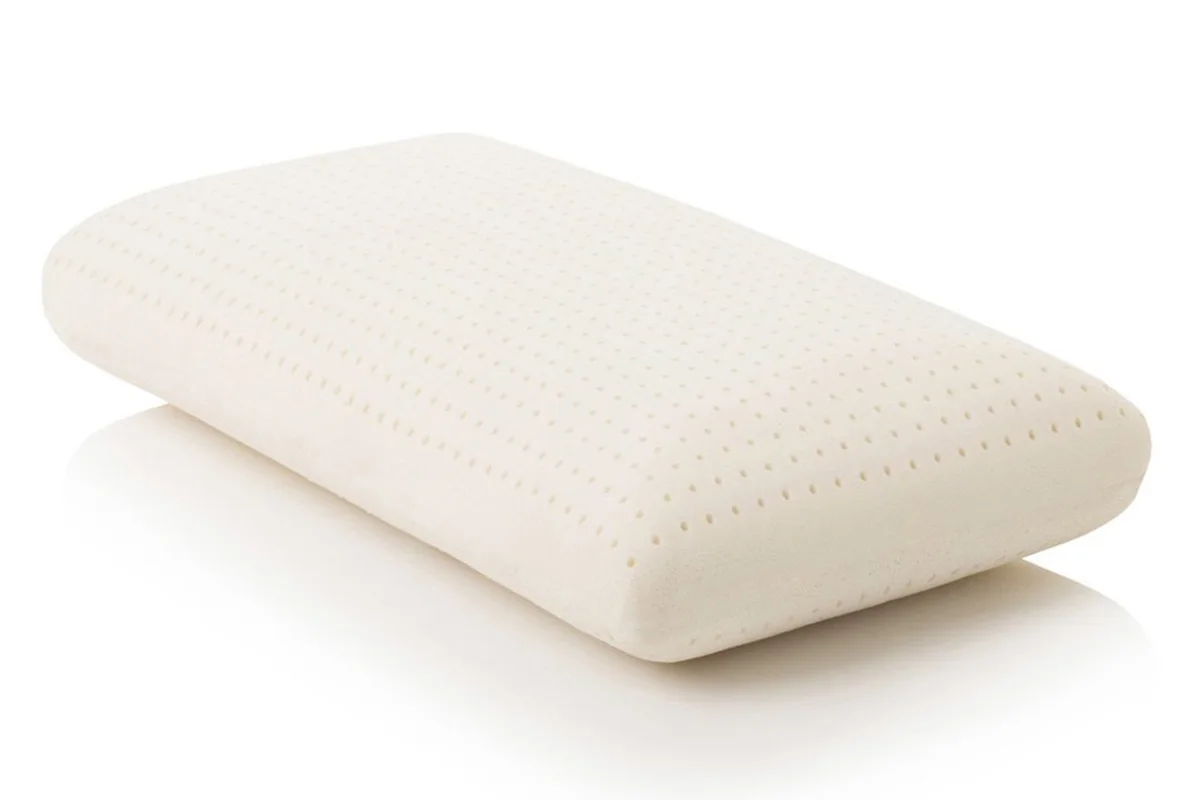
Latex (Solid)
Responsive and resilient; naturally cooling; holds shape without the "trapped" feeling of memory foam; naturally hypoallergenic. Best for: those who want responsive support without memory foam's slow-sink feel.
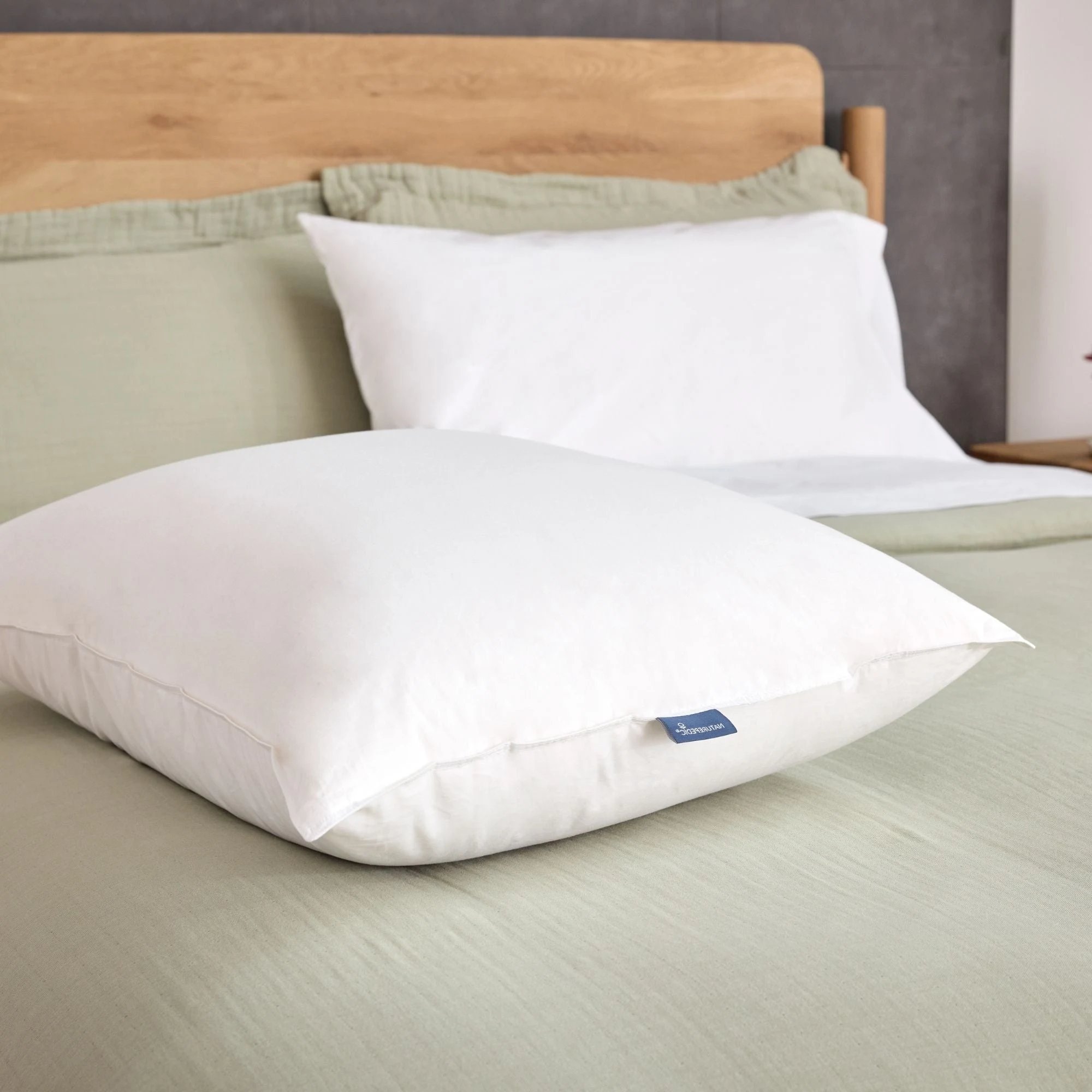
Naturepedic's adjustable model lets you change loft with shredded latex, while its solid five-inch model keeps a fixed, firmer height. Both include a 30-night direct-store trial.
Compare Naturepedic's Adjustable Latex Pillow →Choose the solid version when consistent lift matters more than fine-tuning the fill.
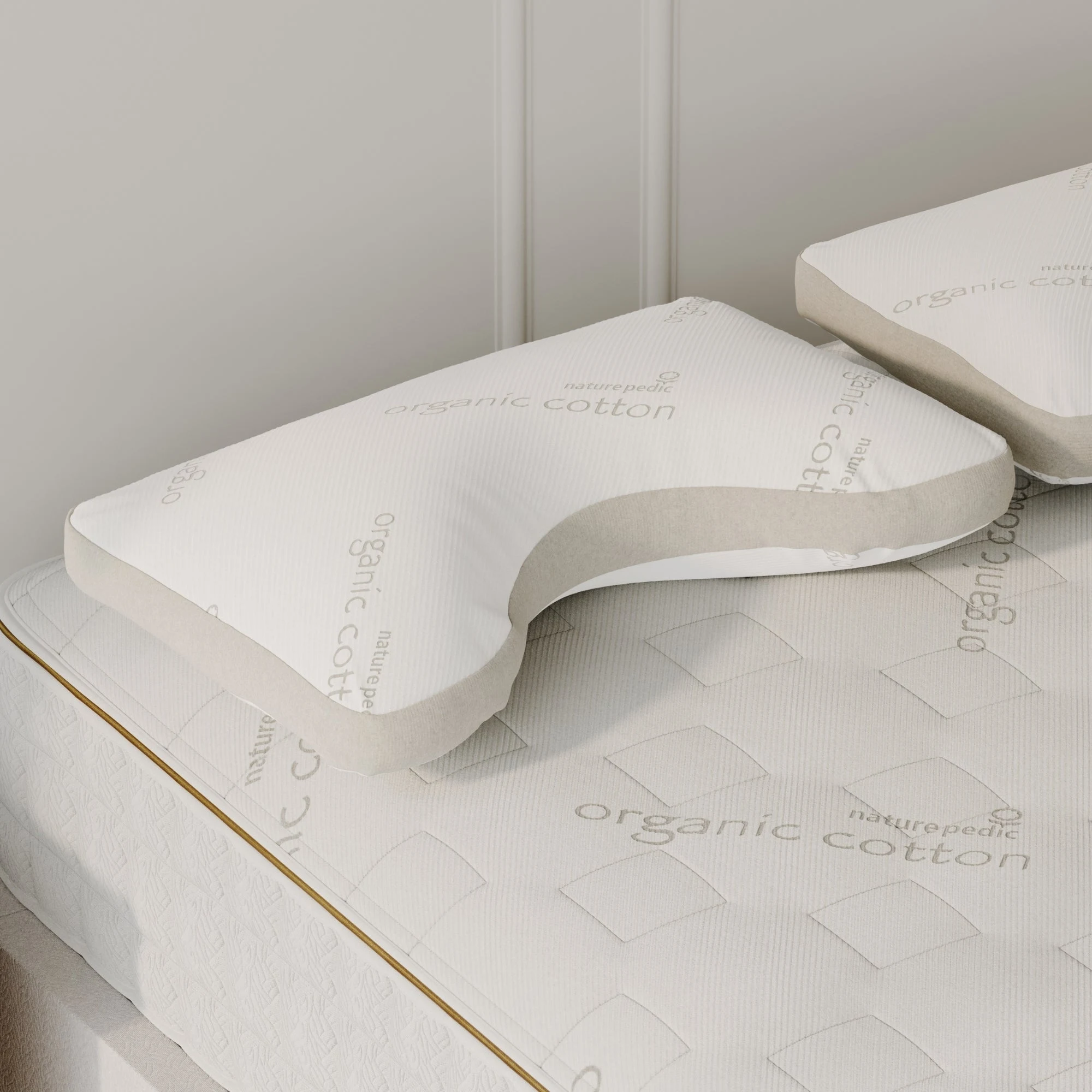
See the Naturepedic Solid Latex Pillow →Naturepedic's $159 Side Sleeper Pillow is $20 above its $139 Standard Adjustable Latex Pillow. The added money buys an 18 x 36-inch curved shape that creates shoulder room and adds width around the head; both use adjustable shredded latex. Choose the curved version when side sleeping is the priority, or the rectangular Adjustable model when you change positions often and want the lower price.
Compare the Naturepedic Side Sleeper Pillow →Down and Down-Alternative
Down is soft, compressible, and moldable; a disclosed fill-power figure helps compare how much loft the clusters create for their weight. Down-alternative uses synthetic or plant-based batting to produce a similar soft feel without animal-derived fill. Both tend to suit stomach and back sleepers who want low to medium loft better than side sleepers who need stable height.
Naturepedic's $219 Queen Down Pillow uses 750 fill-power RDS-certified duck down and feather with more than 75% down cluster. The $20 step above its Queen Wool Pillow buys a softer, lower, more moldable sink-in feel rather than stronger support. Choose the $199 Wool Pillow for medium-firm lift and moisture handling, or save $80 with the $139 Queen PLA when soft compression and an animal-free fill matter more than premium down.
Compare the Naturepedic Down Pillow →Naturepedic's PLA pillow separates the decision into five literal profiles: a 13 x 18-inch toddler pillow, an $89 Standard Low-Fill for adults who want less height, a fuller Standard, Queen, and King. Choose it for a soft, compressible feel; choose latex when rebound and stronger shape retention matter more.
Compare Naturepedic PLA Pillow Sizes →Buckwheat
Heavy and adjustable; filling can be added or removed; excellent cervical support; noisy if you move a lot; durable for decades. An acquired preference with a loyal following.
Wool
Wool's crimped fibers create spring-like lift and move moisture away from the sleep surface. Expect a steadier, medium-firm feel with less collapse than soft down or PLA, but usually without adjustable loft.
Naturepedic's $199 Queen Organic Wool Pillow costs $40 more than its $159 Queen Adjustable Latex Pillow and $60 more than its $139 Queen PLA Pillow. Choose wool when medium-firm shape retention and moisture handling are the benefits you want; choose Adjustable Latex for tunable height, or PLA for a softer, more compressible feel and lower price.
Compare the Naturepedic Organic Wool Pillow →Step 3 — Consider Your Mattress Firmness
This is the step most guides skip: your pillow needs to account for how much your shoulder sinks into the mattress. A side sleeper on a very soft mattress will sink in more, reducing the gap between their head and the mattress — meaning they need less pillow loft than a side sleeper on a firm surface. If you recently changed your mattress and your old pillow feels wrong, this is likely why.
How Often Should You Replace Your Pillow?
General Guidelines
- Down/down-alternative: every 1–2 years
- Polyester fill: every 6–18 months
- Memory foam: every 2–3 years
- Latex: every 3–4 years
- Buckwheat: every 10+ years (replace hulls periodically)
If your pillow can be folded in half and doesn't spring back, it's past its useful life regardless of how old it is.
Protect the Pillow You Choose
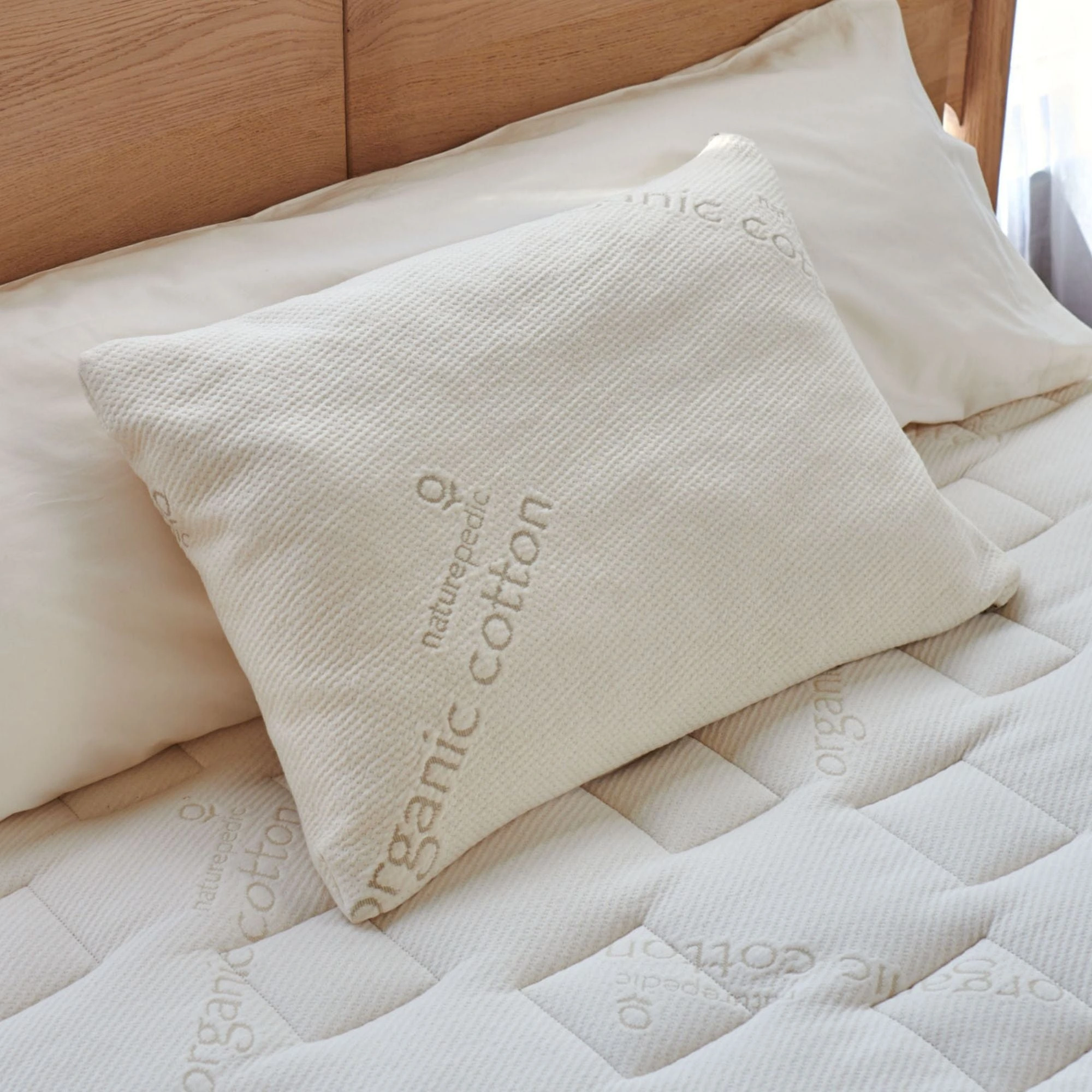
A protector will not fix the wrong loft or firmness, but it can keep sweat, skin oils, spills, and everyday buildup out of a pillow core that is difficult to wash. Match the protector to the pillow's actual dimensions: Standard and Queen protectors may cost the same while fitting different lengths.
Naturepedic's waterproof protector starts at $39 for Toddler and costs $49 in either Standard or Queen. Stretch-knit organic cotton surrounds a thin TPU barrier, giving buyers a washable moisture layer with less stiffness and noise than a basic vinyl cover. Choose it to preserve a pillow you already like; skip it if maximum airflow matters more than waterproofing.
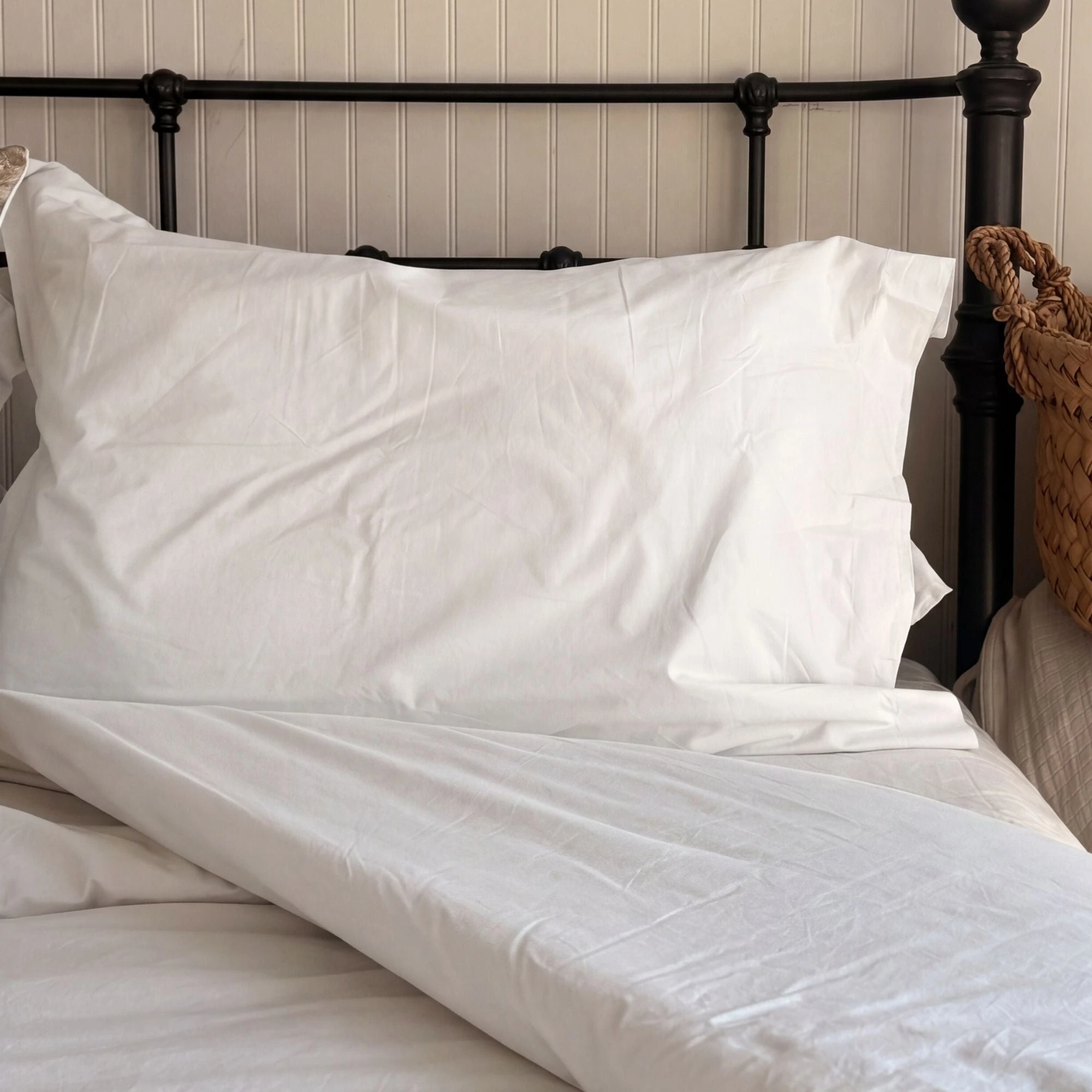
See Naturepedic's Waterproof Pillow Protector →Naturepedic's 300-thread-count organic-cotton percale pillowcases cost $27.30 for a Standard/Queen pair and $34.30 for King. Choose them when you want a crisp, breathable surface against your face without adding a waterproof layer; choose the protector when blocking sweat or spills from the pillow core matters more. These discounted pairs are final sale, so confirm the size and available color before ordering.
See Naturepedic's Organic Percale Pillowcases →Certifications to Look For
- OEKO-TEX Standard 100 — no harmful chemicals
- GOTS (Global Organic Textile Standard) — for wool/cotton shells
- CertiPUR-US — foam fills
- RDS (Responsible Down Standard) — ensures ethical sourcing for down products
Ready to Compare Specific Pillows?
See our pillow rankings — we've ranked the top options by sleep position, fill type, and budget. Visit our pillow comparison page to find the right match.
Not sure where to start?
Take our quick sleep quiz and we'll match you with mattresses that fit your sleep style and budget — no jargon, no upsell.
Find your perfect sleep →