
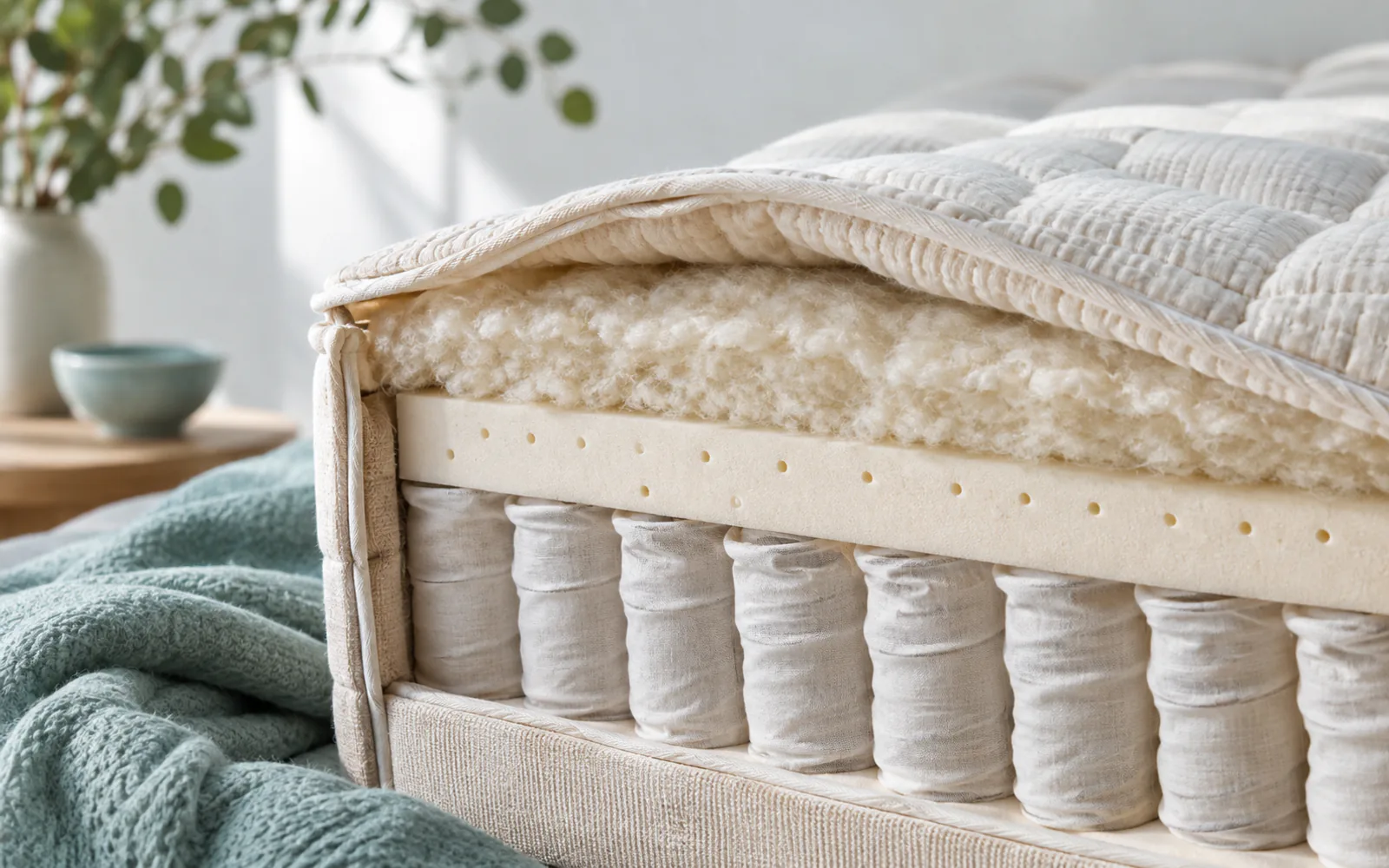
What 'Organic' Actually Means
For a mattress to be legitimately organic, its components need third-party certification: GOLS for latex, GOTS for textile components, and ideally GREENGUARD Gold for air quality. Brands that say 'organic' without these certifications are using unverified marketing language — which is legal but misleading. The first filter for evaluating organic claims is looking for actual certification logos with verifiable issuer information.
The Genuine Benefits
Certified organic latex (GOLS) is processed with fewer synthetic chemicals, which matters for people with chemical sensitivities or who prefer natural materials. Certified organic cotton (GOTS) uses no pesticide-treated fiber and avoids chlorine bleaching and formaldehyde-based wrinkle treatments. For households with young children, pregnant people, or individuals with chemical sensitivities, these distinctions are meaningful.
The Performance Question
Does an organic mattress sleep better? Not inherently. Certified organic latex tends to be high-quality Talalay or Dunlop latex — which is naturally responsive and durable. But the 'organic' designation is about material sourcing and processing, not performance. A GOLS-certified latex mattress from Avocado performs well not because it's organic, but because Talalay and Dunlop latex are high-quality materials regardless of their certification.
The Price Premium Analysis
Avocado Green Mattress queen is $1,399–$1,499. A comparable hybrid without organic certification (Helix Midnight) runs $1,099. The ~$300–$400 premium buys: GOLS latex, GOTS wool and cotton, GREENGUARD Gold certification, and the assurance that sourcing and processing meet audit standards. For buyers with chemical sensitivities or strong environmental values, this premium has real value. For buyers without those specific concerns, the performance difference is negligible.