1. Why crib mattresses must be firm
AAP safe-sleep baseline
The American Academy of Pediatrics recommends placing babies on their backs for every sleep on a firm, flat, non-inclined sleep surface with no soft bedding. See https://www.aap.org/en/patient-care/safe-sleep/.
Firmness matters because an infant cannot reliably reposition away from a soft surface that conforms around the face. A crib mattress should resist indentation. The practical press test is simple: press your hand into the sleep surface and release. If the mattress molds around your hand or leaves a deep impression, it is too soft for infant sleep.
2. When firmness can soften
Some crib mattresses are dual-sided: a very firm infant side and a slightly softer toddler side. Naturepedic, Colgate, and Moonlight Slumber all sell versions of this concept. The toddler side is typically used around 12 months or later, but the manufacturer's stated age and weight guidance controls.
3. Crib mattress sizes
A standard U.S. full-size crib mattress is about 27.25 inches by 51.625 inches and no more than 6 inches thick. A mini-crib mattress is typically 24 inches by 38 inches. Size matters because gaps between the mattress and crib rails are a suffocation risk; the common fit check is that no more than two adult fingers should fit between mattress and crib side.
4. Materials
Common crib-mattress constructions
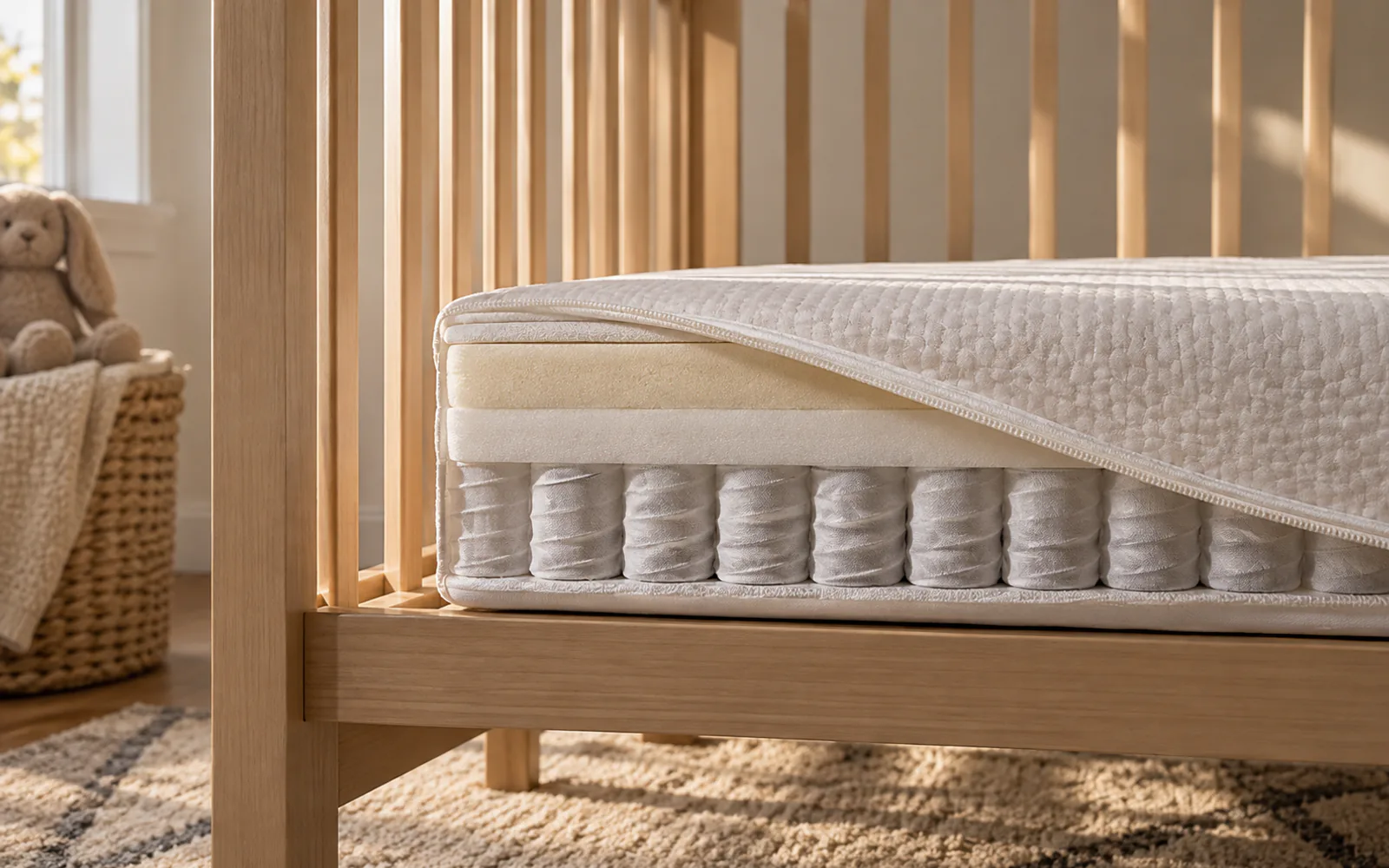
- Innerspring: traditional, firm, durable, and heavier.
- Foam: lighter and often less expensive, with quality depending on density and certification.
- Organic latex or organic textile builds: preferred by low-VOC shoppers, usually at higher prices.
- Hybrid: less common in crib mattresses than adult mattresses.
- Breathable mesh or polymer cores: Newton Baby's Wovenaire design is the best-known example.
5. Certifications to look for
- GREENGUARD Gold: low chemical emissions from the finished product.
- CertiPUR-US: polyurethane foam content and emissions limits.
- OEKO-TEX Standard 100: textile testing for restricted substances.
- MADE SAFE: broader full-product material screening.
- GOTS organic: organic textile content and processing controls.
- JPMA certification: juvenile-product safety certification against relevant standards.
6. Waterproof covers and breathable surfaces
Waterproof covers are common because crib mattresses face leaks, spit-up, and frequent sheet changes. Wipeable surfaces are convenient, while removable washable covers can feel less plasticky. Newton Baby's pitch is different: its Wovenaire core is designed for airflow through the mattress itself, including if a baby rolls face-down. That does not change the AAP baseline: back to sleep, firm surface, fitted sheet only.
7. Crib selection is separate but tied
- Standard fixed-side cribs are the default safe modern choice.
- Avoid drop-side cribs. They have been banned in the U.S. since 2011 because failed latch mechanisms created lethal entrapment risks.
- Convertible cribs can move from crib to toddler bed, daybed, and sometimes full bed with separate rails.
- Mini cribs can work well in small spaces but require true mini-crib mattresses, not standard crib mattresses.
8. Crib and mattress compatibility
Confirm the crib and mattress are the same format before buying. Mini cribs are the most common mismatch point. Standard crib mattresses should fit standard full-size cribs snugly, while portable and mini designs may require brand-specific dimensions.
9. Safety standards
New cribs sold in the U.S. since 2011 must meet stronger federal safety standards. ASTM F1169 covers full-size baby cribs, CPSC rules govern crib safety requirements, and JPMA certification gives an additional third-party signal. Used cribs from before 2011 may not meet current standards and should be avoided.
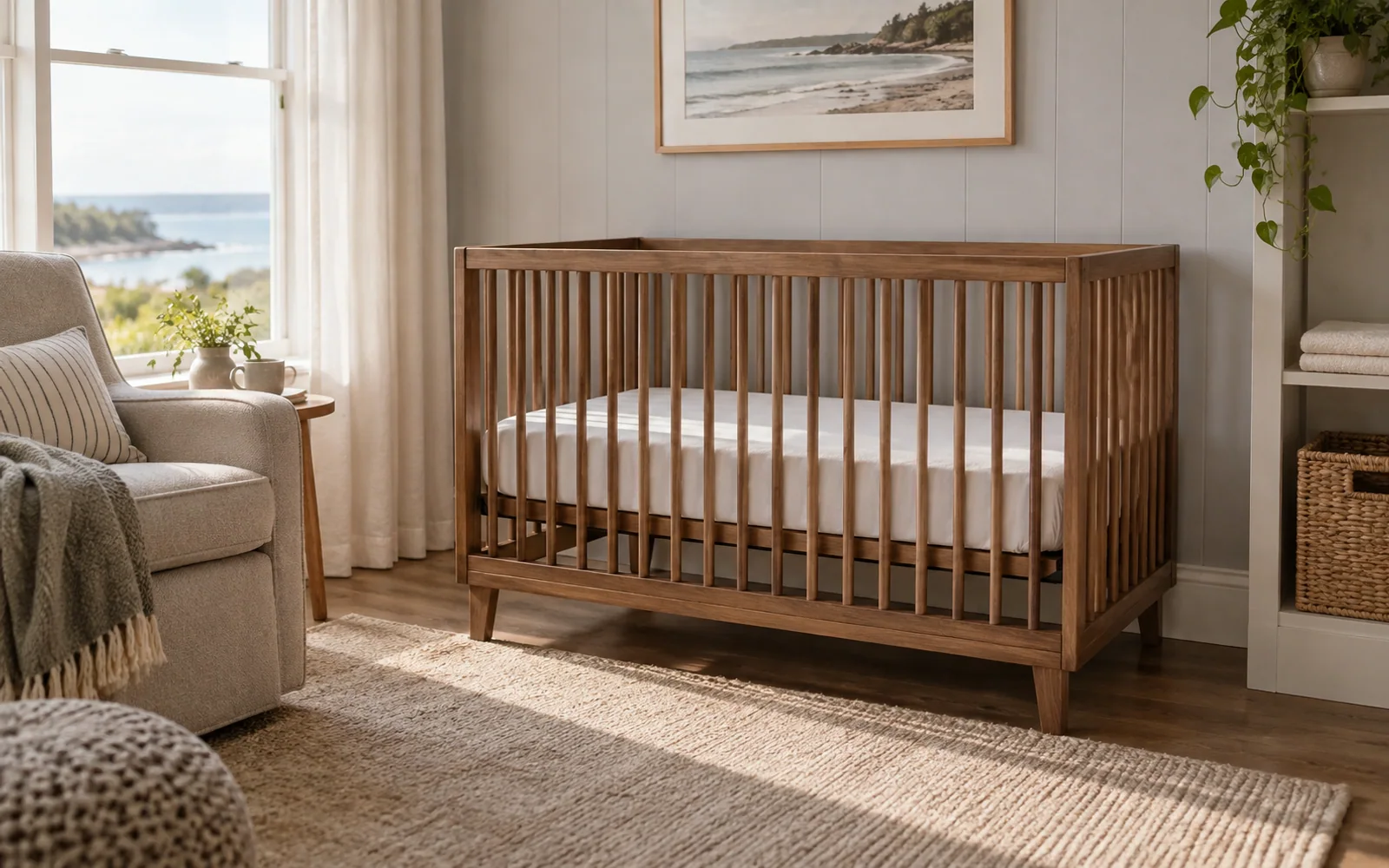
The mattress and crib should be evaluated as a system. A firm mattress still needs the right crib fit, a tight fitted sheet, and an empty sleep space. Loose blankets, pillows, positioners, bumpers, and plush items do not belong in an infant crib. The point is not to make the crib look sparse; the point is to keep the sleep surface predictable and reduce avoidable suffocation and entrapment hazards.
For used gear, be more conservative with cribs than with many other nursery purchases. Hardware can be missing, assembly instructions may be unavailable, recalls may be hard to trace, and older rail spacing or drop-side mechanisms may not meet current expectations. If you accept a secondhand crib, verify the model number, recall status, hardware kit, and assembly manual before using it.
For mattresses, secondhand risk is different: the product may look fine while the foam has softened, compressed, absorbed odor, or been exposed to moisture. If a used crib mattress has any sag, odor, staining, torn cover, unknown storage history, or uncertain fit, skip it. A new budget foam crib mattress is usually the safer value than a questionable hand-me-down.
Sheet choice should stay boring. Use a fitted crib sheet designed for the exact mattress size, and avoid extra pads unless the mattress maker explicitly allows them without changing the surface firmness. Waterproof protectors can be useful, but they should fit tightly and should not add pillow-like cushioning. If a protector bunches, slides, or creates a soft quilted layer, it undermines the reason you bought a firm mattress.
Budget planning should include the full sleep setup, not just the mattress sticker price. A standard crib may need a separate toddler rail later. A mini crib may need more specialized sheets and a specific mini mattress. A breathable or organic mattress may require replacement covers to make laundry realistic. Comparing the all-in cost prevents a cheaper first purchase from becoming more expensive over the first two years.
If relatives are helping with the nursery, send them exact model links rather than broad product names. Crib and mattress listings often have similar names across standard, mini, waterproof, and bundle variants. Exact links reduce the chance of receiving a mattress that is the wrong size or a crib that needs unavailable conversion hardware.
That exact-match discipline is boring, but it is how nursery purchases stay compatible, safe, recall-aware, correctly sized, and easy to verify later at home.
10. Our picks: crib mattresses
Newton Baby Original Crib Mattress
Newton Baby is commonly chosen by parents who prioritize a washable breathable core. It is a premium pick for standard cribs where airflow design and cleanability matter most.
Compare the current Newton Baby offer and available sizes.
Check current price →Newton Baby Waterproof Crib Mattress
This Newton model is preferred by shoppers who want the same washable airflow concept with waterproof protection. It costs more than basic foam but reduces the need to choose between breathability and cleanup.
Compare the current Newton Baby offer and seller terms.
Check current price →Graco Premium Foam Crib & Toddler Mattress
Graco is popular with budget-focused families who want a lightweight foam crib mattress with mainstream certifications. It is the practical value pick when price and simple handling matter.
Compare the current Graco offer and seller terms.
Check current price →Naturepedic Organic Classic 2-Stage Crib Mattress
Naturepedic's linked Classic model adds a separate medium-firm toddler side, organic-cotton surface, and wipe-clean waterproofing. It is the stronger two-stage choice when you want one mattress to bridge the crib-to-toddler transition. Amazon showed the exact offer available with a free 90-day refund or replacement when checked September 12, 2026; checkout terms control.
Compare the current exact Amazon offer and seller terms.
Check current Naturepedic price →11. Our picks: cribs
Babyletto Lolly 3-in-1 Convertible Crib
Babyletto Lolly is popular with modern nursery shoppers who want a clean profile and toddler conversion path. It is a style-forward standard crib rather than a compact-space pick.
Compare the current Babyletto offer, colors, and conversion options.
Check current price →DaVinci Kalani 4-in-1 Convertible Crib
DaVinci Kalani is commonly chosen by families who want classic styling and long conversion runway. DaVinci showed the exact crib in stock at $299 when checked September 13, 2026. The conversion kits are separate, so include the rail cost when comparing its long-term value.
Open the exact current DaVinci product page and confirm the available finish, conversion options, and seller terms.
Check the Kalani at DaVinci →Delta Children Canton 4-in-1 Convertible Crib
Delta Children Canton remains useful as a reference for traditional crib styling and a sturdy visual profile, but it is no longer a current recommendation. Amazon showed the reviewed variant unavailable and Delta Children's exact page says the crib is no longer available.
Compare current standard and mini crib options with available retailer offers.
See current crib picks →Dream On Me Aden Mini Crib
Dream On Me Aden is preferred by apartment nurseries and small rooms. Because it is a mini crib, mattress compatibility must be checked more carefully than with a standard crib.
Compare the current Dream On Me offer and available finishes.
Check current price →Delta Children Emery 4-in-1 Convertible Crib
Delta Children Emery is popular with shoppers who want a simpler curved-headboard look. The exact White crib was $216.91, shipped and sold by Amazon.com, when checked September 13, 2026. Confirm which toddler and full-size pieces are sold separately before comparing total cost.
Amazon showed a free 90-day refund or replacement window for the reviewed offer; confirm the current seller, price, delivery, and eligibility at checkout.
Check the Emery at Amazon →Babyletto Origami Mini Crib
Babyletto Origami is commonly chosen when wheels, folding storage, and a mini footprint matter. It is not a full-size crib, so it will be outgrown sooner than standard convertible designs.
Compare the current Babyletto offer and available finishes.
Check current price →12. Related resources
Compare the full crib-mattress ranked list.
Best Crib Mattresses of 2026 →Compare the full crib ranked list.
Best Cribs of 2026 →See the organic crib-mattress niche page.
Best Organic Crib Mattresses of 2026 →For the toddler-bed transition, read the kids mattress guide.
Mattresses for Kids →Choose between crib-size, Twin, and Full with comfort and room-fit tradeoffs.
How to Choose a Toddler Mattress →Build a safe, practical sleep setup around the empty crib.
Newborn Sleep Essentials for Parents →Browse crib mattress accessory pages.
Crib Mattresses →Browse crib accessory pages.
Cribs →Not sure where to start?
Take our quick sleep quiz and we'll match you with mattresses that fit your sleep style and budget — no jargon, no upsell.
Find your perfect sleep →