Why Memory Foam Sleeps Hot
Traditional memory foam (viscoelastic polyurethane) has a dense, closed-cell structure with very little airflow. The same property that lets it slowly contour around your body — heat-softening visco material — also reflects body heat back at you instead of dissipating it. Newer foam formulations help significantly, but a base memory foam from the mid-2000s era will sleep hot no matter what you do at the bedroom level.
The Sleep Foundation notes that body temperature naturally drops by about 1 to 2 degrees Fahrenheit during sleep, and a mattress that prevents this drop disrupts deep-sleep onset. A cooler sleep surface is genuinely valuable, not just a comfort preference.
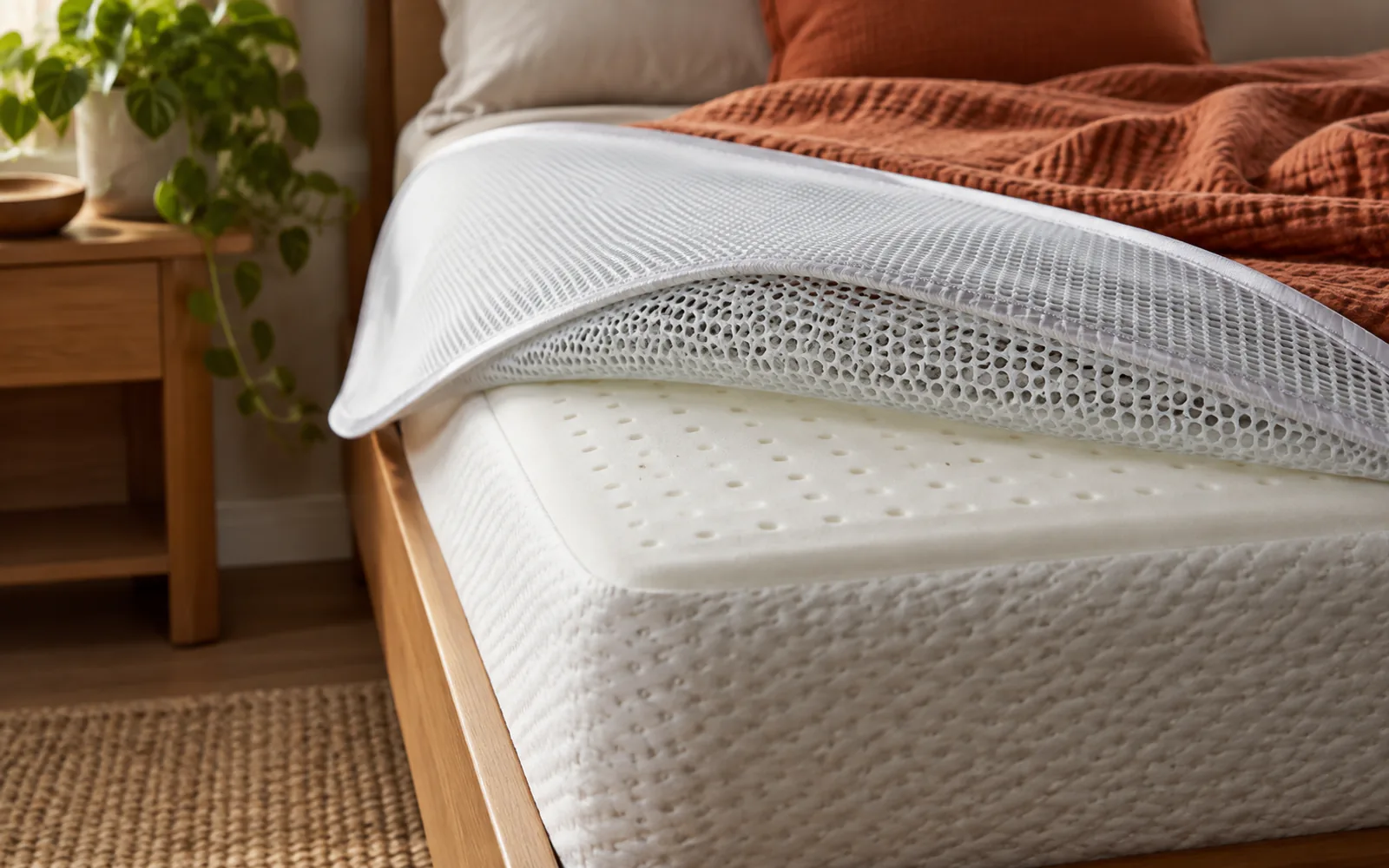
Fix 1: Switch to a Breathable Mattress Protector
If your current protector is thick vinyl or sealed PVC, it's adding an insulating layer between you and the foam. A thinner protector with a breathable surface can preserve spill protection with less insulation. Naturepedic's Waterproof Organic Mattress Protector uses stretchy organic-cotton jersey over a thin TPU barrier; it is the better fit when waterproofing matters, while an unpadded breathable protector is preferable when preserving the mattress feel is the main goal.
Naturepedic gives this protector 30-day free eligible returns, so you can check fit, noise, and surface feel on your own mattress.
See the Naturepedic Waterproof Protector →A moisture-wicking protector is the single most effective sleep-cooling upgrade most people make.
Browse Mattress Protectors →Fix 2: Cooling Sheets
Material matters more than thread count. Percale-weave cotton, Tencel lyocell, and bamboo-derived viscose all breathe and wick moisture significantly better than sateen cotton or microfiber. A 300-thread-count percale will sleep cooler than a 1,000-thread-count sateen — the weave is what determines airflow, not the count.
What to look for in cooling sheets
- Percale weave (lower thread count, crisper feel)
- Tencel/lyocell or bamboo viscose for moisture-wicking
- Avoid sateen weaves and microfiber — they trap heat
- 300–500 thread count range is the sweet spot for breathability
Naturepedic's 300-thread-count organic-cotton percale set has the crisp one-over-one-under weave described above, with 30-day free eligible returns if the texture is not right for you.
See Naturepedic Organic Percale Sheets →Fix 3: Add a Cooling Topper
A topper sits between you and the memory foam, which means a cooler topper material can offset the foam's heat retention. The materials that actually cool:
- Natural latex (Talalay or Dunlop) — open-cell structure breathes well and sleeps notably cooler than foam
- Gel-infused memory foam — the gel beads conduct heat away from the body more efficiently than standard foam
- Copper-infused foam — copper is conductive and pulls heat away on contact
- Phase-change-material toppers — actively absorb and release heat to maintain a target surface temperature
- Gel grid (Purple-style) — the open grid structure allows continuous airflow
Two inches is the practical minimum for noticeable effect; three inches is better. Cheap polyester or low-density foam toppers usually make heat worse, not better, because they add another insulating layer.
The Naturepedic Adagio adds two inches of perforated organic Dunlop latex. It is a strong fit when the mattress is still supportive but needs more responsive contour and a more open comfort layer; it will not repair structural sagging.
See the Naturepedic Adagio Latex Topper →A latex or gel topper is the most effective single fix for a hot memory foam mattress.
Browse Mattress Toppers →Fix 4: Lower the Bedroom Temperature
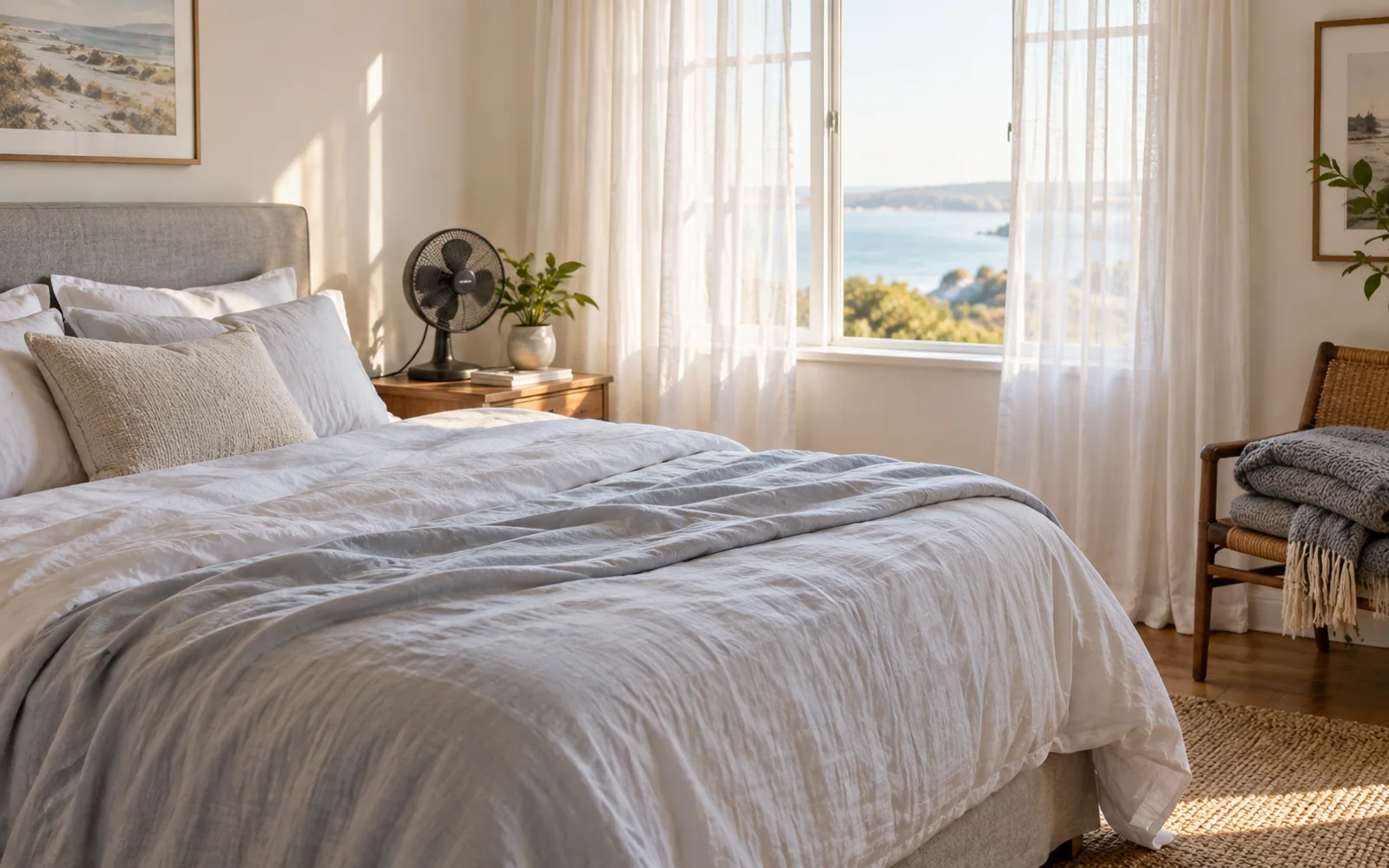
The Sleep Foundation cites 65 to 68 degrees Fahrenheit as the typical range for comfortable sleep for most adults. If your bedroom is warmer than that, cooling the room is more cost-effective than any mattress modification. A bedside fan accelerates moisture evaporation across the sleep surface and pulls warm air away from the body — combined with a cooler thermostat setting, it's one of the lowest-cost cooling upgrades available.
Memory foam specifically softens with heat and firms up when cool, so a cooler room also keeps the mattress feeling closer to its rated firmness.
Fix 5: Active Cooling Systems
If passive fixes aren't enough, active bed-climate systems change the sleep surface directly. Eight Sleep Pod 5 and Chilipad circulate temperature-controlled water through a cover over the mattress. The Pod 5 starts at a reviewed $2,799 sale price before its required first-year plan, so it makes the most sense when staying at a chosen temperature through the night is worth more than a simpler sheet, protector, or airflow upgrade.
Fix 6: Improve Airflow Underneath
A mattress sitting on the floor or on a solid platform has no airflow underneath, so heat and moisture accumulate on the underside. A slatted foundation with one-to-three-inch spacing allows air movement on both sides of the mattress, which lowers overall heat retention. Most mattress warranties also require some version of slatted or breathable foundation specifically for this reason.
If the support base is the bottleneck, the foundations guide covers what works.
Read: Mattress Foundations & Support →When the Mattress Itself Is the Limit
If you've tried a moisture-wicking protector, cooling sheets, a cooling topper, a cooler bedroom, and improved airflow underneath — and you're still waking up sweaty — the mattress itself is the bottleneck. Hybrids with coil airflow and natural latex mattresses both sleep meaningfully cooler than all-foam beds. Use your trial period (100 nights is standard from major brands; some offer 365) to confirm before committing.
Our cooling mattress rankings filter by verified cooling rating and material breakdown.
Browse Best Cooling Mattresses →Not sure where to start?
Take our quick sleep quiz and we'll match you with mattresses that fit your sleep style and budget — no jargon, no upsell.
Find your perfect sleep →