

1. What the Research Actually Shows
A 2003 randomized trial followed 313 adults with chronic non-specific low-back pain for 90 days. Medium-firm mattresses performed better than firm mattresses on several pain and disability outcomes. Participants did not have referred pain, and the trial did not compare today's retail brands or include a soft-mattress group.
That finding makes medium-firm worth considering, not a prescription for every cause of pain. The trial's firmness scale is not interchangeable with a retailer's 1–10 label. A catalog rating cannot establish that a particular model will help your symptoms.
Key Research Finding
- Evidence about a firmness category is not an endorsement of a listed product.
- Your preferred feel, ease of turning and comfort in usual sleeping positions still matter.
- Do not extend a study of non-specific low-back pain to sciatica or another diagnosed condition without appropriate evidence.
2. Support Core vs. Comfort Layer — The Crucial Distinction
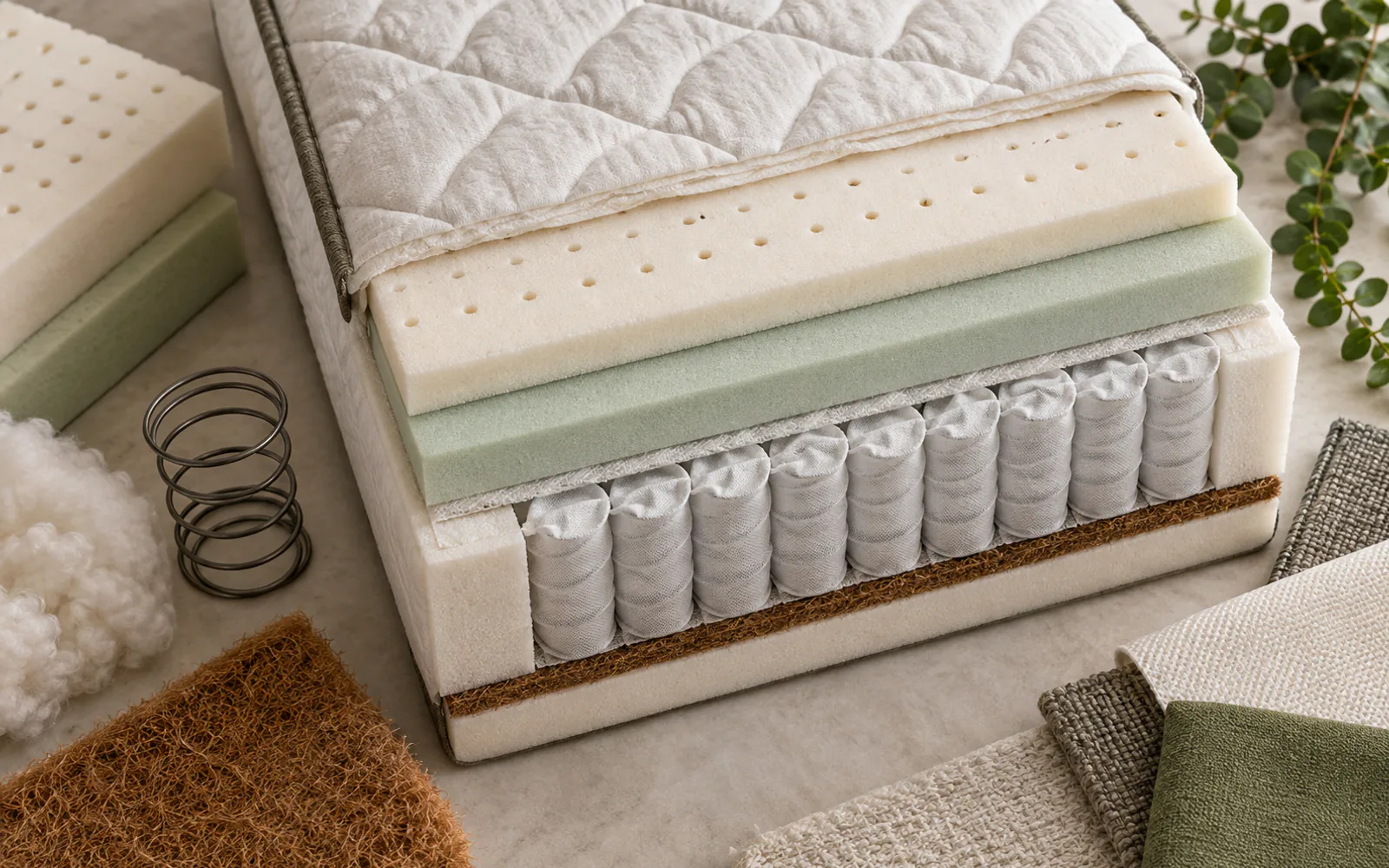
The comfort layers shape the surface feel; the underlying core contributes to how the whole mattress responds under weight. Read the construction description rather than assuming that a soft-feeling surface has a weak core or that a firm surface is medically better.
Layer depth, coil count and lumbar-zone labels are product specifications, not clinical results. We have not established a minimum core thickness or a particular construction that treats back pain.
What to Compare
Look for clearly identified materials, the firmness option you are actually ordering, compatible foundation requirements and written return terms. Treat missing specifications as questions for the seller, not an invitation to guess.
See how firmness and support work across mattress types.
Read the Mattress Firmness Scale →3. Sleep Position and Back Pain
Use your usual sleeping positions to assess comfort, not to diagnose the cause of pain. If a clinician has given you positioning advice, follow that individual guidance rather than a general mattress chart.
- Back sleepers: Notice whether lying down feels comfortable and whether you can change position easily.
- Side sleepers: Notice uncomfortable pressure around the shoulder or hip rather than assuming a firmness label predicts your experience.
- Stomach or combination sleepers: Compare comfort in your actual positions and how much effort it takes to turn. Do not force a position that increases symptoms.
Our quiz compares shopping preferences and listed specifications; it does not assess medical conditions.
Compare my preferences →4. Mattress Types and Back Pain
Use materials to narrow the feel you want. None of the categories below establishes that a mattress treats back pain.
Type-by-Type for Back Pain
- Hybrid: Combines a coil core with foam or latex comfort layers; the feel depends on the specific model.
- Memory foam: Often chosen for a close-contouring feel. Compare ease of movement and warmth as well as initial softness.
- Latex: Often chosen for a more responsive surface. Check the actual latex and other materials in the model you are considering.
- Innerspring: Compare the cushioning above the springs rather than treating every coil mattress as the same feel.
5. Red Flags to Avoid
- Promises to cure pain or guarantees of relief by a particular night.
- Doctor endorsements or clinical claims without a named source, relevant study and clear explanation of what was evaluated.
- An unclear return policy, especially when the mattress is being sold on a pain-relief claim.
- Treating labels such as orthopedic, lumbar support or zero gravity as proof of a medical benefit.
6. The Role of Trial Periods
A home trial gives you a way to assess comfort, subject to the seller's terms. Before ordering, confirm the return deadline, any minimum-use requirement, fees and how collection works. Mattress and adjustable-base return policies can differ.
A seller's waiting period is not medical advice. Do not keep using a painful surface or postpone seeking care to satisfy a trial. Ask the seller about your options promptly, and keep notes about comfort without treating a change in symptoms as proof of its cause.
Learn how trial periods actually work before you commit.
Read: Trial periods guide →Compare listed mattress features and current seller terms—not treatment promises.
Browse mattresses →7. When Shopping Should Wait
Seek medical advice for persistent pain or symptoms affecting daily life. Sudden severe pain, rapid worsening or feeling feverish or unwell calls for urgent assessment. Back pain with new bladder or bowel problems, numbness around the groin, weakness or numbness in both legs, chest pain or a serious accident needs emergency care. Do not wait for a mattress trial to finish.
This buying guide has not been clinically reviewed and is not individualized medical advice. Read the underlying research and care guidance:
Kovacs et al., The Lancet (2003): randomized mattress-firmness trial
NHS: Back pain, including when to seek medical help (reviewed March 2026)
Not sure where to start?
Take our quick sleep quiz and we'll match you with mattresses that fit your sleep style and budget — no jargon, no upsell.
Find your perfect sleep →