1. What weighted blankets actually do and don't
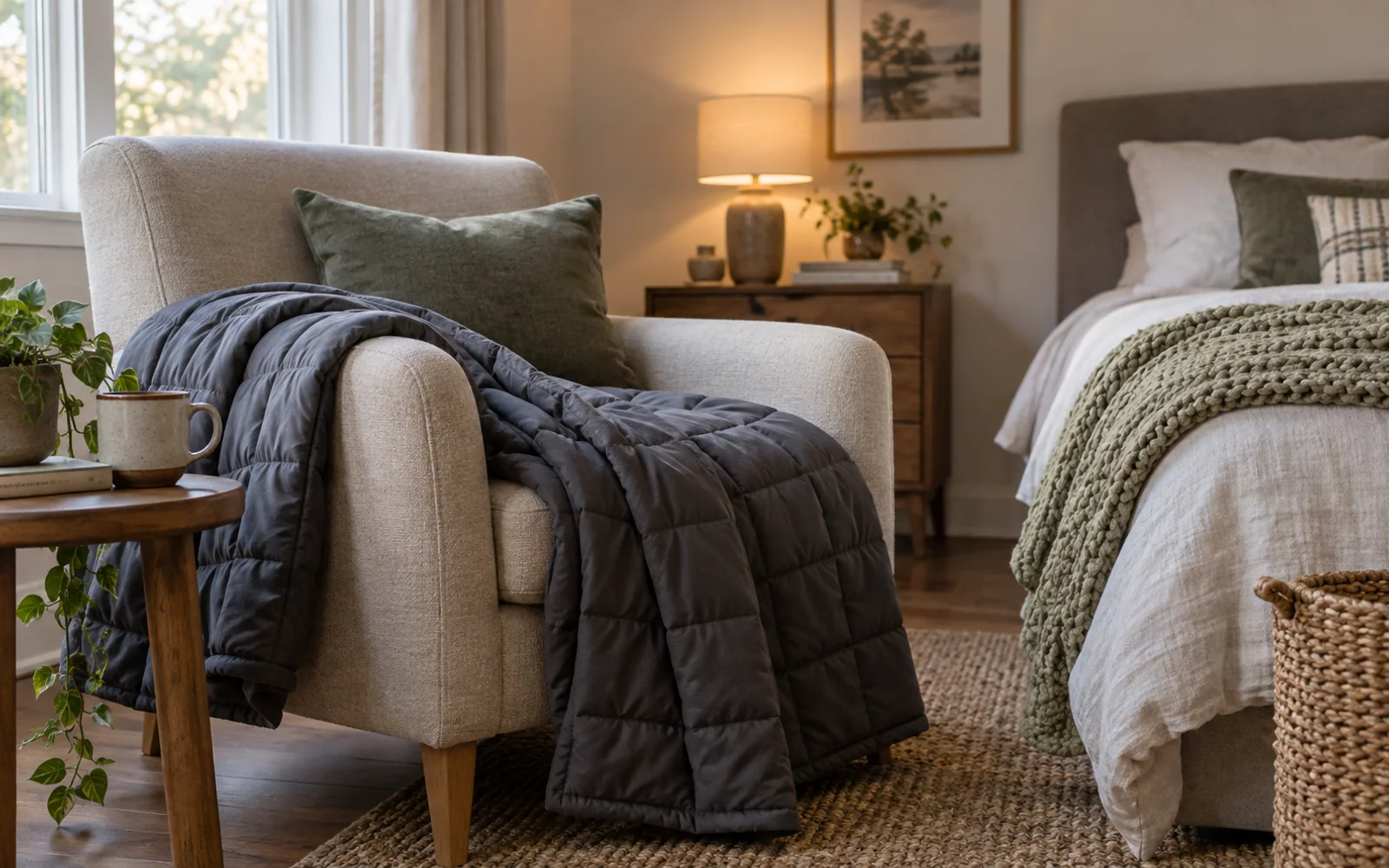
Weighted blankets apply broad, distributed pressure across the body. The proposed mechanism is usually called deep-touch pressure stimulation, or DTPS: firm but gentle pressure that may help some people feel calmer, less restless, and more settled at bedtime.
The evidence is promising but not definitive. Mullen et al. 2008 studied deep-pressure touch in adults with anxiety and found physiologic and self-reported calming effects for some participants. Ackerley et al. 2015 reported that weighted blankets were associated with calmer sleep in adults with insomnia. Ekholm et al. 2020 found improved insomnia severity in adults using weighted-chain blankets. Those are useful signals, not proof that a blanket treats anxiety or insomnia.
Evidence summary
Weighted blankets may help some adults feel calmer or sleep more steadily, but results vary by person and study design. Evidence for children with ADHD or autism is more mixed, and weighted blankets should never replace medical or behavioral care.
2. The 10 percent body-weight rule of thumb
Most buyers should start around 10 percent of body weight, plus or minus 1 to 2 pounds. That is a shopping guideline, not a medical prescription. Some people prefer lighter because they sleep hot, change positions often, or dislike restriction.
Starting-weight examples
- 120 lb adult: 10 to 12 lb blanket
- 150 lb adult: 12 to 15 lb blanket
- 175 lb adult: 15 to 17 lb blanket
- 200 lb adult: 17 to 20 lb blanket
- 225+ lb adult: 20 to 25 lb blanket
3. Fill types
Fill-type tradeoffs
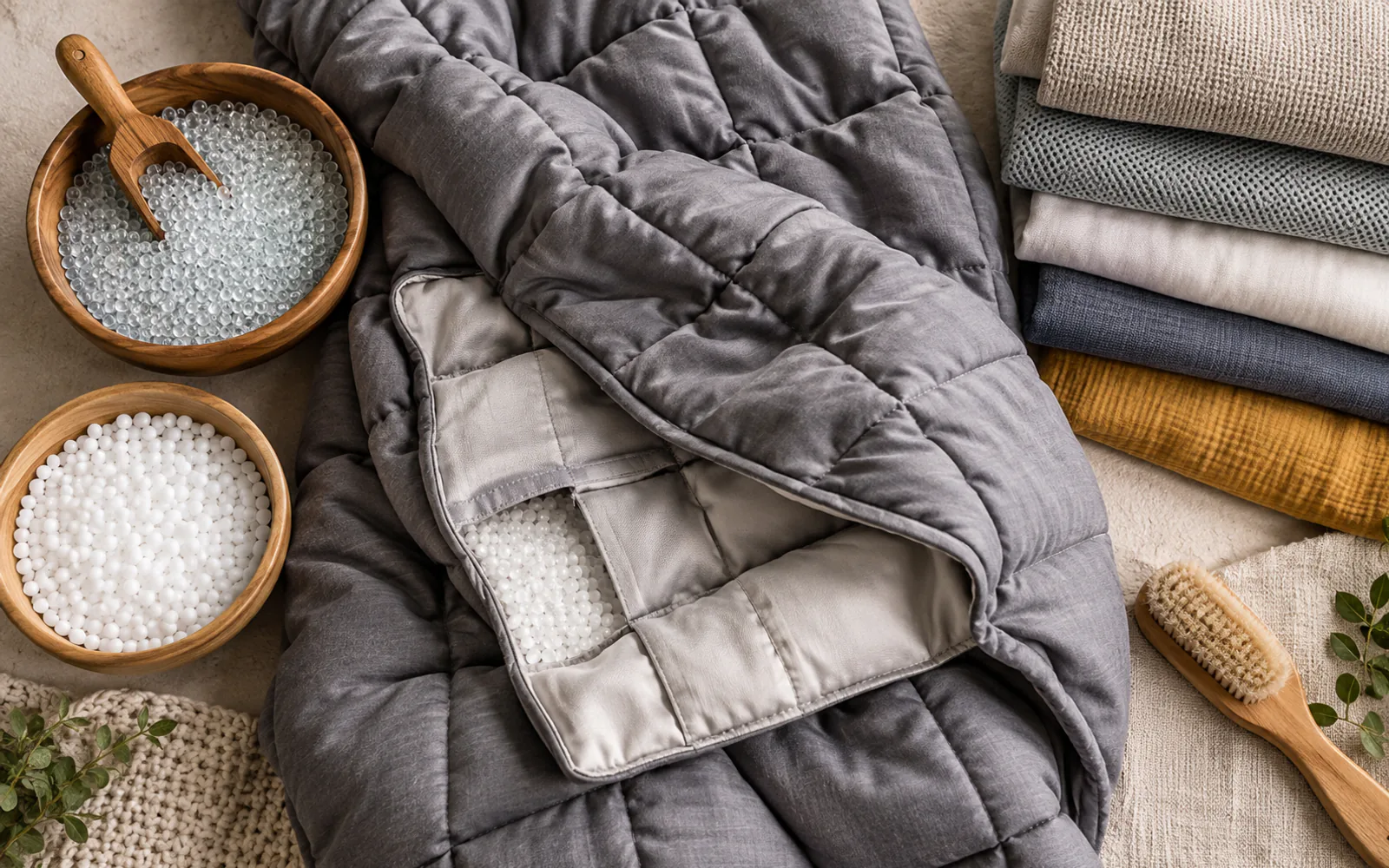
- Glass beads: denser, quieter, more even, and often slightly cooler because less bulk is needed for the same weight.
- Poly pellets: lighter, cheaper, and common in budget blankets, but they can feel bulkier and may shift more over time.
- Knit weave: no beads or pellets. The open weave can breathe better, but the price is usually higher and weight choices may be narrower.
4. Fabric and cover options
Outer fabric determines whether a weighted blanket feels breathable, plush, or winter-heavy. Cotton is the standard all-season choice. Bamboo-derived rayon or viscose and Tencel lyocell feel smoother and are commonly chosen by hot sleepers. Minky, fleece, and plush covers are warmer and softer, but can become too hot for summer or for anyone already prone to overheating.
A removable washable cover is close to non-negotiable. Weighted inserts are awkward to wash and dry, especially above 15 lb. A duvet-style cover lets you wash the part that touches skin and bedding most often without wrestling the entire weighted insert into a machine.
5. Cleaning and care
Always follow the manufacturer's care label. Many blankets have machine-washable covers, but full-blanket washing varies by weight, fill, and stitching. Glass-bead blankets at 15 lb or heavier often need a commercial washer because home machines can be overloaded.
Also think about where the blanket will live. A queen-size weighted blanket can be heavy enough that moving it from bed to couch becomes annoying, while a throw-size blanket is easier to use for reading, TV, or short wind-down sessions. Couples should be especially cautious about sharing one weighted blanket because the weight that feels right for one person can be too heavy or too light for the other.
Distribution matters as much as total weight. Small stitched pockets keep beads from pooling at the edges. Larger channels can feel smoother at first, but they give fill more room to migrate. Knit blankets solve that problem by removing loose fill entirely, though the open weave can stretch and requires more careful drying.
6. Safety rules you should not skip
Weighted blanket safety
- Do not use weighted blankets for children under 3 because of suffocation and entrapment risk.
- Do not use weighted blankets for children under 50 lb without pediatric guidance.
- People with respiratory issues, circulation problems, sleep apnea, or chronic medical conditions should ask a doctor before use.
- Avoid weighted blankets for older adults or anyone with mobility limitations who may not be able to remove the blanket independently.
- The AAP recommends no weighted blankets or weighted sleepers in infant sleep environments. See https://www.aap.org/en/patient-care/healthy-active-living-for-families/safe-sleep/.
The practical safety test is whether the sleeper can remove the blanket quickly and independently when warm, uncomfortable, or short of breath. If the answer is no, the blanket is too heavy or the product category is not appropriate. That independence standard is why healthy adults are the easiest use case and infants, toddlers, medically fragile sleepers, and mobility-limited adults require a much more conservative approach.
Weighted blankets also change heat retention. Even a breathable cover adds a layer of insulation, and the pressure can make it harder to vent one leg or shoulder the way you might under a normal comforter. Hot sleepers should start with cotton, lyocell, bamboo-derived fabrics, or knit construction before considering minky or fleece.
If you are buying for anxiety-related restlessness, keep expectations narrow: the blanket may make the wind-down routine feel calmer, but it should not be framed as a treatment. If insomnia, panic, trauma symptoms, sleep apnea, or medication side effects are part of the picture, the blanket belongs below clinical care on the priority list. Use it only if it feels pleasant and easy to remove.
Return policy matters more than most buyers expect. Weighted blankets are hard to judge from specs alone because the same 15 lb blanket can feel soothing to one person and restrictive to another. If you are between weights, buy from a retailer with a clear return window, keep the packaging until you know the feel works, and test the blanket while awake before sleeping under it overnight.
Finally, do not use a weighted blanket as your only blanket until you know your temperature response. Many people prefer it layered over a light sheet for the first hour, then remove it before deep sleep. That is a valid use pattern; the blanket does not have to stay on all night to be useful.
The best weighted blanket is the one you can use comfortably, wash realistically, and remove without effort every single time.
7. Our picks
Nest 100% Cotton Weighted Blanket
Nest is the strongest current partner-sold choice for shoppers who want a traditional cotton-and-glass-bead construction with true bed-size coverage. The Throw is 42 by 72 inches at 12 pounds; Full/Queen is 60 by 80 inches at 15 or 20 pounds; King is 80 by 87 inches at 25 pounds. Nest permits full-blanket machine washing, although the King requires a commercial machine.
Nest lists a 30-day return request window for this Baloo-fulfilled blanket. Return-label cost is deducted and inspection applies, so keep the packaging while you judge the pressure and temperature feel.
Check Nest size and price →See how Nest's filled construction differs from an open-knit TENCEL blanket and who benefits from paying more.
Compare Nest vs Bearaby →Bearaby Tree Napper
Bearaby is popular with shoppers who want a bead-free knit blanket and a more decorative look on the bed. The open woven construction is often preferred by people who dislike the shifting feel of traditional filled blankets.
Compare the current Bearaby offer, colors, and weight options.
Check current price →Gravity Blanket Original
Gravity is commonly chosen by buyers who want the classic minky weighted-blanket format with multiple adult weight options. It is warmer than the most breathable picks, so it fits better for cool rooms and plush-blanket preferences.
Compare the current Gravity offer and available weight options.
Check current price →YnM Cotton Weighted Blanket
YnM is a lower-cost way to try a cotton-shell blanket with glass-bead fill. Its listed adult weights span 10 to 30 pounds, so choose the weight for one sleeper rather than assuming the heaviest option is better. Confirm the selected size, seller, and return eligibility before ordering.
Check the current YnM variant and seller-specific Amazon terms.
Check YnM options and price →8. Related resources
See the ranked static listicle for this category.
Best Weighted Blankets of 2026 →Browse the accessory category page.
Weighted Blankets →Pillows are the other low-cost sleep comfort lever.
Browse Pillows →Pregnancy pillow and weighted blanket shoppers often overlap around side-sleeping support.
Pregnancy Body Pillow Guide →Not sure where to start?
Take our quick sleep quiz and we'll match you with mattresses that fit your sleep style and budget — no jargon, no upsell.
Find your perfect sleep →