

1. Why Sleep Changes During Pregnancy
Pregnancy changes your body's center of gravity, loosens the ligaments in your pelvis and lower back (thanks to the hormone relaxin), and progressively limits which sleep positions are comfortable. By the second trimester, sleeping on your stomach is no longer realistic. By the third, even lying on your back for extended periods becomes problematic — the weight of the uterus can compress the inferior vena cava (a major vein), reducing blood flow to the heart and causing dizziness or shortness of breath.
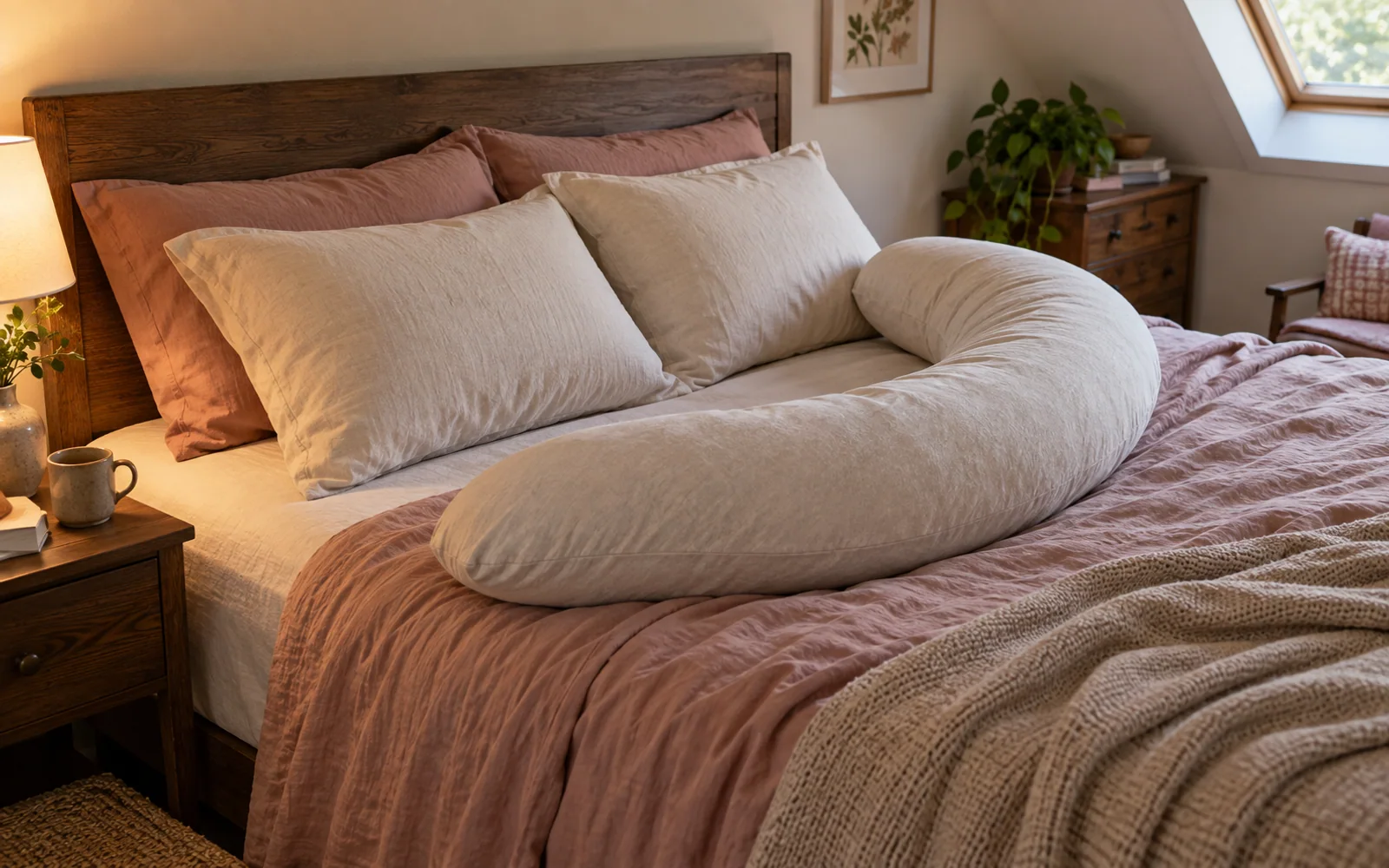
The result: you're funneled toward side sleeping — ideally left-side sleeping — whether or not that's how you naturally sleep. A body pillow makes that transition significantly more comfortable by supporting the belly from beneath, taking pressure off the hips, and providing a backrest that prevents rolling onto your back in the middle of the night.
Why Sleep Gets Worse Each Trimester
- First trimester: Fatigue and nausea disrupt sleep, but position options are still relatively normal.
- Second trimester (~20 weeks): Growing belly makes stomach and back sleeping uncomfortable. Side sleeping becomes the default.
- Third trimester: Hip pain, frequent bathroom trips, heartburn, and baby movement all compound disrupted sleep. Support on all sides matters most.
2. The SOS Position — Why Left-Side Sleeping Is Recommended
SOS — Sleep On Side — is the shorthand OBs and midwives use when advising pregnant women on sleep position. Left-side sleeping specifically improves blood flow to the placenta and kidneys, reduces pressure on the liver (which sits on the right side), and may decrease swelling in the legs and feet.
That doesn't mean right-side sleeping is dangerous — research suggests that while left-side is marginally better, either side is far preferable to back sleeping in the third trimester. The key point: if you wake up on your back during the night, don't panic. Simply roll back to your side. A body pillow placed behind your back passively prevents rolling over, which is one of its most practical benefits.
The Evidence on Back Sleeping During Pregnancy
The concern about back sleeping primarily applies in the third trimester (after 28 weeks) and is related to prolonged back sleeping, not brief moments on your back. A body pillow or rolled towel placed behind you is the simplest way to passively maintain a side-sleeping position without thinking about it.
3. How a Body Pillow Actually Helps
A body pillow works on multiple problems simultaneously — which is why it's more effective than stacking standard pillows:
- Belly support: A pillow wedged under the belly (or a curved pillow that wraps around it) takes the gravitational strain off the lower back and pelvis.
- Hip alignment: Placing a pillow between the knees keeps the hips stacked and the pelvis neutral, which reduces hip bursitis and SI joint pain — common pregnancy complaints.
- Back support: A C-shape or U-shape body pillow provides a cushioned backrest that passively discourages rolling onto the back.
- Knee and ankle comfort: The legs naturally want to cross or stack unevenly when side sleeping. A pillow between the knees solves this without conscious effort.
- Better sleep quality: All of the above combined results in fewer times waking up to reposition — which compounds into meaningfully better total sleep.
4. When to Start Using a Body Pillow
Most pregnant women find body pillows useful starting around 20 weeks (second trimester), when the belly becomes noticeable and stomach sleeping gets uncomfortable. However, if you're experiencing back or hip pain earlier — which is common due to relaxin loosening ligaments — starting earlier makes sense.
There's no downside to starting in the first trimester if you find it comfortable. Many women who use body pillows during pregnancy continue using them postpartum as a nursing pillow or simply because they've come to prefer the support.
When to Start by Symptom
- Hip or lower back pain any trimester → start immediately
- Stomach sleeping gets uncomfortable → start around 18–20 weeks
- Having trouble staying on your side → start in second or early third trimester
- Just want to sleep better → any time is fine
5. Body Pillow Shapes: Which One to Choose
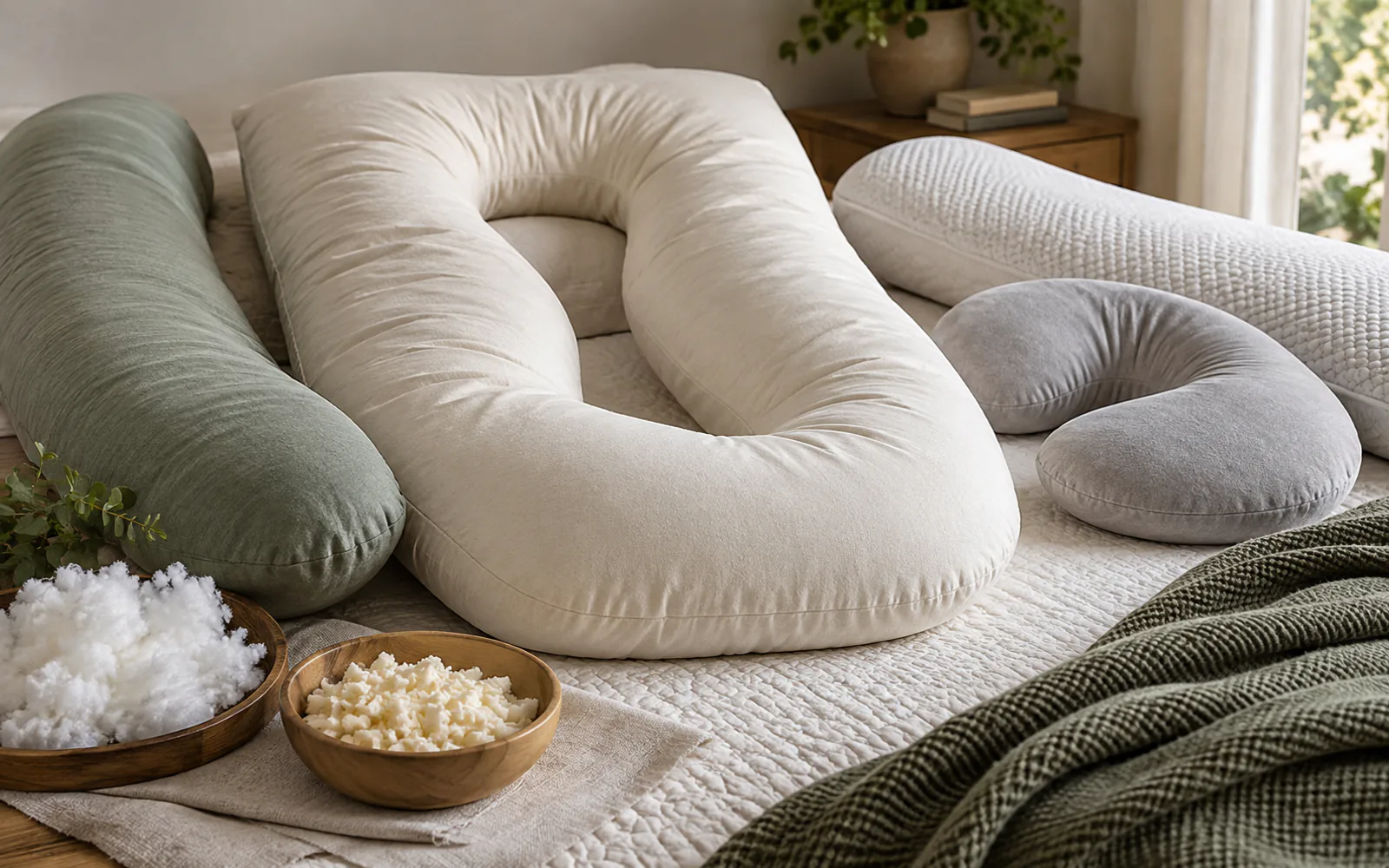
Body pillows come in several shapes, and the right choice depends on your dominant complaint and sleeping style:
Shape Guide
- C-shape: The curve can support the head, back, belly, and knees in one piece. It suits side sleepers who like support concentrated along one side, although the pillow may need repositioning when you turn over. The Leachco Snoogle is the best-known C-shape design.
- U-shape: Wraps around both sides of your body simultaneously. You don't need to reposition when rolling over. Best for third-trimester sleepers who change sides frequently. More bulky and takes up more bed space.
- J-shape: Similar to C but with a straighter top section. Good for sleepers who want head support plus belly/knee support without the full curve of the C.
- Straight/full-length: A standard long pillow (54–72"). Simple, versatile, and the least expensive option. Works well for single-use support (belly or back, but not both simultaneously).
- Wedge: A small triangular pillow that goes under the belly or between the knees. The most compact option — good if you want minimal bed footprint or are targeting one specific pain point.
6. What to Look For
- Removable, washable cover: Non-negotiable. You will need to wash this regularly. Look for a zipper cover that's machine washable.
- Cover fabric: Pregnancy can make some sleepers feel warmer. Compare breathable or moisture-wicking covers, but treat cooling language as a manufacturer design claim rather than a guaranteed result.
- Fill firmness: Soft fills (down alternative, hollow fiber) are the most common and generally work well. If you need more structured support for hip pain, a firmer fill holds its shape better under the knees.
- Size: Standard body pillows are typically 20" × 54". Pregnancy-specific C and U pillows are longer. Check dimensions against your bed size — a U-shape takes up significant width on a queen.
- Certifications: OEKO-TEX Standard 100 or similar certifications confirm the materials are free from harmful chemical residues — worth checking for anything in direct contact with skin during pregnancy.
7. Our Top Picks
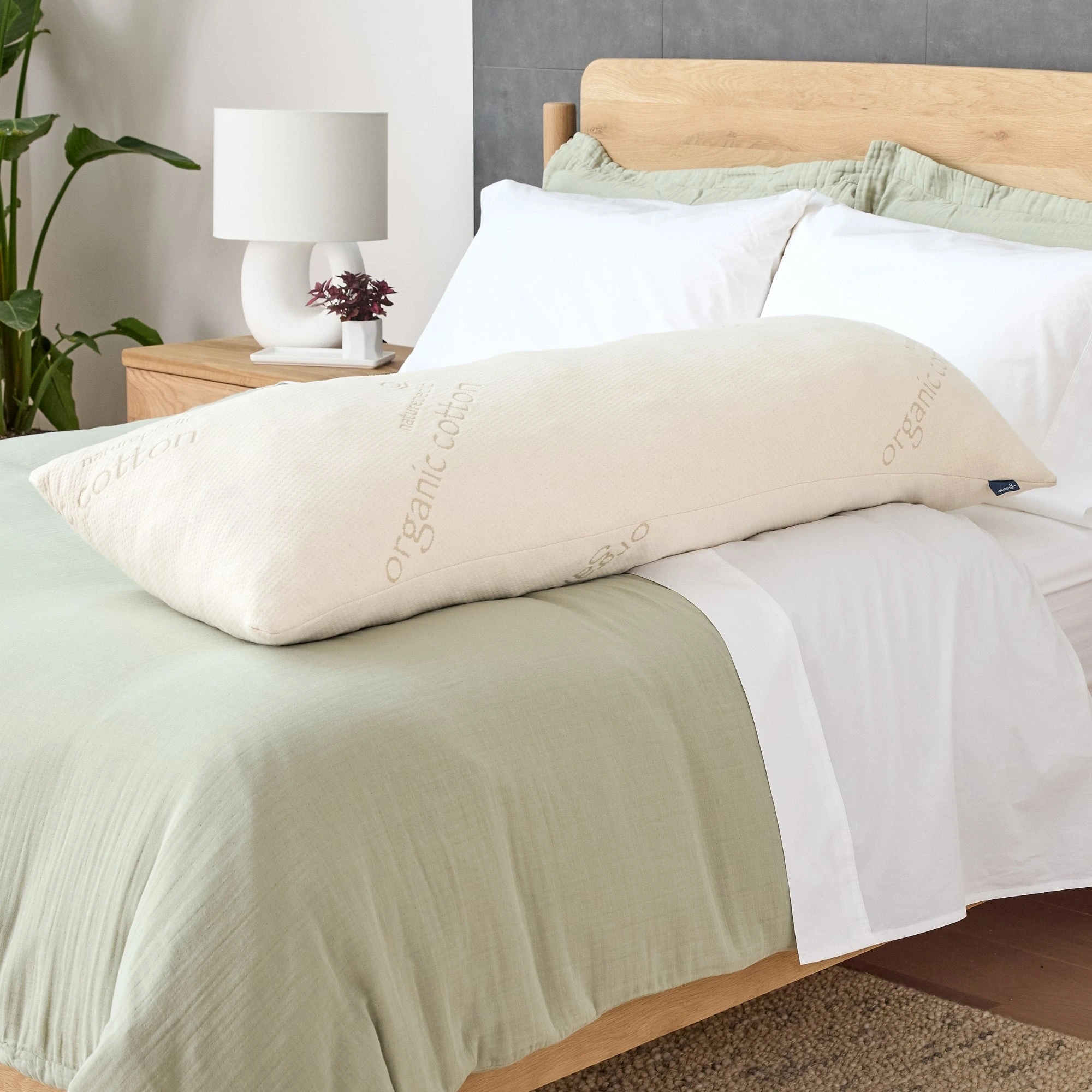
Premium Straight Latex: Naturepedic Organic Latex Body Pillow — $219
Naturepedic uses GOLS-certified shredded organic latex inside GOTS-certified organic-cotton fabric. The 24-by-54-inch straight shape can sit between the knees, in front of the torso, or behind the back without surrounding both sides of the sleeper. Shredded latex adds buoyant support and rebounds quickly when repositioned, while the spaces between the pieces allow more airflow than a solid foam core. Choose it when responsive full-length support, organic materials, and a smaller bed footprint justify the premium. Choose Momcozy or another lower-price U shape when support on both sides matters more than latex, material certifications, or a compact straight shape.
Naturepedic currently includes free shipping and returns, a 30-night risk-free trial, and a one-year limited warranty. The linked Body option is the $219 LB58-BS pillow; the $39 option on the same page is only the pillowcase.
Check the Naturepedic Body Pillow →Full-Length U-Shape: BEDGEAR The Body Pillow — $149.99
BEDGEAR's current Body Pillow is a 54-by-15-by-6-inch U-shaped model with React blend fill, Air-X mesh, and a removable Ver-Tex cover. Its wraparound footprint can support both sides of the body, but it also occupies more bed space than a straight body pillow. The cover is machine washable; the inner pillow is spot-clean only.
Compare the current size, price, and return terms at BEDGEAR.
See Current BEDGEAR Price →Best C-Shape: Leachco Snoogle Chic — $52.99 at Target
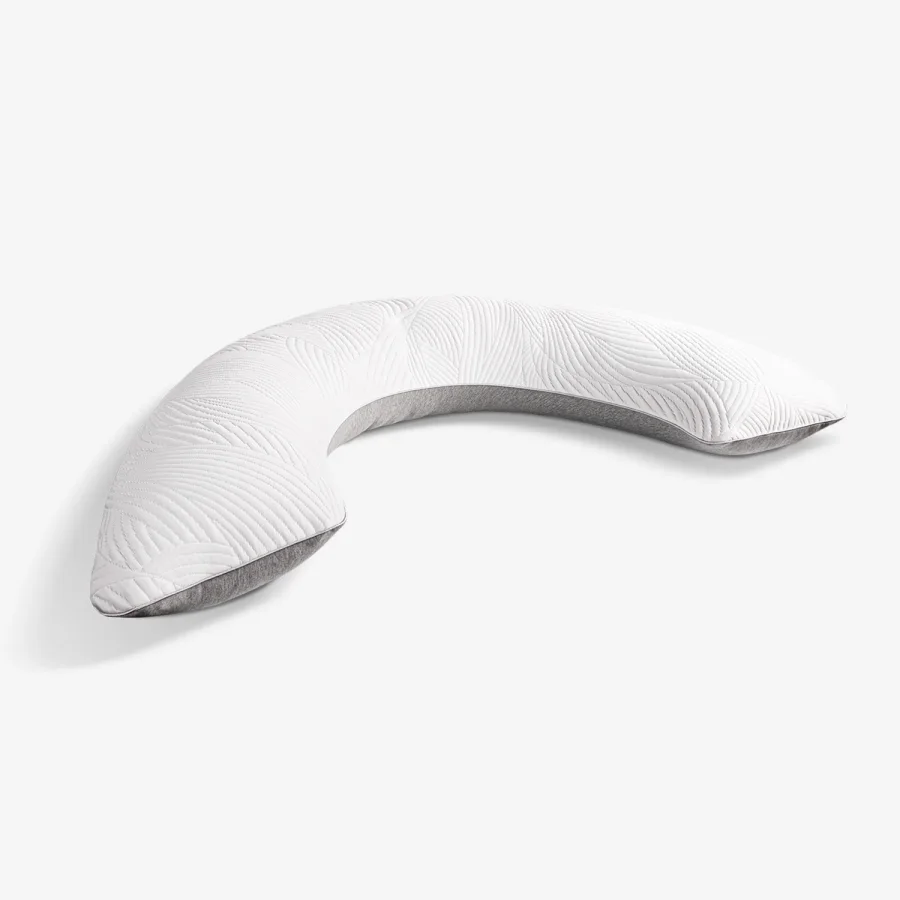
The current Snoogle Chic uses a 58.75-inch C-shaped design to replace several separately arranged pillows. It gives side sleepers a continuous surface for the head, back, belly, and knees while using less width than a full U shape. The cotton-polyester jersey cover is removable and machine washable. Choose it when you prefer support along one side and want more open space on a shared bed; choose the U-shaped Momcozy below when support on both sides matters more.
Target showed the exact Heather Gray Snoogle Chic in stock with a 90-day return window when reviewed.
See Current Target Offer →Best U-Shape Value: Momcozy 57-Inch Pregnancy Pillow — $38.49 at Amazon
The Momcozy surrounds both sides of the body, so a sleeper can turn toward either side and still have a long support surface for the back, belly, hips, and legs. That extra wraparound support is the reason to choose it over the C-shaped Snoogle, especially if you change sides often. The tradeoff is a wider footprint on the bed. The reviewed Grey option includes a removable cover and was sold by Momcozy Direct Store and shipped by Amazon.
Amazon showed the exact Grey offer in stock with a free 90-day refund or replacement window when reviewed.
See Current Amazon Offer →8. After Baby: Postpartum and Long-Term Uses
A good body pillow earns its keep well beyond pregnancy. The most common postpartum use is as a nursing pillow — placing it under the baby to bring them up to breast height reduces the strain on your neck, shoulders, and lower back during feeding sessions. The C-shape works especially well for this.
- Nursing support: Place under baby during breastfeeding to reduce strain on arms and back.
- Feeding support for the parent: Reposition the pillow to support your arms and posture during an awake feeding session, then move the baby to a separate firm, flat sleep surface.
- Side sleeping support: Many women who discover they sleep better with body pillow support during pregnancy continue using one indefinitely — for hip pain, back pain, or simply comfort.
- Recovery support: After a C-section or episiotomy, side sleeping with a pillow supporting the abdomen is often more comfortable during the healing period.
- Partner use: A body pillow is genuinely useful for anyone with hip or lower back pain — it doesn't have to be pregnancy-specific.
Browse our full pillow rankings by sleep position, fill type, and budget.
Browse all pillows →If you're setting up a nursery and want the right mattress for a crib or toddler bed, we cover that too.
Read: Mattresses for Kids →See our complete ranked list of pregnancy pillows.
View: Best Pregnancy Pillows of 2026 →Not sure where to start?
Take our quick sleep quiz and we'll match you with mattresses that fit your sleep style and budget — no jargon, no upsell.
Find your perfect sleep →