
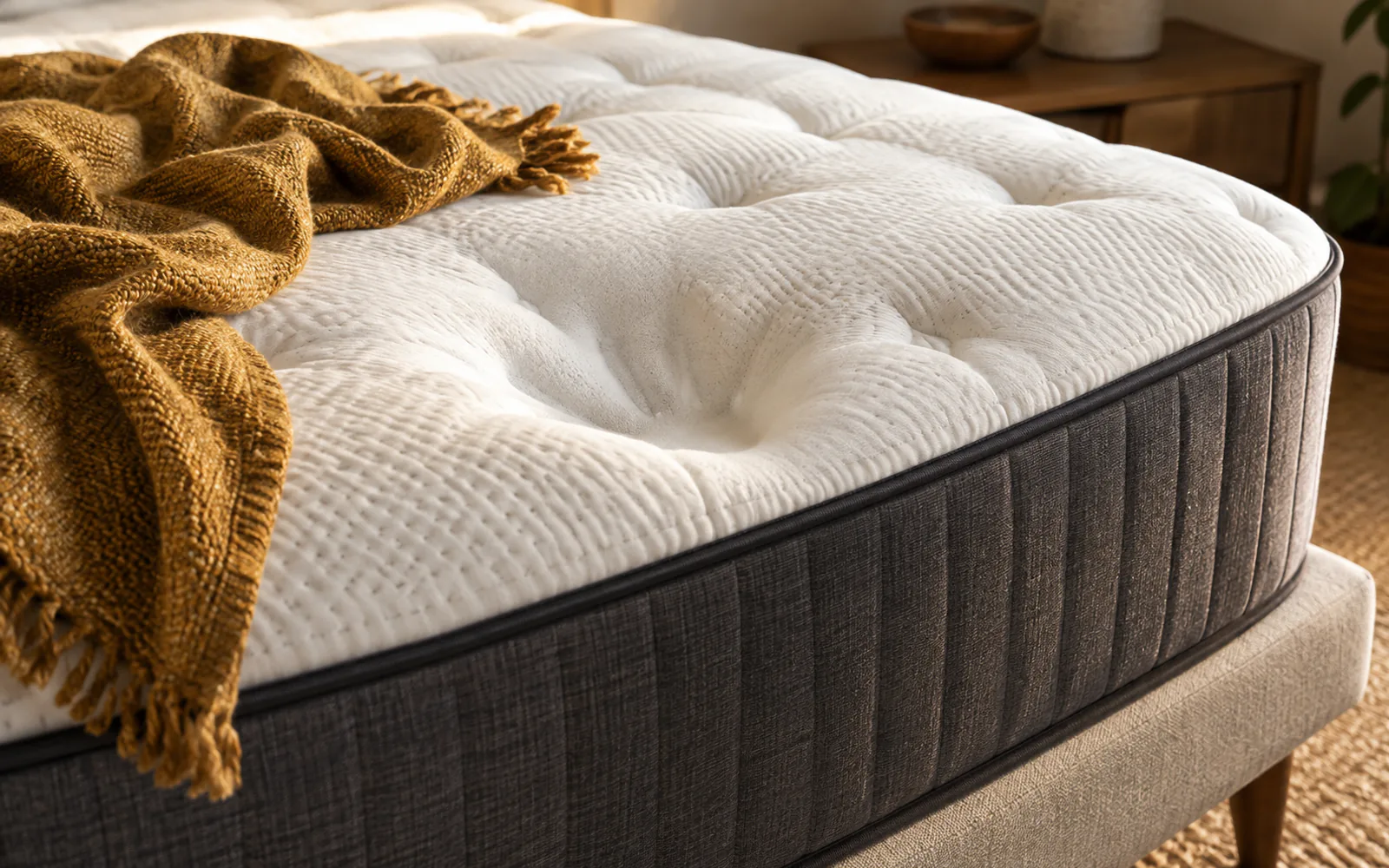
Why Does a New Mattress Feel Firmer?
Foam materials — memory foam, polyfoam, and latex — are stiffer when cold and before use. Foam cells haven't been compressed and released repeatedly yet, so they resist more than they will once you've broken them in. This is normal and expected, not a defect.
- Memory foam: Takes longest to break in — 30–60 days for the viscoelastic cells to fully respond to body heat and pressure
- Hybrid mattresses: Break in faster — the coils compress freely; only the comfort layers need time
- Latex: Relatively fast break-in (2–4 weeks) and doesn't change as dramatically
- Innerspring: Very fast — minimal foam to break in
How Long Does Break-In Take?
Most mattresses reach their intended feel within 30–90 days of regular nightly use. The industry standard trial period of 100 nights exists partly for this reason — you need enough time sleeping on it every night to properly evaluate it.
What this means for returns
If you're 3 weeks in and it feels too firm, wait. Many people who would have returned a mattress at 3 weeks are glad they didn't at 8 weeks. The 100-night trial exists so you have time to reach that point.
How to Speed Up the Break-In Process
- Sleep on it every night: Consistent pressure from body weight is the main driver — not optional
- Walk on it: Spend a few minutes walking across the mattress in bare feet daily — distributes pressure evenly
- Roll across it: Similar to walking — helps work the foam without body-specific pressure points
- Keep the room at normal sleeping temperature: Cold rooms slow foam response — 65–70°F is ideal
- Remove the mattress protector temporarily: Protectors can add perceived firmness; try sleeping without for a few nights
- Use your regular bedding: Heavy toppers or overly thick blankets can mask the mattress feel
What If It's Still Too Firm After 90 Days?
If after 90 days of nightly use the mattress hasn't softened to what you expected, the mattress is probably not the right firmness for you — not a break-in issue. At this point, use your trial period if it's still active. Document the timeline and contact the retailer.
Some legitimate exceptions: memory foam in cold environments (below 65°F regularly), mattresses with very thick high-density foam layers (these may take up to 90 days), and firm mattresses — which simply don't soften as much as medium or soft options.
Signs It's Not a Break-In Issue
- Noticeable sagging or indentation after just weeks of use (defect — return it)
- Spring squeaking immediately (defect)
- No change in feel after 60+ days of nightly use
- The feel was wrong on day one and hasn't changed at all
Does a Mattress Get Softer Over Time Beyond Break-In?
Yes — all mattresses soften gradually over their lifespan as foam cells degrade and coils lose tension. Budget mattresses may soften significantly in year 2–3. Quality mattresses maintain their feel much longer. Durability ratings are a proxy for how slowly this softening happens.
Ready to upgrade your sleep surface?
The mattress you sleep on directly affects your sleep quality. Use our 2-minute quiz to find one matched to your sleep style, body, and budget.
Find my perfect sleep →