The Short Rule
Quick reference by mattress type
- Memory foam: rotate only — never flip
- Latex (single-sided): rotate only — never flip
- Latex (two-sided, layered): rotate, and flip the comfort layer once per year if it's user-rearrangeable
- Hybrid (pocketed coil with foam top): rotate only — never flip
- Innerspring (modern one-sided pillow-top): rotate only — never flip
- Innerspring (vintage two-sided, no pillow-top): rotate AND flip — both every 3 to 6 months
- Airbed (Sleep Number and similar): rotate only — never flip
If you're unsure which category your mattress falls into, the default answer is rotate only. The cost of mistakenly flipping a one-sided mattress is high (damaged comfort layer, voided warranty, sleeping on a non-sleep surface) and the cost of mistakenly not flipping a true two-sided model is low (slightly uneven wear that rotation still mostly addresses).
Why Most Modern Mattresses Aren't Flippable
Modern mattress construction layers a designated comfort surface (memory foam, latex, pillow-top fabric, or quilted cover) on top of a support core (high-density base foam or pocketed coils). The bottom of the mattress is engineered as a foundation-facing surface — often with a non-skid grip texture or open-weave breathable fabric — not as a sleep surface. Flipping puts you on the wrong side entirely.
Manufacturers stopped making two-sided mattresses widely in the 1990s and 2000s because one-sided construction allows thicker, more specialized comfort layers without doubling material cost. Almost every mattress sold by Casper, Nectar, Helix, Saatva, Tempur-Pedic, Purple, Sealy, Serta, Beautyrest, and Stearns & Foster in the last decade is one-sided.
Rotation: The Universally Recommended Practice
180-degree rotation redistributes where your body weight lands on the mattress, so the head-and-shoulder zone and the hip zone alternate which end of the mattress they compress. This evens out body-impression wear and is one of the most reliable ways to extend useful comfort lifespan.
- 1Strip the bed completely — sheets, mattress protector, topper, pillows.
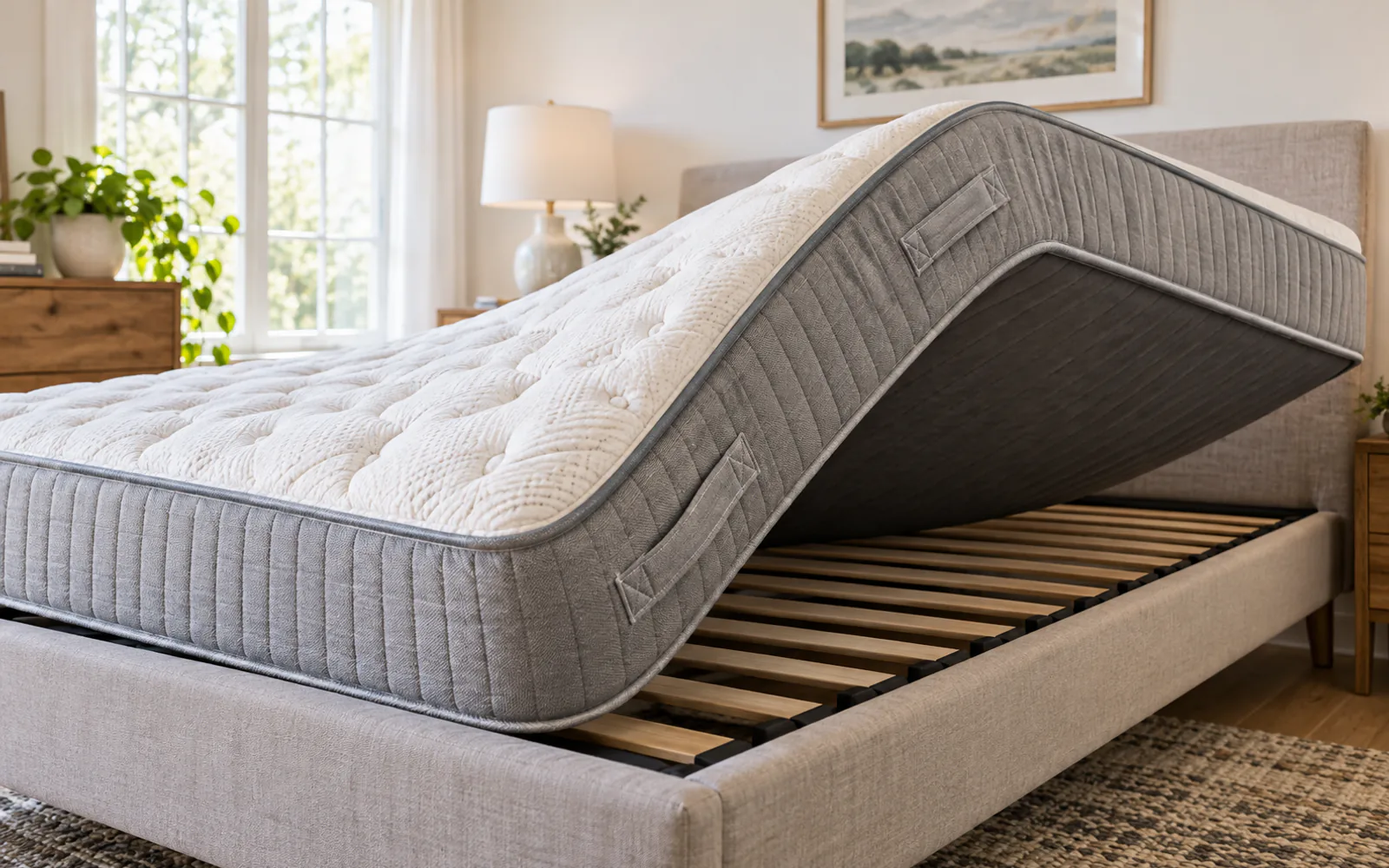
- 2If the mattress has handles (some hybrid and innerspring models do), use them. Most foam mattresses don't have handles and need to be lifted from the corners.
- 3Slide the mattress off the foundation enough to lift one end clear.
- 4Rotate 180 degrees so the head end is now the foot end.
- 5Re-seat the mattress squarely on the foundation. Confirm it's not hanging over any edge.
- 6Re-install the protector, topper, and fitted sheet.
Two-person job for most mattresses
Modern queen and king mattresses commonly weigh 80 to 130 pounds. Foam mattresses are floppy and harder to maneuver than they look. Most people will find this much easier with a second person, even if it's technically possible alone.
Rotation Frequency by Type
Memory foam and hybrid
Every 3 months in the first year (the highest-wear period for new foam), every 6 months after. This cadence is the most commonly recommended by manufacturers including Tempur-Pedic, Casper, Nectar, and Helix.
Latex
Every 6 months. Latex resists body impressions far better than memory foam, so it tolerates a less-frequent rotation cadence without uneven wear. Annual is acceptable for natural latex from quality sources.
Innerspring
Every 3 to 6 months. Coil systems develop the most uneven wear in the head-and-shoulders and hip zones; more frequent rotation helps. Older innersprings without good comfort layer recovery need the more frequent end of that range.
Pillow-top
Every 3 months. The pillow-top layer compresses faster than the support core underneath and concentrates body impressions. Frequent rotation evens out the pillow-top wear specifically.
When to Flip (The Rare Cases)
Two-sided mattresses are still sold by a handful of brands committed to traditional construction or sustainable longevity. The most common examples in 2026:
- Any mattress whose current manufacturer instructions explicitly describe both surfaces as sleep sides
- Brentwood Home Crystal Cove and Cypress models — two-sided organic constructions
- Naturepedic's two-sided organic mattresses — designed for flip-and-rotate care
- Specialty wool mattresses from makers like Shepherd's Dream
- Some custom-layered latex configurations from companies like Sleep On Latex and PlushBeds (where individual layers can be reordered)
- Vintage innerspring mattresses (typically 25+ years old) that pre-date the one-sided manufacturing shift
For these models, flipping every 3 to 6 months — in addition to rotating — is the manufacturer-recommended care. The product manual or care tag will explicitly mention flipping; if it doesn't, assume rotate-only.
How to Tell If Your Mattress Is Flippable
Signs your mattress is two-sided (flippable)
- Both top and bottom look like a sleeping surface (similar fabric, similar quilting, no obvious 'foundation' texture)
- The care tag or manufacturer guidance explicitly mentions flipping
- There's no pillow-top — pillow-tops are always one-sided
- The mattress is sold as 'two-sided,' 'reversible,' or 'flippable' on the product page
Signs your mattress is one-sided (rotate only)
- The underside has a textured, grippy, or open-weave foundation-facing fabric
- The top has a pillow-top, Euro-top, or visibly different cover material
- Care tag says rotate, with no mention of flipping
- The mattress was made in the last 15 years by a major DTC or mainstream brand without a 'flippable' product line
What Happens If You Flip a One-Sided Mattress
The damage is usually immediate and partly cosmetic, partly functional. Sleeping on the foundation-side fabric is uncomfortable (grippy non-skid textures or scratchy open-weave). The comfort layer is now pressed against the foundation underneath, compressing it where it isn't designed to compress. Over weeks, the comfort layer takes on body impressions in the wrong orientation, which won't correct itself when you flip it back.
Most major mattress warranties also explicitly require correct orientation. Flipping a one-sided mattress can void warranty coverage for any sag, body impression, or wear claim that follows.
The Two-Person Method
Most rotation injuries are back tweaks from trying to do a queen or king mattress alone. The two-person method:
- 1One person at the head end, one at the foot end
- 2Both lift simultaneously, keeping the mattress flat (not folded — folding damages foam and coils)
- 3Pivot the mattress 90 degrees as a unit
- 4Set down on the foundation, then pivot another 90 degrees
- 5Realign squarely
Don't drag the mattress across the foundation if it has any kind of grip surface underneath — friction can tear the cover or the non-skid backing.
When Rotation Stops Helping
Rotation extends comfort life but doesn't reverse damage. If the mattress has visible sag deeper than an inch, audible coil noise, or new pain that wasn't there before, rotation alone won't fix it. At that point the fix is either a topper, a foundation upgrade, a warranty claim, or replacement.
If your mattress is sagging despite rotation, the diagnostic walks through repair vs. replace.
Read: How to Fix a Sagging Mattress →The Care Routine That Works
A simple semi-annual routine handles most mattress maintenance in one session: rotate the mattress, vacuum the surface, sprinkle and vacuum baking soda for odor, wash the protector, then re-make. Twenty minutes twice a year, paired with a moisture-wicking protector for the daily prevention, is most of what mattress care actually requires.
A protector is the single highest-ROI addition to mattress care.
Browse Mattress Protectors →Not sure where to start?
Take our quick sleep quiz and we'll match you with mattresses that fit your sleep style and budget — no jargon, no upsell.
Find your perfect sleep →