The Three Universal Rules
Apply to every mattress stain
- Cold water only — heat sets protein stains permanently
- Blot, never rub — rubbing pushes the stain deeper into the foam
- Never saturate — foam absorbs water that can't evaporate, which means mold
Beyond those rules, the choice of cleaning agent depends on the stain type. Bleach and ammonia are off-limits for mattresses regardless of the stain — both can degrade foam and damage cover fabric, and bleach doesn't actually work on the protein stains people most often want to remove.
Universal Spot-Cleaning Protocol
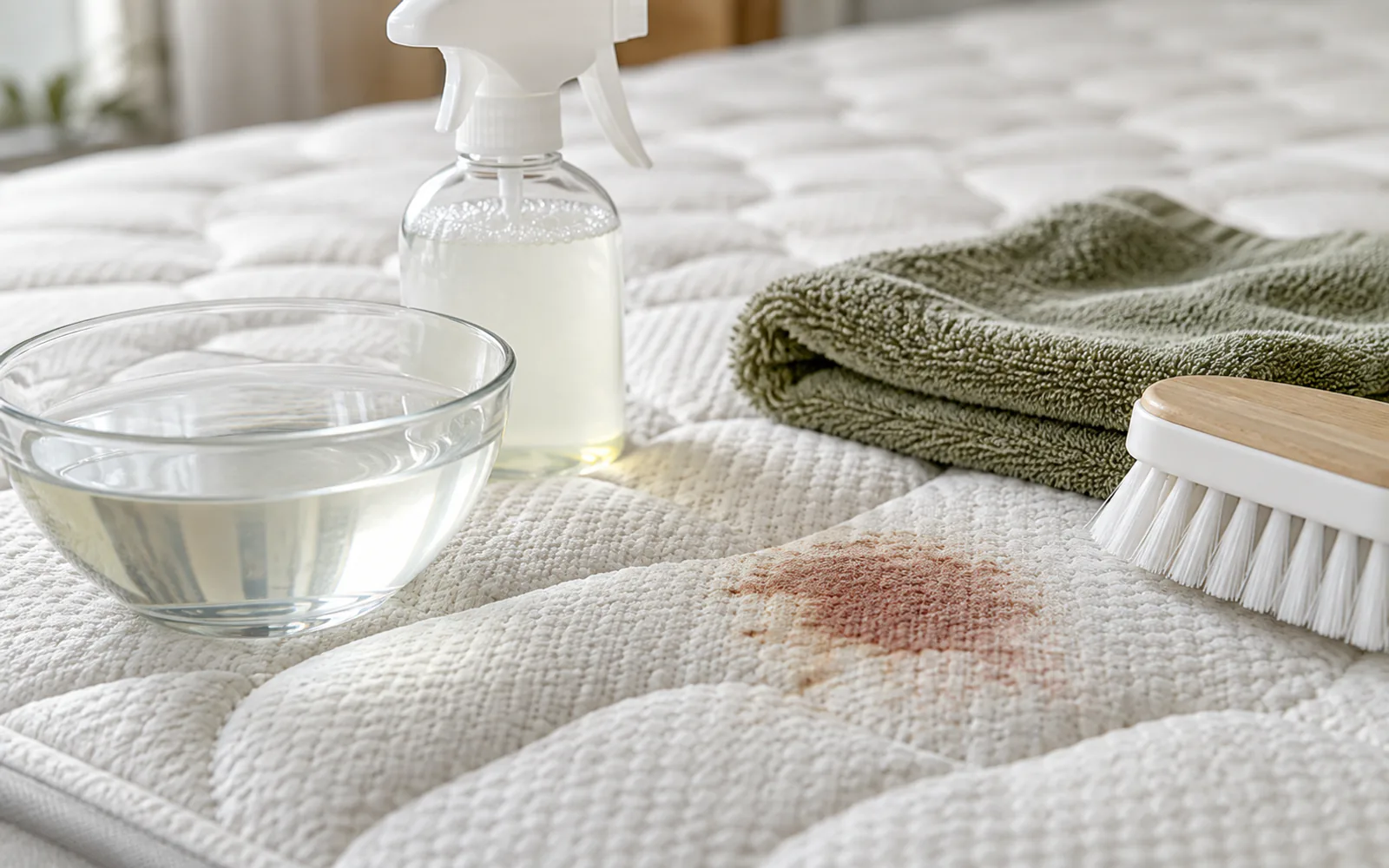
Use this for any stain before trying stain-specific approaches:
- 1Blot up any liquid with dry towels, working from the outside of the stain toward the center
- 2Apply a small amount of cold water with a damp cloth (not a soaked one)
- 3Add a few drops of mild dish soap and blot gently with the damp cloth
- 4Rinse by blotting with a clean cloth dampened only with cold water
- 5Blot dry with fresh dry towels until the towels come away dry
- 6Sprinkle baking soda over the area and leave for at least 30 minutes
- 7Vacuum the baking soda thoroughly
- 8Run a fan over the area for several hours before re-making the bed
Blood
Blood is a protein stain that bonds chemically to fibers when exposed to heat. The cleaner of choice is hydrogen peroxide combined with baking soda:
- Mix two parts hydrogen peroxide (3% strength) with one part baking soda and a drop of dish soap into a paste
- Spread a thin layer over the stain and let it bubble — that's the peroxide breaking down the proteins
- Wait 30 minutes, then blot away with a damp cloth and cold water
- Repeat once if the stain is still visible
Dried blood needs the same treatment but a longer dwell time — let the paste sit for an hour. For fabric covers, an enzyme stain remover (like Nature's Miracle or similar pet-formulated products) is also effective.
Urine
Urine contains uric acid crystals that regular soap can't break down — which is why a urine-stained mattress can smell fine when dry and then re-emit odor when humidity rises. The fix is an enzyme cleaner, which contains bacteria that digest the uric acid:
- 1Blot up as much liquid as possible with dry towels
- 2Apply an enzyme cleaner (Nature's Miracle, Rocco & Roxie, or any pet-stain enzyme formula) per the bottle directions
- 3Let it sit for the manufacturer-recommended time, typically 10 to 15 minutes
- 4Blot with cold water to lift residue
- 5Cover with baking soda for at least an hour, then vacuum
- 6Repeat the enzyme treatment if odor returns after drying
For older dried urine stains and odors, the enzyme treatment usually needs two or three applications across multiple days.
Sweat and Yellow Stains
Yellow staining from accumulated sweat over time is one of the harder mattress stains to fully remove. The approach combines an oxygen-based cleaner with patience:
- Mix one tablespoon dish soap, one tablespoon hydrogen peroxide, and a teaspoon of baking soda into a paste
- Apply to the yellowed area and let it sit for 30 to 60 minutes
- Blot away with cold water and a clean cloth
- For stubborn yellowing, a lemon juice and salt paste is the traditional alternative — apply, let dry in indirect sunlight if possible, brush off
Once you've cleaned the surface, install a moisture-wicking protector to prevent the cycle from repeating.
Wine and Coffee
Tannin-based stains respond to soap and water, but speed matters — older stains are much harder to remove.
- 1Blot up as much liquid as possible immediately
- 2Sprinkle salt or baking soda over the wet stain to absorb the rest, then vacuum after 10 minutes
- 3Mix a teaspoon of dish soap with a cup of cold water
- 4Blot the stain with the soap solution using a microfiber cloth
- 5Rinse by blotting with cold water
- 6Air dry with a fan for several hours
For dried red wine stains, hydrogen peroxide can sometimes lift them — test on a hidden area first, since peroxide can lighten fabric.
Vomit
Both a stain and an odor problem. Same protein-stain rules apply:
- 1Scrape off solids first with a stiff piece of cardboard or an old spatula
- 2Blot any liquid with dry towels
- 3Apply an enzyme cleaner per bottle directions and let it sit 15 to 20 minutes
- 4Blot with cold water and dish soap
- 5Cover thickly with baking soda and let sit for at least two hours
- 6Vacuum thoroughly and run a fan over the area
When the Stain Won't Come Out
Some stains — especially older ones or ones that have been heat-treated — won't fully come out. That's a cosmetic problem more than a functional one. The mattress is still usable. The bigger consequence is that visible staining voids most manufacturer warranties, so install a waterproof protector immediately to preserve any remaining warranty coverage.
A waterproof protector is the simplest way to keep the next stain from happening at all.
Browse Mattress Protectors →Not sure where to start?
Take our quick sleep quiz and we'll match you with mattresses that fit your sleep style and budget — no jargon, no upsell.
Find your perfect sleep →