
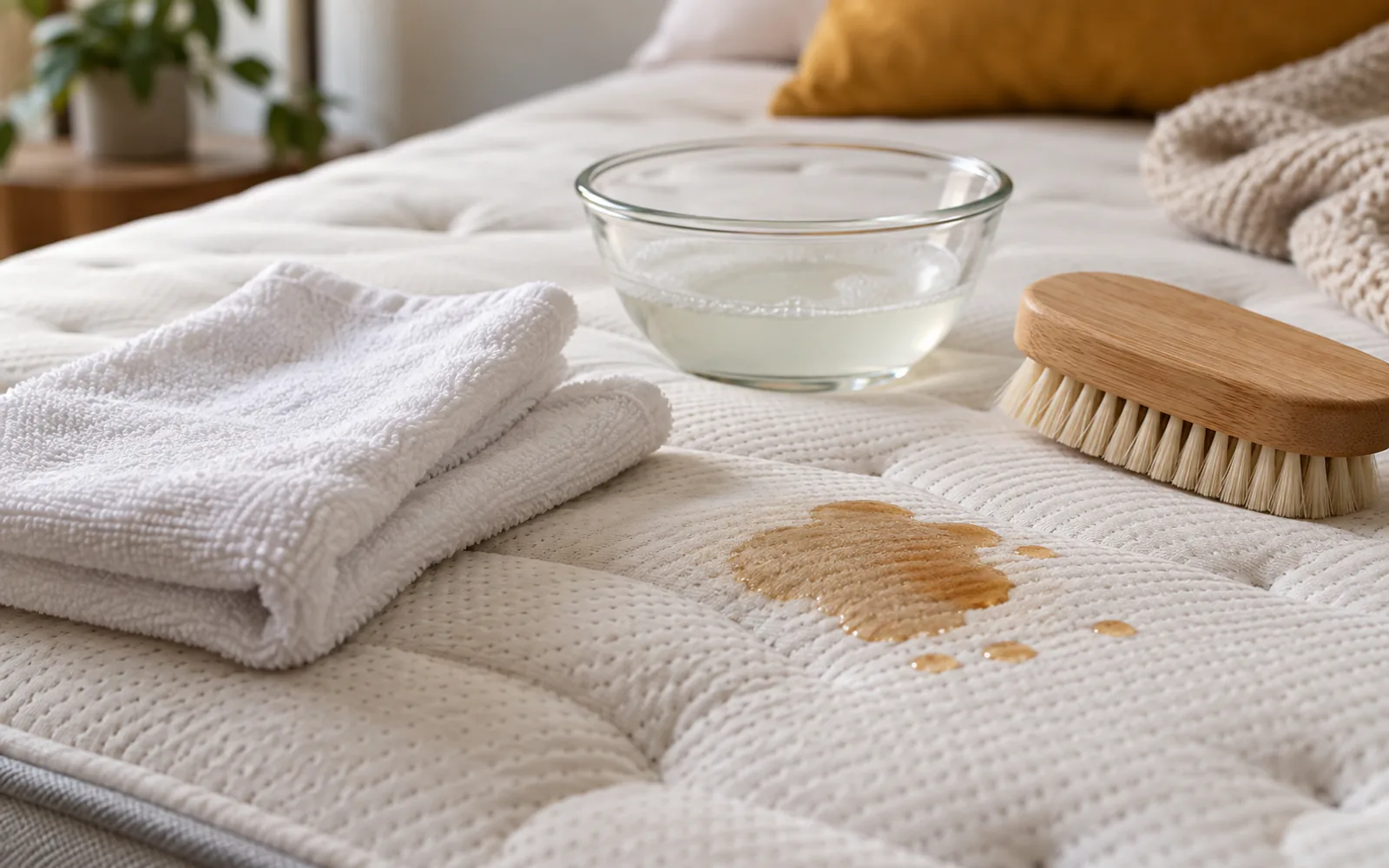
Spot-Clean vs. Deep-Clean: The Difference
Spot-cleaning is targeted and reactive — you address a specific spill or fresh stain as soon as it happens. Deep-cleaning is the periodic full-surface routine (vacuum, baking-soda deodorize, address any lingering stains) that you do every six months or so. Spot-cleaning is the more important of the two for protecting the mattress; deep-cleaning is for general hygiene.
What to Have on Hand
- A few clean microfiber cloths or white towels (white so you can see what's transferring)
- Mild dish soap (a drop or two — not the whole bottle)
- Cold water in a small bowl
- Baking soda
- Enzyme cleaner for protein-based stains (urine, blood, sweat) — Nature's Miracle, Rocco & Roxie, or similar
What to skip
Hot water (sets protein stains), bleach (damages fabric and foam, doesn't work on the main mattress stains anyway), carpet cleaner (too harsh for mattress covers), and rough scrub brushes.
The Universal Spot-Clean Protocol
This works for almost every fresh spill. The sequence matters:
- 1Blot up as much liquid as possible with dry towels, working from outside the spill toward the center to prevent spreading
- 2Mix a few drops of dish soap into a bowl of cold water
- 3Dampen a microfiber cloth (wet, not soaked) with the soap solution
- 4Blot the spill area gently — don't rub, don't scrub
- 5Rinse: blot with a clean cloth dampened only with cold water to lift soap residue
- 6Dry: blot with fresh dry towels until they come away dry
- 7Sprinkle baking soda over the area and let sit for 30 minutes
- 8Vacuum the baking soda thoroughly
Run a fan over the area for several hours afterward. Don't replace fitted sheets until the spot is fully dry to the touch — moisture trapped under bedding is how mildew gets started.
Speed Matters
Time-since-spill cheat sheet
- First few minutes — most of the liquid can be blotted off before it migrates into the foam
- First hour — a basic spot-clean handles almost any fresh spill
- First 24 hours — usually still treatable with the universal protocol; may need a second pass
- After 24 hours — you're now in stain-removal territory, not spot-cleaning
Common Spills and Quick Adjustments
The universal protocol covers most situations. A few common spills benefit from small adjustments:
- Wine or coffee — sprinkle salt or baking soda on the wet stain immediately to absorb extra liquid, then proceed with the universal protocol
- Pet urine — go straight to enzyme cleaner; uric acid crystals don't break down with regular soap
- Blood — hydrogen peroxide and baking soda paste; cold water always
- Vomit — scrape solids first with a piece of cardboard, then enzyme cleaner
- Sweat — usually doesn't need immediate spot-cleaning, but yellowing over time benefits from a peroxide-and-baking-soda paste
Older or stubborn stains need a more targeted approach.
Read: How to Get Stains Out of a Mattress →The Drying Step Most People Skip
Foam absorbs water. Water that doesn't evaporate becomes mildew. After any spot-clean — even a small one — running a bedside fan across the area for at least two hours is the difference between a clean mattress and a moldy one a week later. Open a window if the room is humid. Don't put the fitted sheet back on until the area is fully dry to the touch.
Install a Protector After the First Spill
Most major mattress warranties are voided by any visible stain — once you've had one spill, the next one threatens warranty coverage. A waterproof, moisture-wicking mattress protector blocks liquid from reaching the mattress entirely and washes in a regular cycle. It's the single most effective preventive measure against future spot-cleans.
A good protector is the difference between one spill and an ongoing problem.
Browse Mattress Protectors →Not sure where to start?
Take our quick sleep quiz and we'll match you with mattresses that fit your sleep style and budget — no jargon, no upsell.
Find your perfect sleep →