
How Often to Clean a Mattress
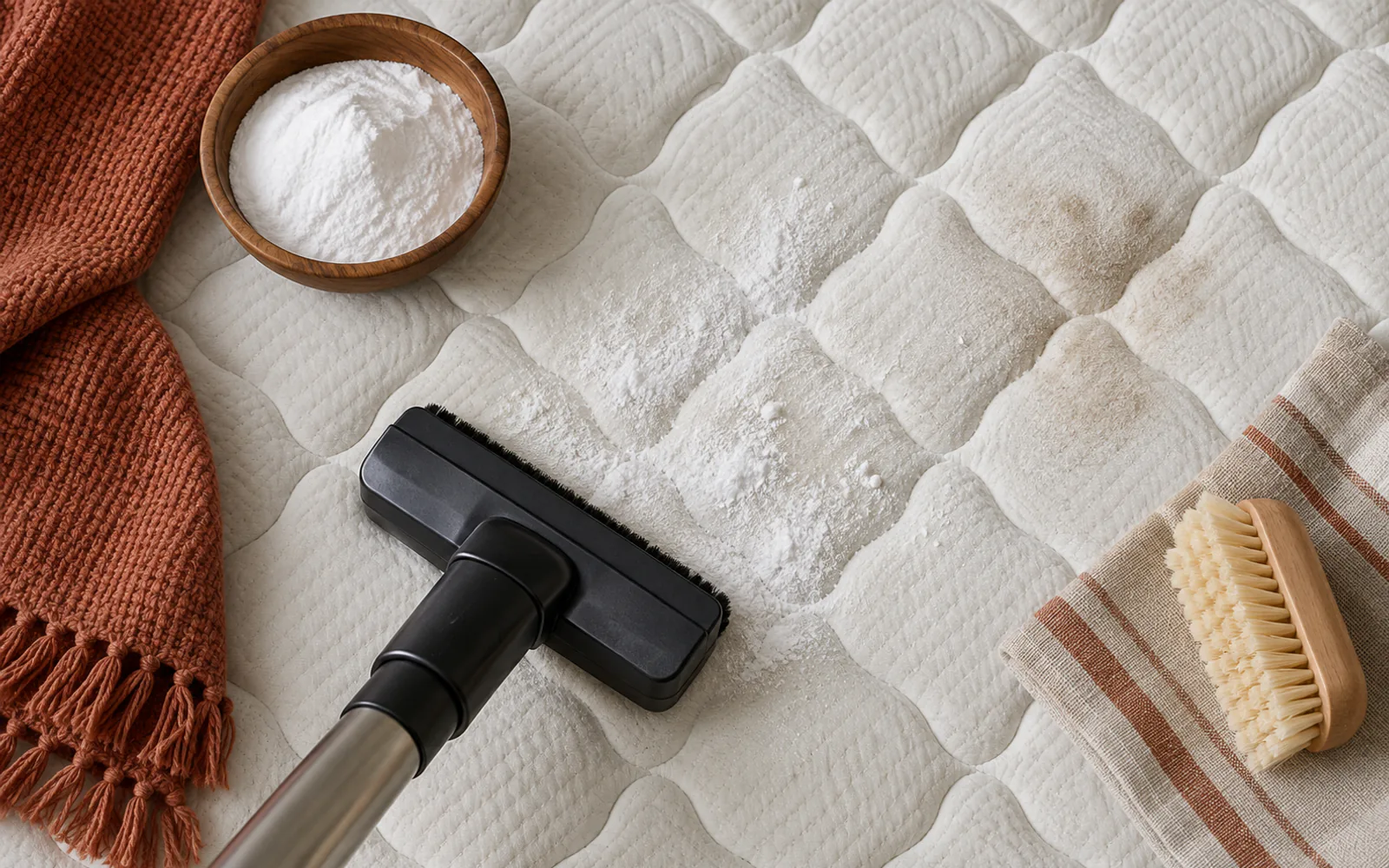
Vacuum the surface every one or two months. Do a deeper clean — vacuum, baking-soda deodorize, spot-treat any stains — every six months or so. Many people sync the deeper clean with the seasonal sheet change, which is an easy schedule to remember. Spills and accidents should be addressed immediately, not on a schedule.
What You'll Need
- A vacuum with an upholstery attachment (the small hose head with the wider opening)
- A box of baking soda
- A few clean microfiber cloths or white towels
- Mild dish soap (a few drops in cold water)
- Optional: an enzyme cleaner for protein-based stains (urine, blood, sweat)
- Optional: a few drops of essential oil to scent the baking soda before deodorizing
What to skip
Steam cleaners, carpet shampooers, bleach, and ammonia. All four can damage foam, leave residue that off-gasses, or void your warranty by introducing too much moisture into the support layers.
Step 1: Strip the Bed and Vacuum
Remove all sheets, the mattress protector, and any toppers. Wash bedding on the hottest cycle the fabric allows — hot water kills dust mites. With the mattress bare, vacuum the entire surface in slow, overlapping passes using the upholstery attachment. Pay extra attention to seams, tufts, and the perimeter piping, which collect more debris than the open surface.
Step 2: Deodorize With Baking Soda
Sprinkle a thin, even layer of baking soda across the entire mattress. Let it sit for at least 30 minutes; for stronger odors, leave it for several hours. Baking soda pulls trapped moisture out of the surface fibers and neutralizes odor compounds. If you want a light scent, mix a few drops of lavender or eucalyptus oil into the box of baking soda before sprinkling.
Vacuum the baking soda completely. Take your time — leftover residue can attract moisture and feel gritty under your sheets. Several passes with the upholstery attachment, working in a grid pattern, gets it all.
Step 3: Spot-Clean Any Stains
Mix a few drops of mild dish soap into a bowl of cold water. Dampen a microfiber cloth — wet, not soaked — and blot at any visible stains. Blot, don't rub; rubbing pushes the stain deeper into the foam. Work from the outside of the stain toward the center to avoid spreading it. Follow with a clean damp cloth using only cold water to lift the soap residue, then blot dry with a fresh towel.
The cold-water rule
Always use cold water on mattress stains. Hot water sets protein-based stains — blood, urine, sweat — permanently into the fibers. Cold keeps the proteins soluble so detergents and enzymes can break them down.
Step 4: Let the Mattress Fully Dry
Open a window and run a bedside fan across the surface for several hours. Don't put fitted sheets back on until the entire mattress is dry to the touch — trapping moisture under a sheet is how mildew gets started in foam cores. If you cleaned in the morning, you can usually re-make the bed by evening.
Step 5: Rotate and Re-Protect
While the bed is bare is the perfect time to rotate the mattress 180 degrees. This evens out body-impression wear and is often required by warranty terms. Install a waterproof mattress protector before putting the fitted sheet back on — it's the single biggest thing you can do to keep the mattress clean and warranty-valid going forward.
A good waterproof protector pays for itself the first time something spills.
Browse Mattress Protectors →Mattress Type Considerations
- Memory foam: never saturate. Foam absorbs water deep into the support layers where it can't evaporate. Use the lightest possible moisture and dry thoroughly.
- Hybrid: same caution as memory foam for the top comfort layer. The coil core is more forgiving but you still don't want water pooling.
- Latex: naturally antimicrobial and mold-resistant, but the same low-moisture rules apply.
- Innerspring with a thin top layer: the most forgiving for cleaning, but check for any felt or padding that can hold moisture.
Common Mistakes That Cause Damage
- Steam cleaning a foam mattress — moisture penetrates too deep and most manufacturer warranties void for moisture damage
- Using bleach — degrades fabric and foam, doesn't even work on protein stains
- Skipping the drying step — sheets back on damp surface creates mildew within days
- Rubbing instead of blotting — pushes stains deeper into the comfort layer
- Trying to deep-clean a stained mattress instead of using a protector going forward — most warranties are already void after a stain
Stains that won't lift with the basic spot-clean usually need a targeted approach.
Read: How to Get Stains Out of a Mattress →Not sure where to start?
Take our quick sleep quiz and we'll match you with mattresses that fit your sleep style and budget — no jargon, no upsell.
Find your perfect sleep →