

Quick answer
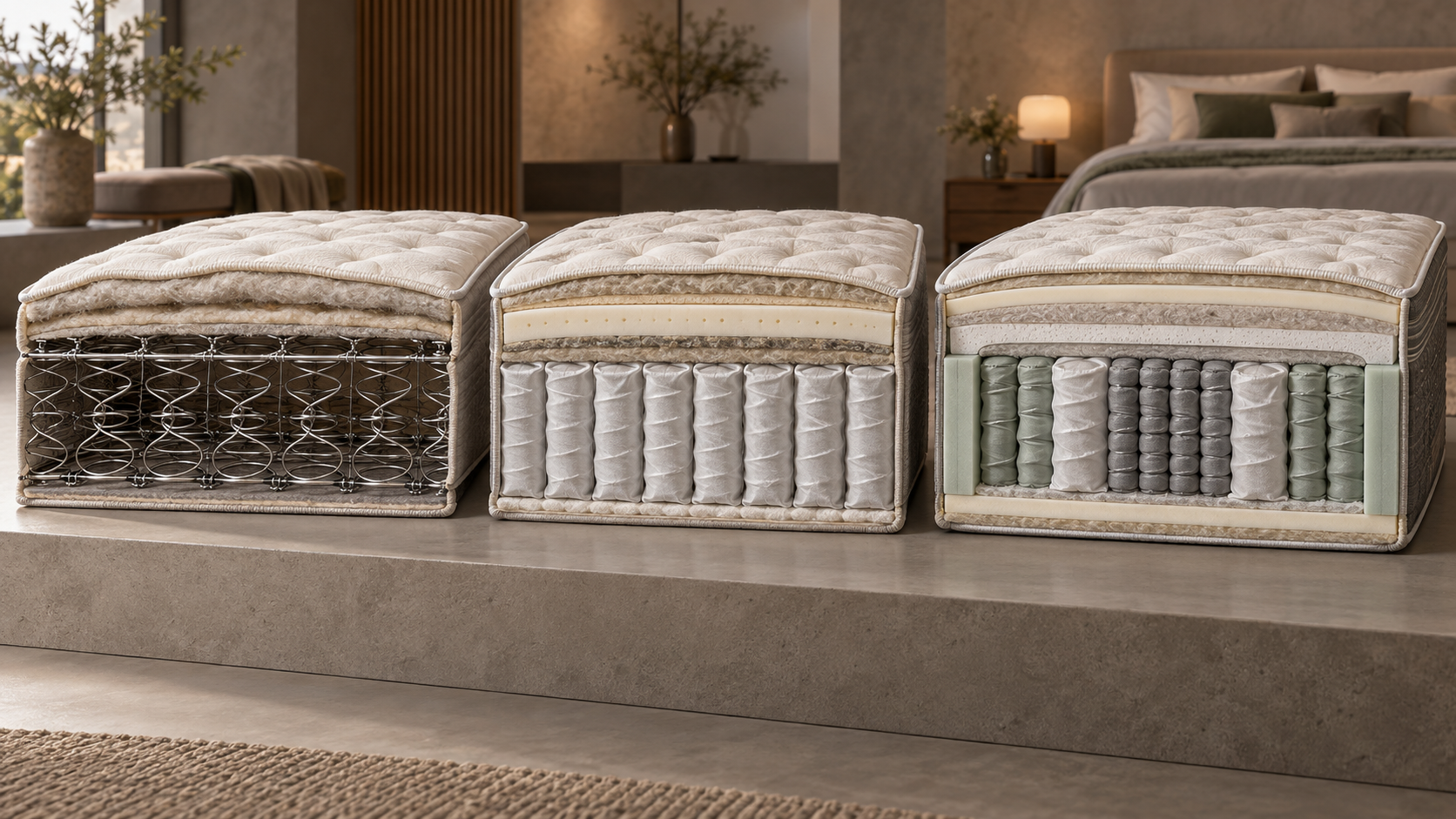
Compare coil count only within the same mattress size and similar construction. Then check coil type, spring-layer count, unit height, gauge or gauge zones, perimeter design, and comfort layers. More coils and thicker wire are not automatic signs of a better mattress.
What Mattress Coil Count Measures
Coil count is the number of springs in a stated mattress configuration. A Queen naturally has more surface area than a Twin, and a King can hold more coils than a Queen even when both use the same layout. Some published totals cover one support unit; others combine a support unit with microcoils or a second stacked spring unit.
Before comparing two counts, ask
- Are both numbers for the same mattress size?
- Does each total cover the main support core only, or every spring layer?
- Are the coils similar in diameter, height, shape, and pocket construction?
- Does one design use zoning, denser nesting, or reinforced perimeter coils?
- Is the number a Queen specification or an 'up to' total from the largest size?
Without those answers, 1,200 versus 900 is not a useful quality comparison. The larger number may describe smaller coils, a larger mattress, or two layers doing different jobs.
What Mattress Coil Gauge Measures
Gauge describes wire thickness. Within ordinary mattress specifications, a lower gauge number generally means thicker wire. That can change a spring's resistance, but gauge is only one input. Coil diameter, height, number of turns, shape, steel properties, preload, pocket material, nesting, and how the coil is attached all affect its response.
The safe translation
Read 'lower gauge' as 'thicker wire,' not as 'this mattress is firmer, more supportive, or more durable.' Those finished-product conclusions require the rest of the construction.
Why Coil Count Is Not a Quality Score
- Smaller-diameter coils can raise the count without adding more steel or more useful support.
- Microcoils can increase the total even though they sit in the comfort system rather than replacing the main support core.
- Two stacked coil units can produce a larger combined number than one taller support unit, but they are a different architecture rather than a simple upgrade.
- Zoned layouts deliberately vary coil density, diameter, or gauge across the bed, so the distribution matters more than one total.
- The foam, latex, wool, quilting, and transition layers above the springs determine much of the first feel and pressure distribution.
Sleep Foundation: mattress coil types, count, gauge, and construction limits
Pocket Coils, Connected Coils, and Microcoils
Pocketed coils
Each spring is enclosed in fabric and can respond more locally than a fully connected unit. The pockets and connecting fabric still influence how neighboring coils interact. A pocketed design does not guarantee perfect motion isolation, edge strength, or adjustable-base compatibility; verify the complete mattress specifications.
Connected coils
Bonnell, offset, and continuous-wire systems connect movement across the unit in different ways. Their response depends on the exact geometry and border construction. Do not assume that every connected system is identical or that its count can be compared directly with a pocketed unit.
Microcoils and nanocoils
These smaller springs typically sit closer to the sleeper as a responsive comfort or transition component. They can be useful, but they can also make a total sound dramatic. Ask for the support-core count separately whenever a seller advertises several thousand coils.
How Zoning and Edge Reinforcement Change the Numbers
A zoned unit may use different wire gauges, coil diameters, spacing, or patterns across the mattress. Perimeter reinforcement may use thicker or narrower coils around the edge while the center uses another specification. One headline gauge cannot describe a mixed-gauge unit, and one total cannot show where the coils are concentrated.
Ask for a map, not just a number
- Which areas are zoned, and what physically changes between them?
- Is the perimeter reinforced with different coils, foam, or another structure?
- Is the published gauge uniform or does the unit use several gauges?
- Does the zoning continue across every size and split configuration?
Three Real Mattresses Show Why Architecture Matters
The examples below use current Queen specifications published by the manufacturers. They are not a ranking by coil count. They show why the same size can have different totals because the springs are organized differently. Confirm the selected size, current specifications, price, stock, delivery, and seller terms before ordering.
Avocado Green Firm: 1,049 coils in one 8-inch zoned unit
Avocado publishes 1,049 coils for the current Queen Green Firm, with one 8-inch zoned support unit. This is the useful comparison baseline inside the brand: one main unit with zoning, rather than a generic 'over 1,000' badge.
Avocado Extra Firm: 1,600 coils across two 3-inch units
Avocado publishes a Queen total of 1,600 for the Extra Firm and describes two stacked 3-inch uniform 14-gauge units. The larger number comes with a different support architecture and a different intended response. It does not prove that this model is universally better than the Green Firm.
My Green Mattress Natural Escape: 1,148 coils in one multi-gauge zoned unit
My Green Mattress publishes 1,148 coils for the Queen Natural Escape in one 8-inch pocketed unit. Its specification uses 16-gauge coils at the perimeter, 15-gauge coils through most of the unit, and 14.5-gauge coils through the center third. The gauge map explains more than a single average gauge would.
💡 Prices change frequently. Click any mattress above to see today's deal.
A Better Way to Compare Two Coil Mattresses
- 1Match the size. Compare Queen with Queen, King with King, and the same split configuration.
- 2Identify the architecture. Note connected versus pocketed coils, the number of spring layers, and whether microcoils are included.
- 3Read the geometry. Record support-unit height, coil diameter when disclosed, zoning, perimeter construction, and every listed gauge.
- 4Inspect the layers above the coils. Comfort-material type, depth, density, firmness, and transition design can dominate the first feel.
- 5Check the use case. Consider movement, edge use, ease of turning, adjustable-base approval, finished height, and foundation requirements.
- 6Compare the recovery path. Read the exact seller's trial, minimum-use rule, pickup or shipping fee, exchange effect, and warranty conditions.
Specification Red Flags
Pause when a product page
- Says 'up to' a coil total without naming the mattress size behind that maximum.
- Combines microcoils and support coils but does not separate the two counts.
- Calls a high count proof of durability without describing the coil geometry, steel, or construction.
- Lists one gauge for a zoned or reinforced unit without explaining which area uses it.
- Uses a proprietary coil name but supplies no ordinary construction details.
- Publishes precise support claims while withholding the size, architecture, or layer definition behind the number.
What to Prioritize When Specifications Are Missing
A brand may withhold coil count, gauge, or both. That does not prove poor construction, but it limits your ability to compare. Shift the decision toward disclosed layer depth, product weight, verified size and model identity, base compatibility, return costs, warranty exclusions, and whether customer service will answer construction questions in writing.
Final recommendation
Use coil count and gauge as construction clues. Match size and architecture first, then interpret the numbers alongside zoning, edge design, comfort layers, and seller terms. Reject any shopping rule that turns one disclosed number into a universal quality grade.
See how coils fit into the larger choice among innerspring, foam, latex, and hybrid mattresses.
Read Mattress Types Explained →Not sure where to start?
Take our quick sleep quiz and we'll match you with mattresses that fit your sleep style and budget — no jargon, no upsell.
Find your perfect sleep →