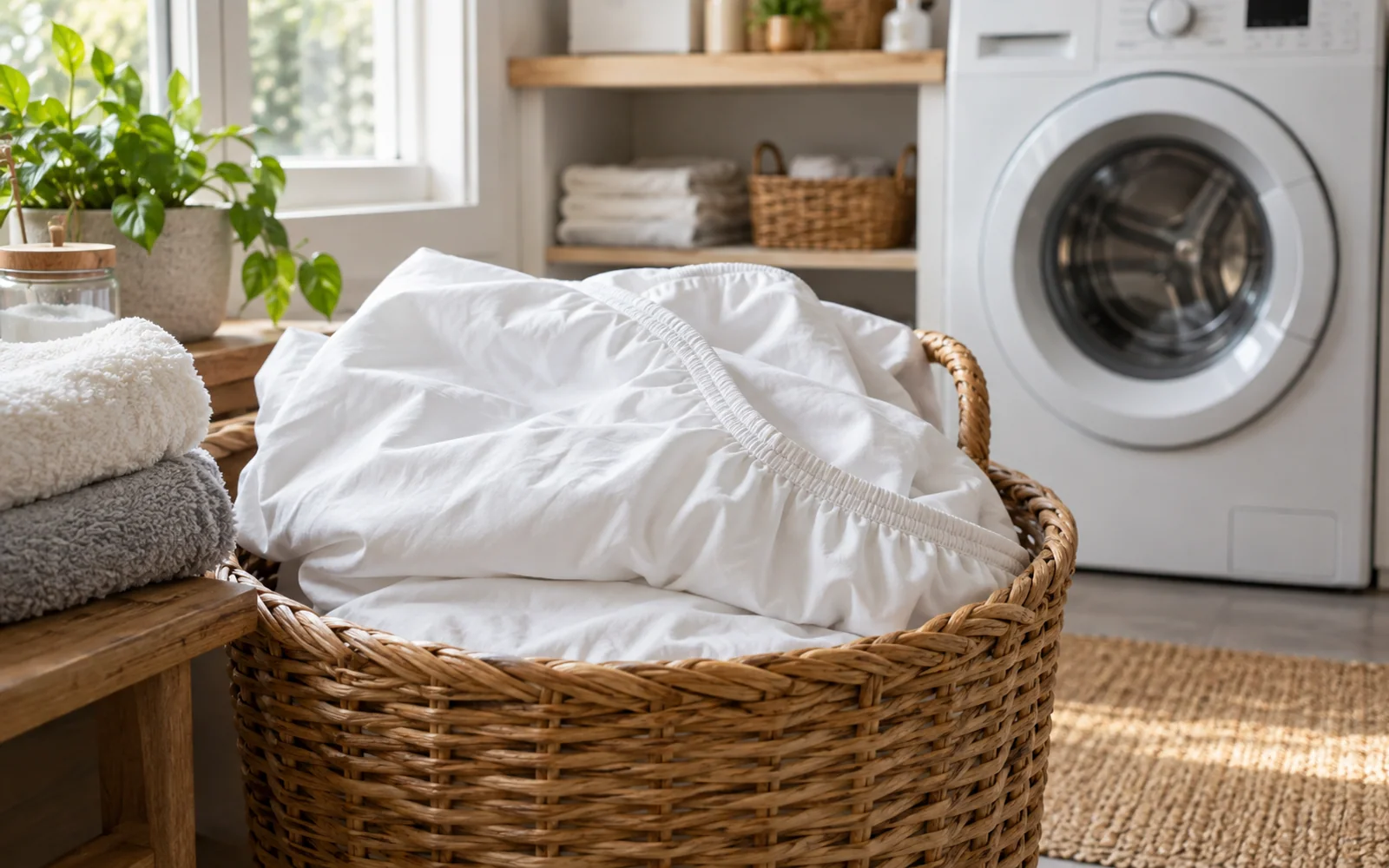
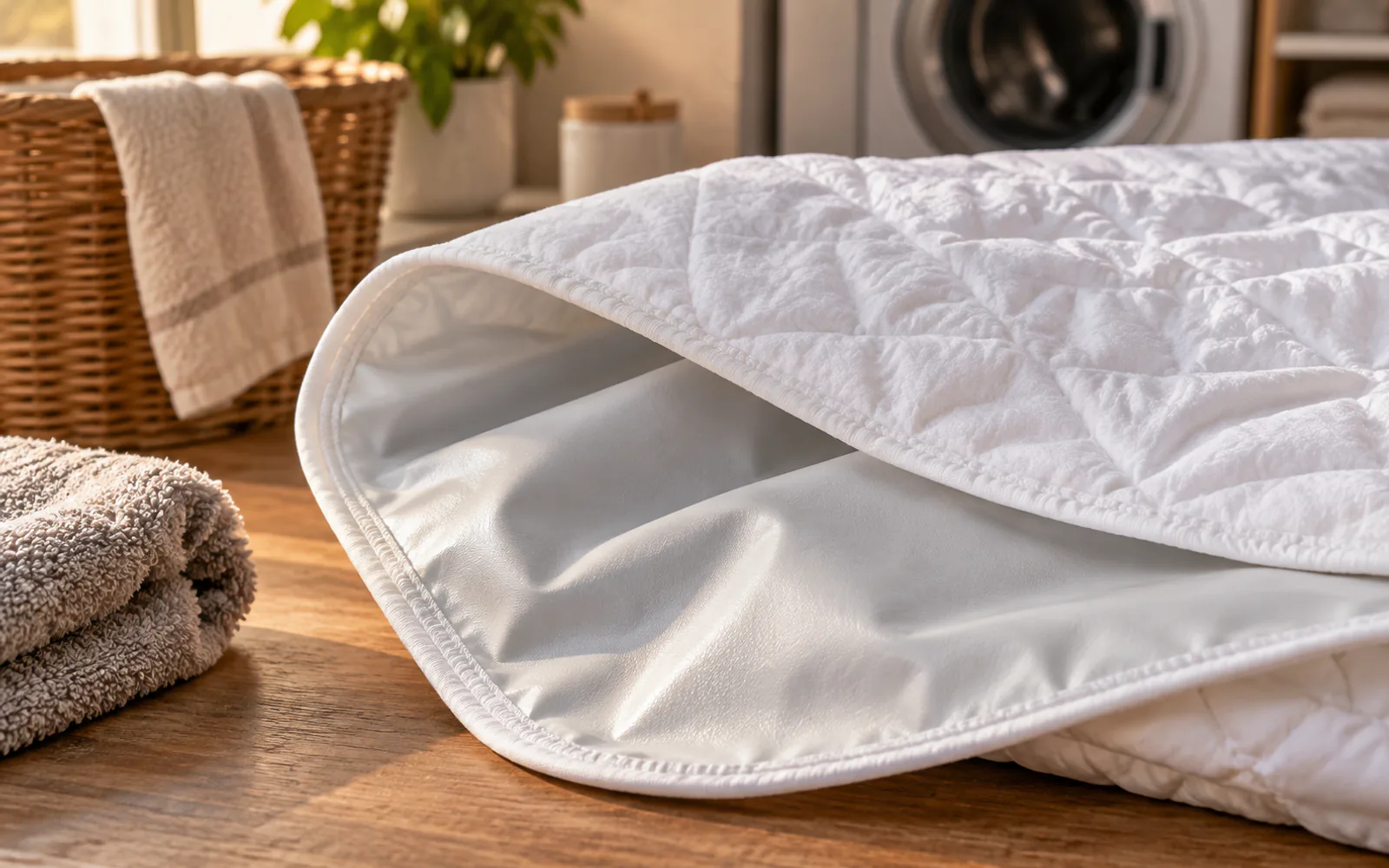
Before First Use
Wash the protector before the first installation. New protectors carry manufacturing residues that can cause skin irritation and a faint chemical smell. A cold gentle wash with mild detergent and a low-heat tumble dry preps it for everyday use.
How Often to Wash
- Standard sleeper: every 2 to 4 weeks (toss in with the sheets on the regular wash day)
- Hot sleepers, households with pets on the bed, or kids in the bed: every 1 to 2 weeks
- Immediately after any spill, accident, or sickness
Washing the protector regularly also keeps the mattress underneath cleaner — sweat and oils stop short of the mattress fabric, and dust mite accumulation slows significantly.
The Right Wash Cycle
Safe defaults for most waterproof protectors
- Water temperature: cool to warm (under 105°F / 40°C)
- Cycle: gentle or normal
- Detergent: mild liquid detergent in standard amounts
- Add an extra rinse to remove all detergent residue
The hot-water exception
Allergen-proof encasements specifically rated for hot washing (130°F+) can be washed hot to kill dust mites. The care label will explicitly say so. Standard waterproof protectors don't tolerate hot wash — the polyurethane backing breaks down with sustained heat exposure.
Drying: Where Most Protectors Get Ruined
High heat melts the polyurethane backing on most waterproof protectors. Once the backing fails, water beads through to the mattress instead of beading up on top — and the protector becomes a regular fabric mattress cover with no protective value.
Safe drying methods
- Tumble dry on low heat or no heat (air fluff)
- Hang dry on a clothesline or drying rack
- Lay flat to dry on a clean surface
- Remove from the dryer slightly damp and finish air-drying — the gentlest option
If you're in a hurry, low heat with dryer balls accelerates drying without melting the backing. Avoid the high-heat sanitize cycle that many newer dryers offer — it's specifically designed to exceed the temperature most protector backings can tolerate.
What Not to Use
- Bleach — degrades the waterproof membrane and the fabric over time
- Fabric softener — leaves a residue that clogs the breathable and waterproof layers, reducing wicking
- Dryer sheets — same residue problem as fabric softener
- Vinegar — generally fine in small quantities but unnecessary; cold water and mild detergent do the job
- Stain-fighting laundry boosters with oxidizers — some are safe, some degrade waterproof backings; check the protector care tag and the booster label both
Type-by-Type Care Notes
Cotton terry top with polyurethane backing
The most common waterproof protector style. Cool to warm wash, low-heat dry. The terry top can take more handling than the backing; the backing is the limiting factor.
Bamboo viscose top
Wicks moisture well. Cool gentle wash, low-heat dry or hang dry. Bamboo can shrink slightly with hot water.
Polyester knit top
Most durable to washing of common materials. Standard gentle cycle, low-heat tumble dry. Performs well over many wash cycles.
Allergen-proof zippered encasement
Some rated for hot wash (135°F+) to kill dust mites. Check the care tag specifically — encasement construction varies widely.
Wool / organic cotton waterproof protector
Wool can felt with warm wash and agitation. Cool gentle wash, hang dry, follow brand-specific instructions carefully — these protectors are usually the most care-sensitive.
When to Replace a Protector
Replace when
- Water beads through to the mattress instead of beading up on the protector surface (waterproof layer has failed)
- Fabric thins enough that you can feel the difference under the sheet
- Stains or odor persist after thorough washing
- Visible tears, cracks, or peeling on the waterproof backing
- The fitted-sheet-style edges no longer grip the mattress
Most quality protectors last 1 to 3 years of regular washing. Premium models from Bedgear, Saatva, Coop Home Goods, and Saferest commonly outlast the lower end of that range. The economics are simple: a $40 to $80 protector replaced every two years is a tiny fraction of the cost of replacing a mattress prematurely due to stains, sweat damage, or voided warranty.
If the protector has failed or doesn't exist, this is the highest-ROI single addition to mattress care.
Browse Mattress Protectors →Not sure where to start?
Take our quick sleep quiz and we'll match you with mattresses that fit your sleep style and budget — no jargon, no upsell.
Find your perfect sleep →