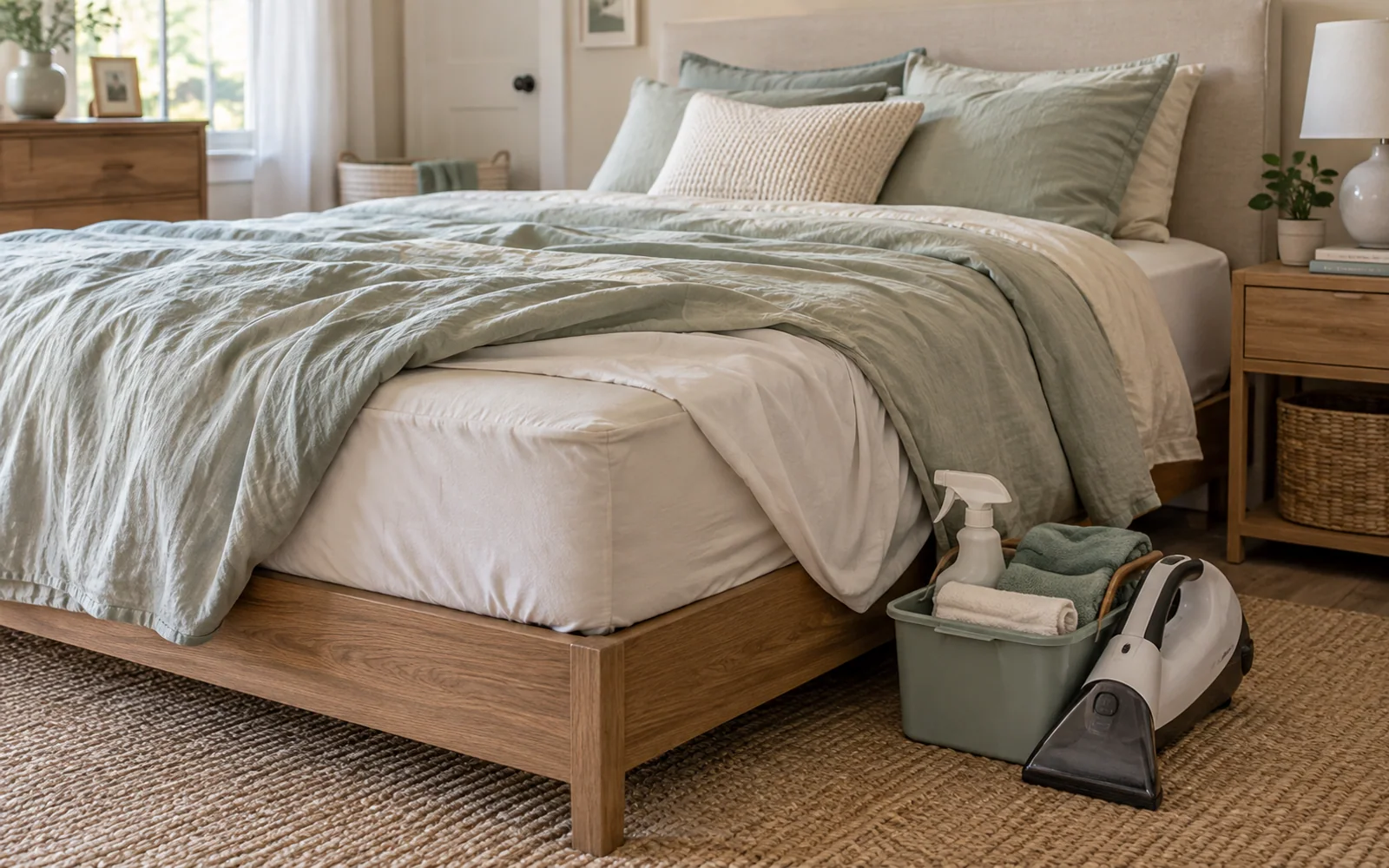
What Dust Mites Are
Dust mites are microscopic arthropods, roughly a quarter of a millimeter long — too small to see with the naked eye. They don't bite, don't sting, and don't carry disease. They live in soft surfaces (mattresses, pillows, upholstered furniture, carpet) and feed on dead skin cells. They thrive when ambient humidity is above 50 percent and temperatures are comfortable for humans, which is exactly the bedroom environment.
Reducing dust mite populations is a general bedding hygiene goal — similar to vacuuming carpets or cleaning kitchen surfaces. Sleep Foundation and EPA both publish dust mite reduction guidance focused on washing, humidity, and encasement strategies.
The Five Habits That Make the Biggest Difference
Dust mite reduction playbook
- Hot-wash bedding weekly at 130°F (54°C) or hotter
- Use allergen-proof zippered encasements on mattress and pillows
- Keep bedroom humidity under 50 percent
- Vacuum the mattress monthly with a HEPA-filter vacuum
- Replace pillows every 2 to 3 years and rotate to a freshly washed schedule
Doing all five together has a far larger effect than doing any one in isolation. Each addresses a different point in the dust mite lifecycle.
1. Hot Washing Bedding
Water at 130°F (54°C) or hotter kills dust mites and removes the allergens (mite waste and shed body parts) they leave behind. Most home water heaters are set lower than this by default, so set the wash cycle to its hot setting, then double-check that the machine actually delivers hot water (a thermometer in a sink of the same hot water confirms).
- Sheets and pillowcases: weekly
- Mattress protector: every 2 to 4 weeks
- Comforter cover and duvet inserts: monthly (or more if a duvet cover isn't used)
- Pillow inserts: every 3 to 6 months (washable types); replace every 1 to 3 years
For delicate fabrics that can't tolerate hot water, a long tumble dry on high heat (at least 15 minutes) after cool washing kills mites by heat rather than water.
2. Allergen-Proof Encasements
Zippered allergen-proof encasements have pore sizes under 10 microns — small enough to physically block dust mites and their waste. They go on the mattress like a fitted sheet, then zip closed on the underside. Pillow encasements are similar.
What to look for in an encasement
- Pore size rated under 10 microns (or explicitly labeled allergen-proof / dust-mite-proof)
- Full zipper closure (not just elastic edges)
- Waterproof backing also blocks sweat that would otherwise feed the mite population in the mattress underneath
- Breathable fabric on the top surface to keep the bed comfortable
Encasements last 1 to 3 years before the fabric thins. Wash them with the sheets and replace when the waterproof layer fails.
3. Bedroom Humidity Under 50 Percent
Dust mites need ambient humidity above roughly 50 percent to survive. Reducing humidity is one of the most effective single interventions, especially in humid climates.
- A dehumidifier in the bedroom, set to 40 to 50 percent
- Air conditioning during humid months — AC dehumidifies as a side effect
- An inexpensive hygrometer ($10 to $20) lets you actually measure and verify rather than guess
- Open windows when outdoor humidity is low; close them when it's high
- Use bathroom and kitchen exhaust fans aggressively — household humidity migrates
The EPA recommends 30 to 50 percent indoor humidity for general indoor air quality. The lower end of that range is also less hospitable for mold, which is a related but separate concern.
4. HEPA Vacuuming
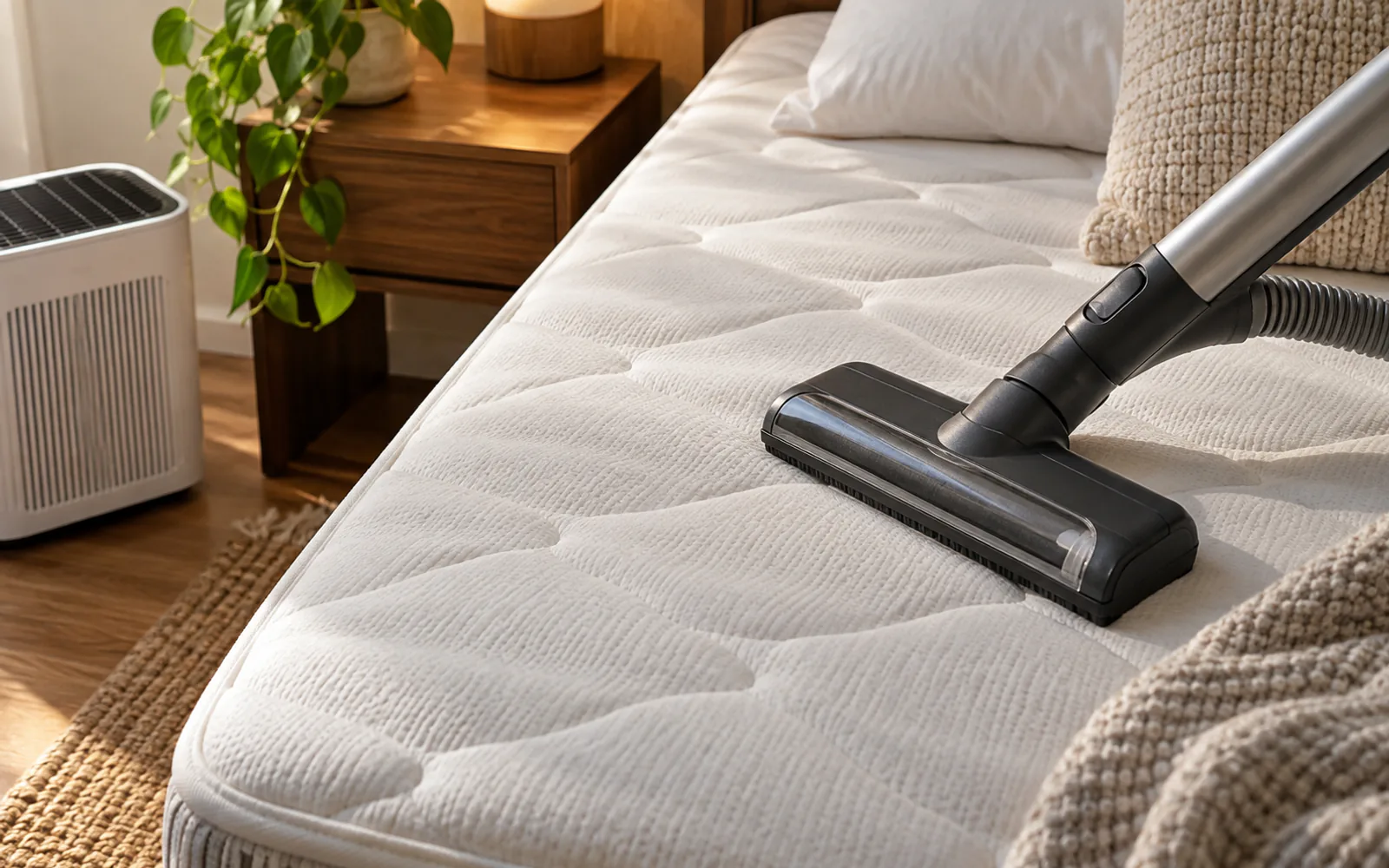
Once a month, vacuum the mattress with a vacuum that has a HEPA filter. Standard vacuums can blow microscopic particles (including mite allergens) back into the air. HEPA filters trap them. Use the upholstery attachment, work in slow overlapping passes, and pay extra attention to seams and perimeter piping where debris collects.
After vacuuming, empty the canister or dispose of the bag outside immediately. The captured material recirculates if it's emptied indoors.
5. Pillow Care and Replacement
Pillows accumulate skin cells, sweat, and dust mites faster than mattresses because they're closer to the face and harder to protect. Wash washable pillows every 3 to 6 months. Replace polyester pillows every 1 to 2 years, down every 2 to 3 years, memory foam and latex every 2 to 4 years. Pillow encasements (under the pillowcase) add a second barrier.
The pillow guide covers wash methods for each fill type.
Read: How to Wash Pillows →Things That Help But Aren't Essential
- Sunlight exposure of mattress and pillows — UV reduces mite populations on the exposed surface
- Freezing items that can't be hot-washed (small pillows, stuffed animals) for 24 hours kills mites
- Tile or hardwood bedroom floors instead of carpet — fewer mite-friendly surfaces in the room
- Steam cleaning carpet (not the mattress — steam ruins foam) reduces mites in surrounding fabric
- Air purifiers with HEPA filters help with airborne allergens generally
Things That Don't Actually Help
- Anti-mite sprays applied to bedding — most are ineffective and some leave residues that cause skin irritation
- Essential oils diffused in the bedroom — pleasant but no meaningful effect on mite populations
- Removing the mattress and replacing it without addressing the underlying humidity and washing routine — the new mattress will accumulate the same population
On Medical Concerns
This is a hygiene guide. Dust mite allergies, asthma triggered by mite allergens, and related medical conditions need a doctor's input, allergy testing, and a treatment plan tailored to the individual. The hygiene strategies above are general best practices that support — but do not replace — medical care.
A waterproof, allergen-proof protector handles steps 2 and part of step 1 in one purchase.
Browse Mattress Protectors →Not sure where to start?
Take our quick sleep quiz and we'll match you with mattresses that fit your sleep style and budget — no jargon, no upsell.
Find your perfect sleep →