
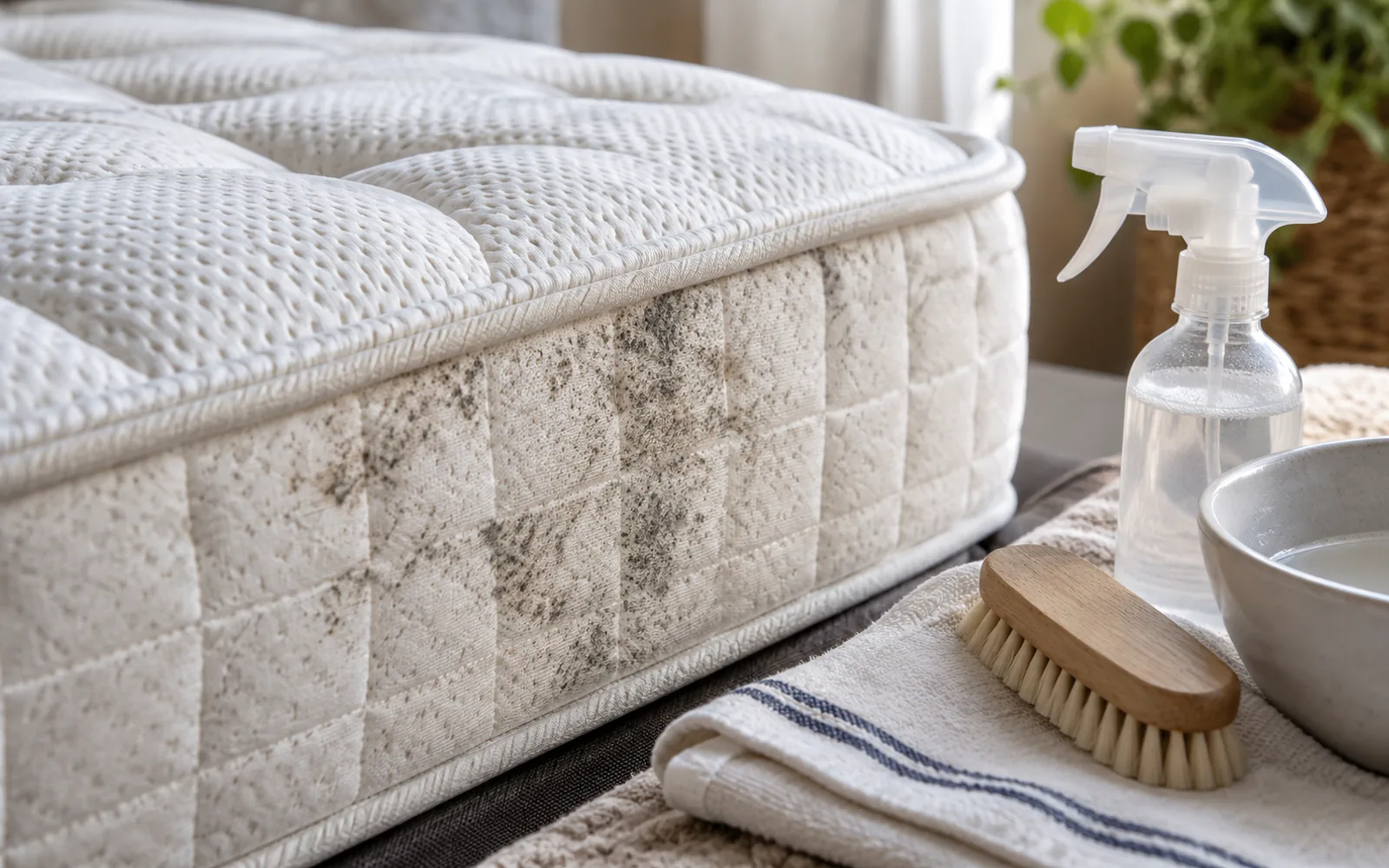
Is It Actually Mold?
A dark spot alone does not prove mold, and its color does not establish whether it is harmless. Look for visible growth, a persistent musty odor, dampness, a recent leak, or a patch that spreads. Check the underside and the bed base without disturbing a suspected patch. A stain can have a different cause, but a photo or home inspection cannot certify the inside of a mattress as mold-free.
If you are unsure
Stop using the mattress while you identify the moisture source. Follow the manufacturer's care and warranty instructions, or ask a qualified mold-remediation professional to assess a valuable item. Do not cut into the mattress or rely on a home color test to decide it is safe.
What Causes Mold on a Mattress
Mold needs moisture, organic material (which a mattress is full of), and time. Common causes:
- Storing the mattress in a sealed plastic bag (traps humidity)
- Placement on a solid platform or directly on the floor with no airflow underneath
- A leaky window, wet basement, or other environmental moisture in the room
- Persistent night sweats without a moisture-wicking protector
- A spill or accident that wasn't dried thoroughly
- Bedroom humidity consistently above 50 percent for extended periods
- Storage in unconditioned spaces (garages, attics, basements)
The common thread: persistent moisture the mattress can't shed. Eliminating either the moisture source or the trapped condition prevents new mold from forming.
Why Wiping a Moldy Mattress Is Unreliable
EPA distinguishes hard, nonporous surfaces, which can often be scrubbed and dried, from absorbent materials whose internal spaces may hold mold. A mattress has fabric, padding, and foam or fibers. The visible patch does not show how far contamination has traveled, so an alcohol wipe, bleach spray, vacuum, or time in the sun cannot verify that the mattress is safe again.
Do not rely on killing visible mold
EPA advises that even dead mold can cause reactions; cleanup must remove contamination and fix the moisture problem. Do not use a chemical treatment as proof that a porous mattress has been restored.
What to Do Instead
- 1Stop sleeping on a mattress with visible growth or a persistent musty odor, and look for the leak, condensation, or trapped humidity that caused it.
- 2If only a removable protector or cover is affected and the underlying mattress is dry and unaffected, follow that item's laundering instructions; do not assume the mattress itself is clean without checking it.
- 3For visible growth on the mattress, replacement is the prudent default. Ask a qualified remediation professional if the source or extent is unclear or the mattress is valuable.
- 4Follow local mattress-disposal rules. Contain a contaminated item during removal so it does not shed debris through the home, and clean and dry the surrounding hard surfaces according to EPA guidance.
- 5Fix the water source and dry the bed base and room before bringing in a replacement. Otherwise the new mattress can develop the same problem.
CDC says people with allergies, asthma, COPD, other lung disease, or immune suppression should not take part in mold cleanup. If anyone in the household is in one of these groups, seek professional help and individual medical advice rather than handling the item yourself.
EPA explains why mold in porous materials can be difficult or impossible to remove completely.
Read EPA mold cleanup guidance →CDC lists who should avoid mold cleanup and what protection cleanup workers need.
Read CDC mold cleanup guidance →When Replacement Is the Right Call
Do not wait for a large patch before taking visible mold on a porous mattress seriously. These conditions make replacement especially clear:
Replace if
- Visible growth appears on the mattress surface or underside
- The mattress was soaked, stored damp, or stayed wet long enough for growth or odor to develop
- A musty odor persists or returns after the moisture source is fixed
- Growth spreads or reappears after surface treatment
- A person who may be more vulnerable to mold exposure will use the bed
This is general home-care information, not a diagnosis or individual medical advice. A clinician can advise on symptoms; a qualified remediation professional can assess an uncertain moisture problem.
Prevention
Mold prevention is mostly about airflow and humidity:
Prevention checklist
- Use a ventilated, manufacturer-approved bed base rather than placing the mattress directly on a damp floor
- Install a breathable moisture-wicking mattress protector
- Keep bedroom humidity under 50 percent (a hygrometer is $10 to $20)
- Address any spill or sweat soaking within hours, not days
- Never store a mattress in sealed plastic — use a breathable storage bag instead
- If the bedroom has a humidity problem (basement, single-pane windows), run a dehumidifier
If the mattress was in storage and now smells musty, the storage guide covers what went wrong and how to avoid it next time.
Read: How to Store a Mattress →On Disposing of a Moldy Mattress
If replacement is the call, contain the moldy mattress during removal so debris does not spread through the home. Ask your local waste service how to wrap and dispose of a contaminated mattress; pickup requirements vary by location. Do not donate a moldy mattress.
The disposal guide covers municipal pickup, recycling programs, and brand take-back options.
Read: How to Dispose of an Old Mattress →A fitted waterproof protector can reduce spill penetration, but it does not replace fixing leaks, drying the base, and controlling room humidity.
Compare Mattress Protectors →Not sure where to start?
Take our quick sleep quiz and we'll match you with mattresses that fit your sleep style and budget — no jargon, no upsell.
Find your perfect sleep →