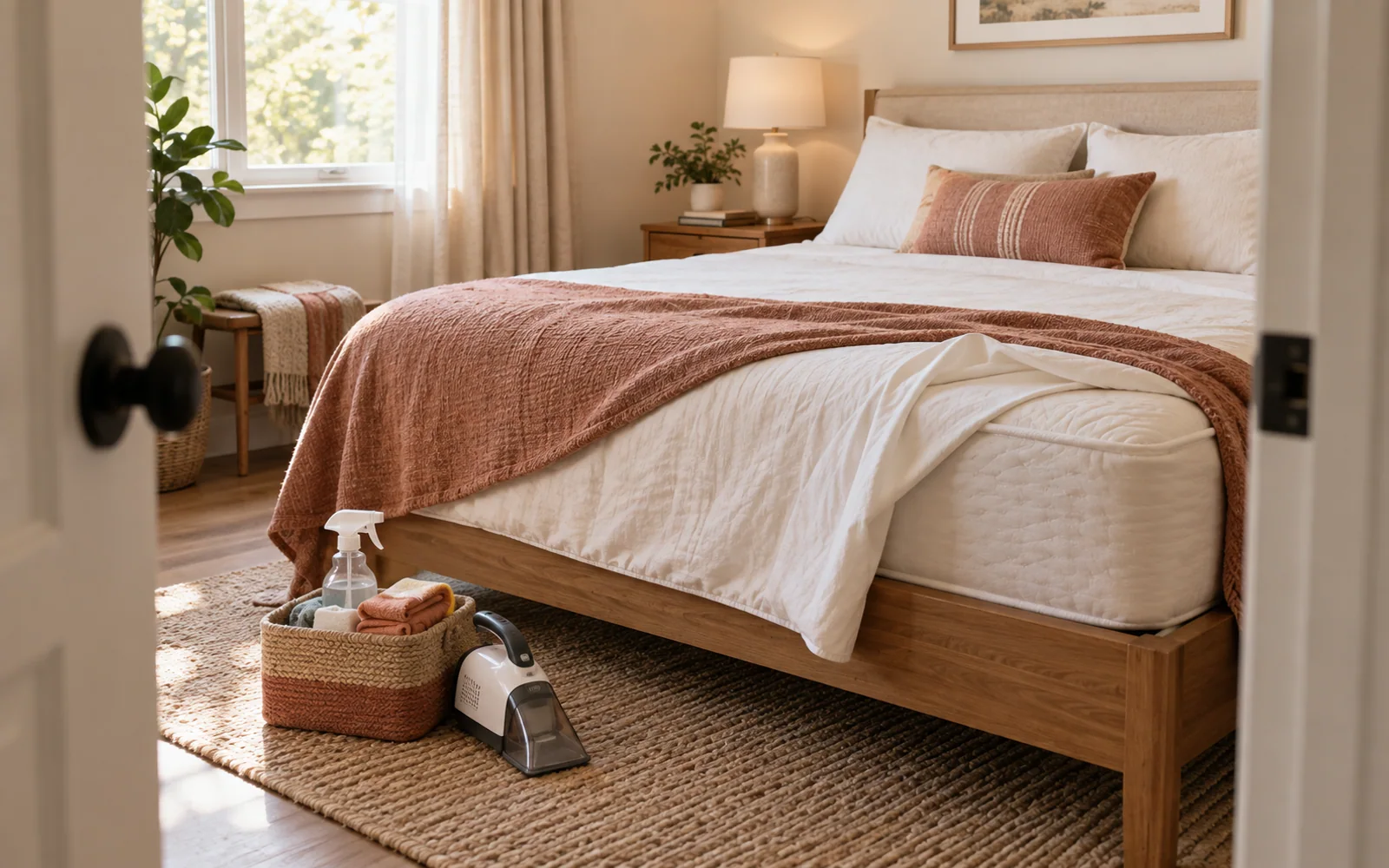
Why Mattresses Develop Odor
Three sources, layered: bodily moisture (sweat and oil), shed skin cells that dust mites consume and process, and ambient absorption from the room (cooking, smoke, pet hair, humidity). All three accumulate slowly under sheets and become noticeable once they cross an individual threshold — usually around the one-to-two-year mark without periodic deodorizing.
The Canonical Baking Soda Method
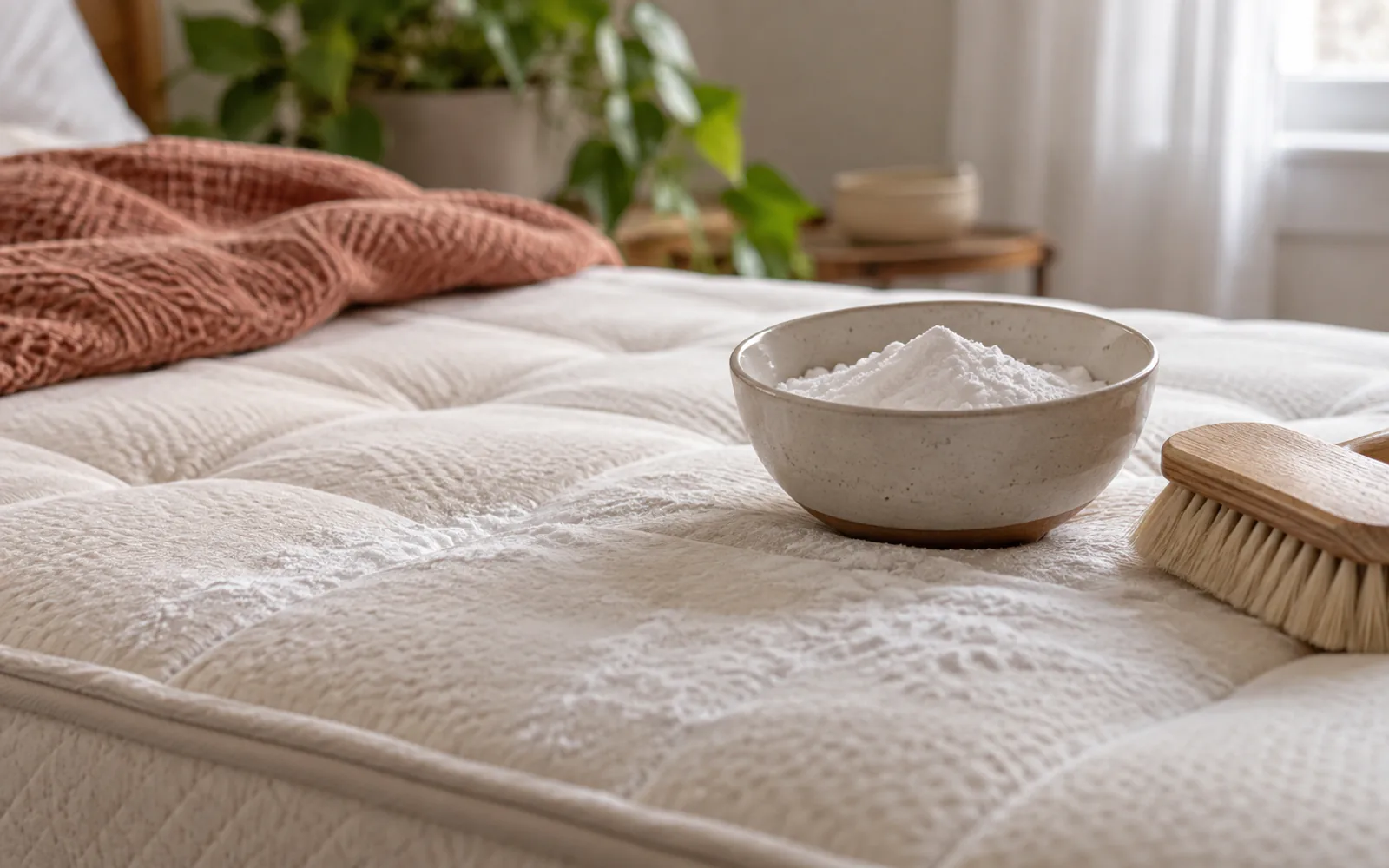
Baking soda absorbs moisture and neutralizes odor compounds. It's the simplest, safest, and most universally recommended deodorizer for any mattress type.
- 1Strip the bed completely — sheets, protector, topper.
- 2Vacuum the entire mattress surface with an upholstery attachment to remove loose debris.
- 3Sprinkle a thin even layer of baking soda across the entire surface.
- 4Leave for at least 30 minutes. For stronger odors, leave for several hours (or overnight).
- 5Vacuum thoroughly with the upholstery attachment in overlapping passes. Take your time — residue feels gritty under sheets.
- 6Re-make the bed.
Light scent option
Mix a few drops of lavender, eucalyptus, lemon, or tea tree essential oil into the box of baking soda before sprinkling. The scent disperses with the baking soda and most fades after a few days. Don't apply essential oils directly to the mattress — concentrated oils can stain and may irritate skin contact later.
When Baking Soda Isn't Enough
For odors that have set in deeper than the surface — old urine, persistent sweat, smoke from a previous owner — a few stronger approaches:
Vinegar Mist (Light Use)
Mix one part white vinegar with one part cold water in a spray bottle. Lightly mist (not soak) the affected area. The vinegar smell itself fades within a few hours and takes some of the embedded odor with it. Follow with the baking soda method above. Skip this on memory foam — even diluted, vinegar adds more moisture than foam tolerates well.
Enzyme Cleaner (For Organic Odors)
If the odor source is identifiable — urine, sweat, vomit, pet accidents — an enzyme cleaner reaches the underlying compounds that baking soda only masks. Apply per the bottle directions, dwell time 10 to 15 minutes, blot away with cold water, then finish with the baking soda step. Enzyme cleaners are most commonly chosen for protein-based odor sources.
Sunlight (Where Practical)
UV light breaks down some odor-producing organic compounds. After cleaning, dragging the mattress to a sunny window or out into the yard for two to three hours can lighten residual odor. Check the weather, don't leave it long enough to attract pollen and pests, and use this as a supplement to baking soda rather than a replacement.
Common Mistakes That Backfire
- Layering air freshener over the smell — masks temporarily, returns immediately
- Soaking the mattress with vinegar or other liquid — introduces more moisture than foam can dry, often creating a worse problem
- Using fabric softener spray — leaves a residue that attracts dust
- Skipping the vacuum step after baking soda — leftover residue feels gritty and clogs sheets
- Trying to deodorize without identifying the source — if it's old urine or mold, surface deodorizing won't reach it
When Persistent Odor Signals Something Deeper
If the smell comes back within days after a thorough baking-soda deodorize — or if it's strongest from the underside of the mattress — the source is likely deeper than the surface.
Possible underlying causes
- Mold or mildew inside the foam (sweet musty smell, often after humid storage or persistent sweat without a protector)
- Old urine accidents that were never enzyme-treated (uric acid crystals re-emit when humid)
- Moisture trapped between mattress and a solid platform with no airflow
- A wet basement, leaky window, or other environmental moisture in the room
If you suspect mold, the mold-on-mattress guide covers identification and the limits of cleaning. If old urine is the cause, the urine cleaning guide walks through the enzyme protocol.
Mold is the one cause where cleaning can't always recover the mattress — early identification matters.
Read: How to Deal With Mold on a Mattress →How Often to Deodorize
Most sleepers benefit from a deodorize every six months — usually paired with the seasonal sheet change and a deeper clean. Hot sleepers, households in humid climates, and homes with pets on the bed do well with a quarterly cadence. A moisture-wicking protector dramatically slows the buildup of body oils and sweat that cause most ambient mattress odor.
A protector handles the daily prevention so the periodic deodorize stays light.
Browse Mattress Protectors →Not sure where to start?
Take our quick sleep quiz and we'll match you with mattresses that fit your sleep style and budget — no jargon, no upsell.
Find your perfect sleep →