What Causes Yellow Stains on a Mattress
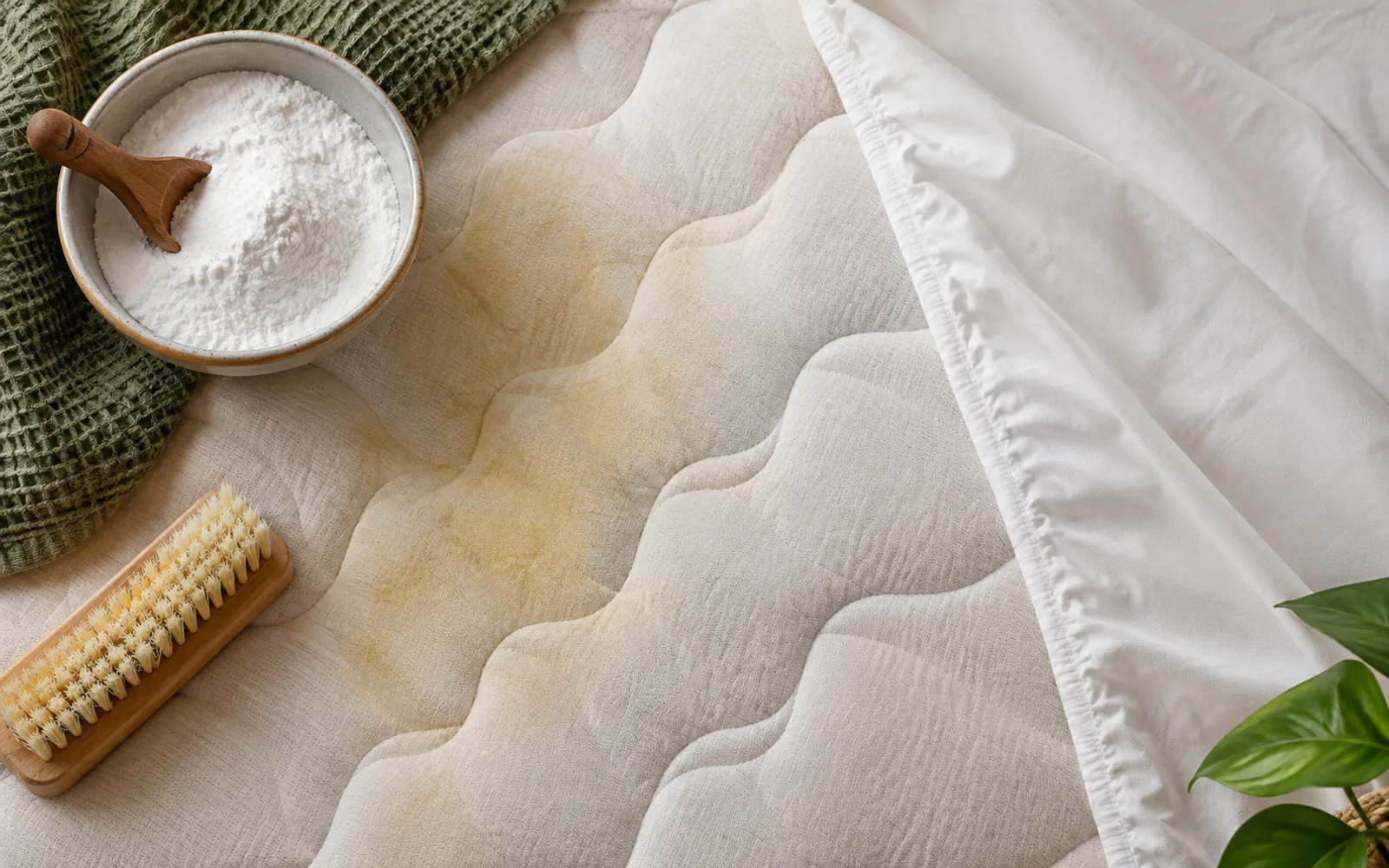
Three things, layered: sweat (mostly water but containing salts and urea), body oils (sebum from the skin), and shed skin cells. Over months, the proteins and oils oxidize on the fabric surface, producing the characteristic yellow discoloration. People who sleep hot, who exercise in the evening, or who don't use a moisture-wicking protector see yellowing fastest. The discoloration is normal but cosmetic — it doesn't affect mattress performance, but it does void most warranties.
What You'll Need
- 3% hydrogen peroxide (drugstore strength)
- Baking soda
- Mild dish soap
- Several clean microfiber cloths
- A vacuum with an upholstery attachment
- A spray bottle of cold water
- Optional: lemon juice and table salt (the traditional alternative paste)
- Optional: an OxiClean-style oxygen powder cleaner for stronger yellowing
The Standard Yellowing Treatment
Work in cool conditions — heat sets protein stains, including the proteins in dried sweat.
- 1Strip the bed completely and vacuum the entire mattress surface with the upholstery attachment.
- 2Mix one tablespoon dish soap, one tablespoon hydrogen peroxide, and one teaspoon baking soda into a paste.
- 3Apply the paste to the yellowed area in a thin even layer. You should see it bubble slightly.
- 4Let it sit for 30 to 60 minutes.
- 5Blot away with a clean cloth and cold water. Work from the outside of the stain toward the center.
- 6Sprinkle baking soda over the cleaned area and leave for at least 30 minutes.
- 7Vacuum thoroughly and run a bedside fan over the area for several hours before re-making the bed.
For stubborn yellowing, repeat the paste application once. Older stains commonly need two passes.
The Lemon, Salt, and Sunlight Method
An alternative for white or cream-colored mattress covers when peroxide isn't available or has already been tried:
- 1Squeeze the juice of half a lemon into a small bowl, mix in two tablespoons of table salt to form a slurry.
- 2Spread over the stain.
- 3Drag the mattress to a sunny spot (a window, a porch, or the yard) and let the sun work on the area for two to three hours.
- 4Brush off the dried mixture, vacuum, and blot with cold water if any residue remains.
UV light from sunlight breaks down some of the organic compounds that cause yellowing — the lemon and salt act as a mild bleaching agent. Don't leave the mattress out long enough to scorch the cover or attract pollen and pests, and check the weather forecast before starting.
Why Bleach Is the Wrong Tool
Skip the bleach
Chlorine bleach can degrade mattress cover fabric, leave a residue that irritates skin, and damage the foam underneath. It also doesn't reliably work on the protein component of sweat stains. Hydrogen peroxide is the safer and more effective oxidizer. Most mattress warranties also specifically prohibit bleach cleaning.
Prevention: The Three Habits That Actually Work
Yellowing is the kind of stain that's much easier to prevent than to remove. Three practical habits:
Prevent future yellowing
- Install a moisture-wicking, waterproof mattress protector — blocks sweat and oils from reaching the cover at all
- Use breathable percale cotton, Tencel lyocell, or bamboo viscose sheets — they wick moisture better than sateen or microfiber
- Keep the bedroom in the 65–68°F range overnight — lower bedroom temperature means less sweating, which means slower yellowing
People who sleep hot or who exercise in the evening benefit most from the protector. Sheets alone are not enough — sweat passes through cotton and polyester in hours, and the mattress cover absorbs it directly without a barrier in place.
A moisture-wicking protector is the single most effective preventive measure for sweat stains.
Browse Mattress Protectors →When Yellowing Won't Fully Come Out
Old, deep yellowing rarely lifts completely — the discoloration is structural at that point, not just surface. That's a cosmetic limit, not a functional one. The mattress still sleeps fine. The warranty implications are usually already settled (yellowing alone doesn't typically void warranty, but visible spot stains do). Install a protector going forward and accept that the existing yellowing is mostly permanent.
Frequency
Deep-cleaning the mattress with the paste-and-vacuum approach every six months — usually synced with seasonal sheet changes — catches yellowing before it becomes structural. Hot sleepers, people with allergies, and households in humid climates benefit from quarterly deep-cleans. The protector handles the daily protection work in between.
Breathable sheets paired with a moisture-wicking protector dramatically slow how fast yellowing develops.
Read: Performance Bedding Guide →Not sure where to start?
Take our quick sleep quiz and we'll match you with mattresses that fit your sleep style and budget — no jargon, no upsell.
Find your perfect sleep →