
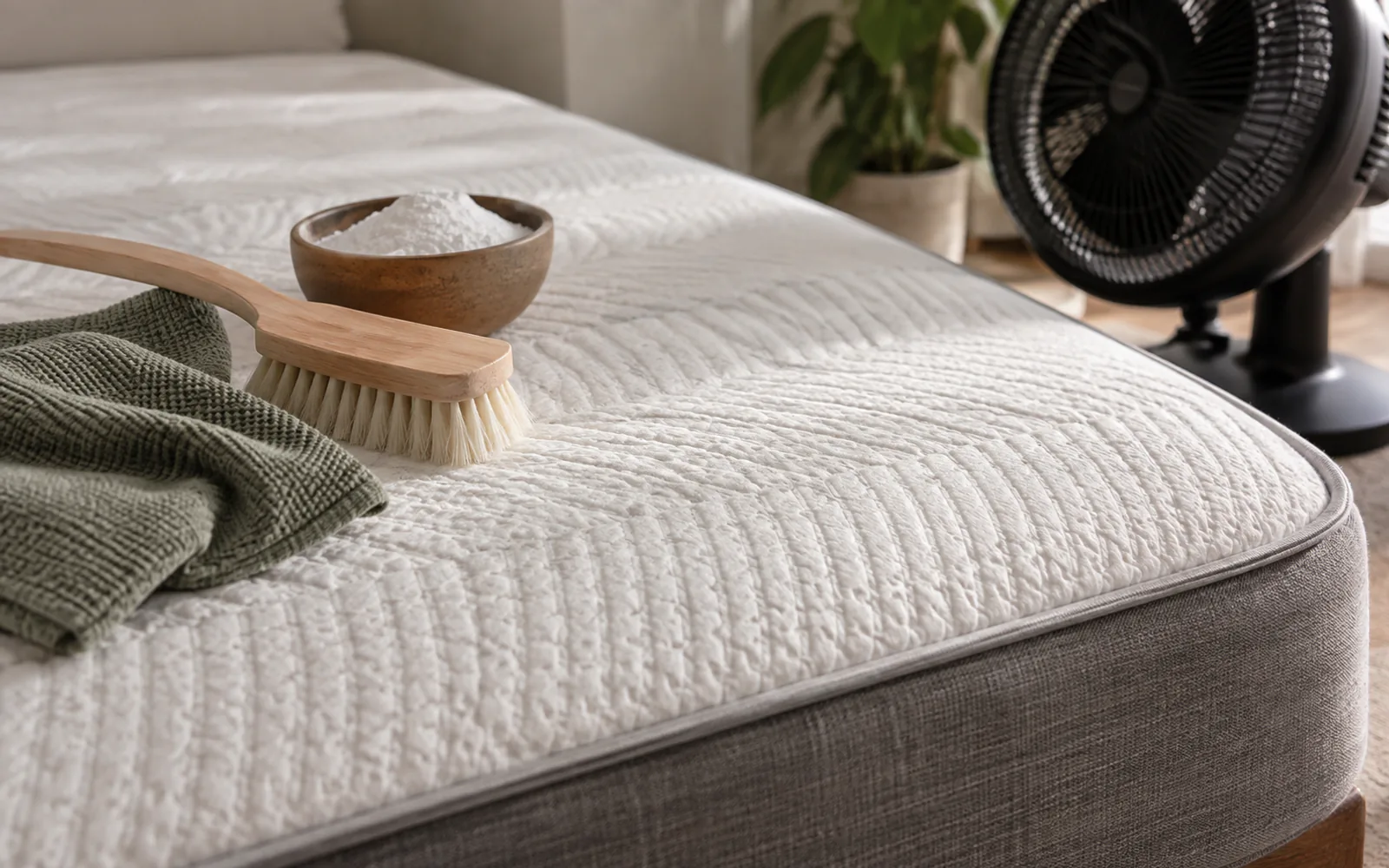
The Three Rules That Decide Everything
Memory foam cleaning rules
- Never saturate — if a cloth feels wet rather than damp, it's too wet for foam
- Never use a steam cleaner — pushes moisture deep into the foam where mold grows
- Always dry thoroughly with airflow before re-making the bed — trapped moisture is how mildew starts
Beyond those three, the technique is similar to deep-cleaning any mattress: vacuum, deodorize with baking soda, spot-treat any stains, dry, install a protector. The difference is the moisture margin — foam tolerates far less of it than innerspring or hybrid construction.
What You'll Need
- A vacuum with an upholstery attachment (HEPA filter if you have allergies)
- A box of baking soda
- A few microfiber cloths
- Mild dish soap (a few drops in a bowl of cold water)
- A spray bottle with cold water
- A bedside fan
- Optional: an enzyme cleaner for protein-based stains (urine, blood, sweat)
Skip these
Steam cleaners, carpet shampooers, bleach, ammonia, and any soaking method. Each of these has ruined more memory foam mattresses than it's saved. The reason is the same: water that doesn't evaporate quickly becomes mildew in the foam.
Step 1: Strip and Vacuum
Remove sheets, mattress protector, and topper. Wash sheets and the protector on the hottest cycle the fabric allows. With the mattress bare, vacuum the entire surface in slow overlapping passes using the upholstery attachment. Pay extra attention to seams and the perimeter piping — they collect more debris than the open surface.
If the memory foam mattress has a removable zip-off cover (some Casper, Tuft & Needle, and Nectar models do), unzip and remove it before vacuuming. Wash the cover separately per the manufacturer's care tag — typically cold gentle cycle, tumble dry low.
Step 2: Deodorize With Baking Soda
Sprinkle a thin even layer of baking soda across the entire mattress. Leave it for at least 30 minutes; for stronger odors or in humid climates, leave it for several hours. Baking soda pulls trapped moisture out of the surface foam and neutralizes odor compounds. If you want a light scent, mix a few drops of lavender or eucalyptus oil into the box before sprinkling.
Vacuum the baking soda completely. Take your time. Leftover residue can attract moisture and feel gritty under sheets. Several passes in a grid pattern with the upholstery attachment gets all of it.
Step 3: Spot-Clean Any Stains
Mix a few drops of mild dish soap into a bowl of cold water. Dampen — not soak — a microfiber cloth and blot at visible stains. Blot from the outside of the stain toward the center to avoid spreading. Follow with a separate clean damp cloth using only cold water to lift the soap residue, then blot dry with a fresh towel.
Cold water always
Hot water sets protein-based stains (blood, urine, sweat) permanently into foam. Cold keeps the proteins soluble so detergents and enzymes can lift them.
For protein-based stains specifically, an enzyme cleaner is more effective than soap. Apply per the bottle directions, let it dwell 10 to 15 minutes, blot away with cold water.
Step 4: Dry With a Fan for Hours, Not Minutes
This is the step most people shortchange and the step that determines whether the mattress comes out clean or moldy a week later. Run a bedside fan directly across the cleaned area for at least six to eight hours. Overnight is ideal. Open a window if the room is humid. Don't put fitted sheets back on until the entire surface is dry to the touch — sealed-in moisture is how mildew develops.
Don't speed-dry with heat
Hair dryers, heat guns, and space heaters near memory foam can warp the foam structure. Memory foam softens with heat. Stick to airflow.
Step 5: Re-Install Protector and Re-Make the Bed
While the mattress is bare, this is the time to rotate it 180 degrees. Most memory foam manufacturers recommend rotation every three months in the first year and every six months after. With the rotation done, install a clean waterproof, moisture-wicking mattress protector before adding fitted sheets. The protector is the single most effective preventive measure against future stains, sweat absorption, and dust mite accumulation.
Most memory foam warranties require an approved foundation and explicitly void on moisture damage — a protector keeps both in good standing.
Browse Mattress Protectors →How Often to Deep-Clean Memory Foam
- Average sleeper, average climate: every 6 months — sync with seasonal sheet changes
- Hot sleepers, humid climates, pets in bed: every 3 to 4 months
- Surface vacuuming and sheet changes handle routine maintenance between deep-cleans
Common Mistakes That Ruin Memory Foam
- Steam cleaning — guarantees deep moisture penetration
- Spraying any cleaner directly onto the foam (always damp-cloth instead)
- Putting fitted sheets back on damp surface — creates mildew within days
- Using bleach — degrades foam and damages cover fabric
- Skipping the protector — sweat saturates the foam within months without one
- Hairdryer or heat to speed drying — warps the foam structure
If the mattress also runs hot, the same airflow principles apply to long-term cooling.
Read: Make a Memory Foam Mattress Cooler →Not sure where to start?
Take our quick sleep quiz and we'll match you with mattresses that fit your sleep style and budget — no jargon, no upsell.
Find your perfect sleep →